Power Contactor Assembly
View system integration details
This page explains how Arc Chute is classified within Electrical Equipment Manufacturing. Technical values and manufacturer relationships are research references; confirm the current specification and supplier evidence for each order.
A safety component in electrical contactors designed to extinguish electric arcs that form when contacts open under load.
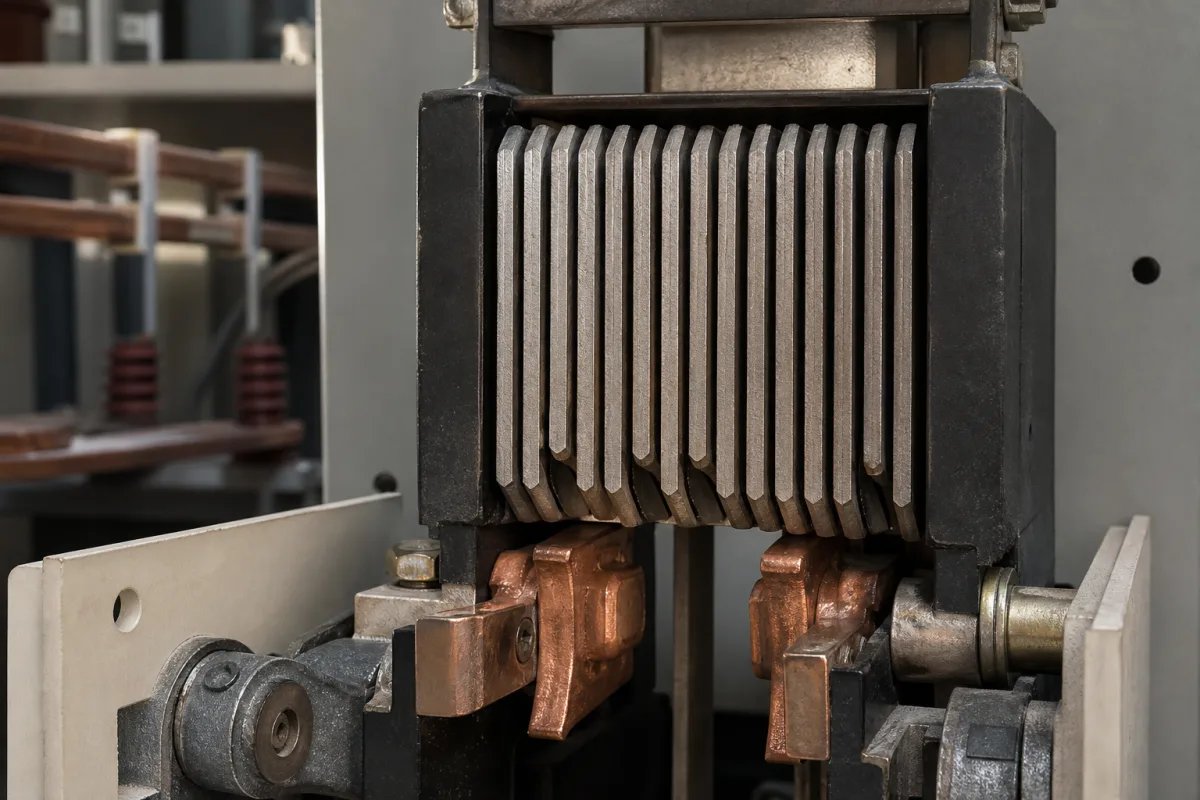
Technical details and manufacturing context for Arc Chute
| Parameter | Typical range | Notes & selection driver |
|---|---|---|
| Rated Voltage | 690 V AC V | Maximum voltage for arc extinction capabilityIEC 60947-4-1 |
| Rated Current | 9–630 A | Continuous current rating rangeIEC 60947-4-1 |
| Breaking Capacity | 6–100 kA | Maximum short-circuit current at rated voltageIEC 60947-4-1 |
| Arc Extinction Time | 10–30 ms | Time to fully extinguish arc after contact separation |
| Dielectric Strength | 2.5–6 kV | Withstand voltage between live parts and groundIEC 60947-1 |
| Insulation Resistance | ≥100 MΩ | Minimum resistance at 500 V DCIEC 60947-1 |
| Operating Temperature Range | -25–+55 °C | Ambient temperature limits for reliable operationIEC 60947-1 |
| Relative Humidity | ≤95 % | Non-condensing at 40°CIEC 60068-2-78 |
| Degree of Protection | IP20–IP54 | Protection against dust and water ingressIEC 60529 |
| Material Grade | Ceramic (Al2O3 ≥95%) | High thermal shock resistance for arc quenchingGB/T 5593 |
| Weight | 0.05–2.5 kg | Depends on current rating and number of poles |
| Dimensions (L×W×H) | 30×20×15–150×100×80 mm | Varies with rated current and arc chamber design |
Ranges are indicative industry figures for RFQ preparation, not a supplier commitment. Confirm every value and standard with the legal manufacturer before ordering.
| pressure: | Atmospheric to 1.5 bar (typical enclosure), withstands arc-induced pressure surges |
| other spec: | Rated voltage: 250V to 1000V AC/DC, current interruption: 10A to 5000A, dielectric strength: 2.5-4 kV/mm |
| temperature: | -40°C to 150°C (operating), up to 300°C (arc exposure transient) |
Indicative industry ranges for design and RFQ preparation. Confirm the exact figures and applicable standard with the manufacturer before specifying.
Quoted from the published standard.
A practical evidence checklist for RFQ preparation and supplier evaluation.
Compare the published product scope and source details, then include your specifications and quantity in an enquiry.
Manufacturer profiles associated with Arc Chute.
Explore company information and manufacturing capabilities, then discuss the scope of your project with a relevant supplier.
Ask for use case, specification boundaries, supplier type, and RFQ preparation information for this product.
The primary function is to extinguish the electric arc that forms when contactor contacts open under load, preventing damage and ensuring safe circuit interruption.
Common materials include ceramic (e.g., steatite), thermoset plastic (e.g., melamine), and metal plates (e.g., steel) for arc runners and splitter plates.
Typical rated voltage is up to 690 V AC, and rated current ranges from 9 to 630 A, per IEC 60947-4-1. These are reference ranges; verify for specific models.
The arc chute splits the arc into smaller segments, cools them with plate material, and releases deionizing gases, increasing voltage requirement and extinguishing the arc.
This component is essential for the following industrial systems and equipment:
Editorial classification, named public sources where available, and source-reviewed manufacturer records.
Compare manufacturer profiles with relevant product and process capability.