Editorial Technical Reference

Driver/power supply

This page explains how Driver/power supply is classified within Electrical Equipment Manufacturing. Technical values and manufacturer relationships are research references; confirm the current specification and supplier evidence for each order.

Technical Definition & Core Assembly

A driver/power supply is an essential electronic component within LED lighting systems that converts incoming AC power to the appropriate DC voltage and current required by the LEDs.
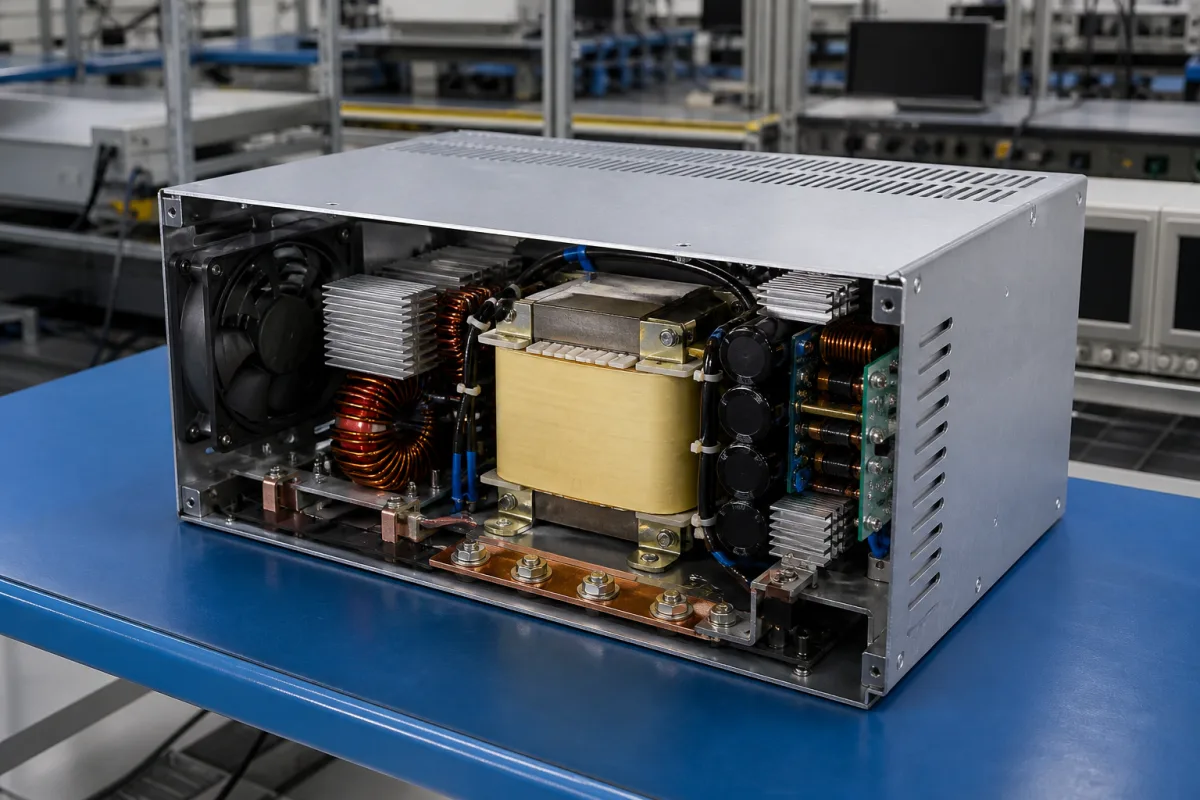
Representative product image. Confirm appearance and specifications with the manufacturer.

Product Specifications

Technical details and manufacturing context for Driver/power supply

Definition
A driver/power supply is an essential electronic component within LED lighting systems that converts incoming AC power to the appropriate DC voltage and current required by the LEDs. It ensures stable operation, protects against voltage fluctuations, and enables dimming functionality while maintaining optimal performance and longevity of the lighting system. This directory entry covers generic LED drivers/power supplies used in electrical equipment manufacturing. The device typically accepts a universal input voltage range of 100–277 V AC, making it suitable for global use. It provides output power ranging from 20 to 150 W, with output voltage options of 24–56 V DC for constant voltage applications (e.g., LED strips) and output current options of 350–1050 mA for constant current applications (e.g., LED modules). Efficiency typically ranges from 85% to 93%, and power factor is 0.9–0.99, meeting IEC 61000-3-2 for harmonic distortion (total harmonic distortion <20%). The operating temperature range is -40°C to 85°C (case temperature, with derating above 70°C), and storage temperature is -40°C to 100°C. IP ratings vary from IP20 to IP67, suitable for indoor or outdoor/damp locations per IEC 60529. Isolation voltage between input and output is 3000–4000 V AC per IEC 61347. Physical dimensions range from 100×40×30 mm to 200×60×40 mm, and weight from 150 to 800 g, depending on power and IP rating. Key materials include printed circuit board (PCB), semiconductors (MOSFETs, diodes), capacitors, inductors, and a heat sink. The driver operates by rectifying AC to DC, regulating output to match LED requirements, and includes power factor correction, thermal protection, and dimming control. When selecting a driver, verify model-specific values and standards with the legal manufacturer or supplier, as actual performance may vary.
Working Principle
The driver/power supply receives alternating current (AC) from the mains power supply, rectifies it to direct current (DC), and regulates the output to match the specific voltage and current requirements of the connected LED modules. It typically includes circuitry for power factor correction, thermal protection, and dimming control when applicable. The input AC voltage (100–277 V AC) is first rectified and filtered, then converted to a regulated DC output using switching topology. The output can be constant voltage (24–56 V DC) or constant current (350–1050 mA), depending on the LED load. Power factor correction ensures high power factor (0.9–0.99) and low harmonic distortion (<20%) to meet grid stability requirements. Thermal protection monitors case temperature, derating output above 70°C to prevent overheating. Dimming control may be integrated, allowing adjustment of light output. The isolation transformer provides input-to-output isolation (3000–4000 V AC) for safety.
Common Materials
Printed Circuit Board (PCB), Semiconductors (MOSFETs, Diodes), Capacitors, Inductors, Heat Sink
Technical Parameters
ParameterTypical rangeNotes & selection driver
Input Voltage Range100–277 V ACUniversal input for global use
Output Power20–150 WSelect based on LED load
Output Voltage24–56 V DCConstant voltage for LED strips
Output Current350–1050 mAConstant current for LED modules
Efficiency85–93 %Higher efficiency reduces heat
Power Factor0.9–0.99Required for commercial lightingIEC 61000-3-2
Total Harmonic Distortion<20 %Lower THD for grid stabilityIEC 61000-3-2
Operating Temperature-40–85 °CCase temperature; derate above 70°C
Storage Temperature-40–100 °CNon-operating condition
IP RatingIP20–IP67IP67 for outdoor/damp locationsIEC 60529
Isolation Voltage3000–4000 V ACInput to output isolationIEC 61347
Dimensions100×40×30–200×60×40 mmDepends on power and IP rating
Weight150–800 gHeavier for higher power and IP

Ranges are indicative industry figures for RFQ preparation, not a supplier commitment. Confirm every value and standard with the legal manufacturer before ordering.

Components / BOM
  • Rectifier Circuit
    Converts AC input to DC
    Material: Semiconductor diodes on PCB
  • Filter Capacitors Part
    Smooths DC output and reduces ripple
    Material: Electrolytic capacitors
  • Switching Transistors Part
    Regulates output through high-frequency switching
    Material: MOSFET semiconductors
  • Control IC Part
    Manages regulation, protection, and dimming functions
    Material: Integrated circuit chip
  • Transformer/Inductor
    Steps voltage up/down and stores energy
    Material: Ferrite core with copper windings
  • Power Factor Correction Circuit
    Shapes input current so power factor stays in the 0.9–0.99 band the spec calls for.
  • Thermal Protection
    Derates or shuts the driver down before the power stage overheats.

Applied To / Applications

This component is essential for the following industrial systems and equipment:

Industrial Ecosystem & Supply Chain Structure

Complementary Systems
Downstream Applications
Specialized Tooling

Application Fit & Sizing Matrix

Operational Limits
pressure: N/A (sealed electronic component)
other spec: Input voltage: 90-305V AC, 120-430V DC; Output voltage: 12-48V DC; IP rating: IP65/IP67 for outdoor use
temperature: -40°C to +85°C operating, -40°C to +105°C storage
Media Compatibility
✓ LED strip lighting ✓ High-bay industrial LED fixtures ✓ Architectural LED installations
Unsuitable: Explosive atmospheres (ATEX zones) without proper certification
Sizing Data Required
  • Total LED wattage (W)
  • LED forward voltage (V)
  • Required dimming protocol (0-10V, DALI, PWM)

Reliability & Engineering Risk Analysis

Failure Mode & Root Cause
Overheating
Cause: Inadequate cooling, dust accumulation on heat sinks, or excessive ambient temperature leading to thermal stress on components like capacitors and semiconductors.
Voltage Surge Damage
Cause: Power supply spikes, lightning strikes, or switching transients causing insulation breakdown, blown fuses, or failure of sensitive electronic components.
Maintenance Indicators
  • Unusual humming, buzzing, or clicking noises from the driver/power supply unit
  • Visible discoloration, bulging capacitors, or burnt smell indicating overheating or electrical arcing
Engineering Tips
  • Implement regular thermal monitoring and ensure proper ventilation; clean air filters and heat sinks periodically to prevent overheating.
  • Install surge protection devices and ensure proper grounding to shield against voltage spikes; use uninterruptible power supplies (UPS) for critical applications.

Indicative industry ranges for design and RFQ preparation. Confirm the exact figures and applicable standard with the manufacturer before specifying.

Compliance & Manufacturing Standards

Applicable Standards
IEC 62368-1:2018 - Audio/Video, Information and Communication Technology Equipment CE Marking - Conformity with EU Directives (e.g., EMC Directive 2014/30/EU)

Quoted from the published standard.

Manufacturing Precision
  • Output Voltage Stability: +/-2% under full load
  • Ripple and Noise: <50mV peak-to-peak at rated output
Quality Inspection
  • Hi-Pot (Dielectric Strength) Test - 1500VAC for 1 minute
  • Load Regulation and Efficiency Test - 0-100% load sweep

Manufacturers of Driver/power supply

Manufacturer profiles associated with Driver/power supply.

Sourcing Driver/power supply from China?
Tell us your specification and target quantity — we will match it against manufacturer records and come back with the factories that fit.
Request manufacturers We manufacture this

Manufacturer listings support early research and capability understanding. They are not certification, ranking, or transaction guarantees.

Technical documentation
Request current drawings, revision history, and a signed specification sheet.
Manufacturing capability
Verify equipment lists, process limits, capacity, and representative production evidence.
Inspection readiness
Confirm test methods, calibrated equipment, sampling plans, and traceable reports.
Supplier transparency
Check the legal entity, factory address, ownership, certifications, and direct contacts.

CNFX does not score or rank suppliers. Buyers must verify all claims and documents with the legal manufacturer before ordering.

Supply Chain Compatible Machinery & Devices

Motor Terminal Block

A motor terminal block is a standardized electrical component that provides secure, insulated connection points for motor winding leads.

Explore Specs →
PLC Control System

A digital industrial computer control system that monitors inputs, makes decisions based on a custom program, and controls outputs to automate industrial processes.

Explore Specs →
Control Panel

A centralized interface for monitoring and controlling industrial equipment and processes

Explore Specs →
PLC Control Panel

A centralized interface unit housing the programmable logic controller and associated control components for industrial automation systems.

Explore Specs →

Frequently Asked Questions

What is the input voltage range for this LED driver?

The input voltage range is 100–277 V AC, which is universal for global use. However, always verify the specific model's input range with the manufacturer, as some models may have narrower ranges.

How do I choose between constant voltage and constant current output?

Constant voltage (24–56 V DC) is typically used for LED strips that require a stable voltage, while constant current (350–1050 mA) is used for LED modules that need a fixed current. The choice depends on the LED load's specifications. Consult the LED manufacturer's datasheet and the driver's datasheet to ensure compatibility.

What is the significance of the IP rating?

The IP rating indicates the degree of protection against dust and water. IP20 is for indoor use, while IP67 is suitable for outdoor or damp locations. Select the IP rating based on the installation environment. For outdoor installations, IP65 or higher is recommended.

What standards should I check for compliance?

Relevant standards include IEC 61000-3-2 for harmonic distortion and power factor, IEC 60529 for IP ratings, and IEC 61347 for isolation voltage. However, these standards are references for verification; the actual product must be tested and certified by the manufacturer. Always request compliance certificates from the supplier.

Data Basis

Editorial classification, named public sources where available, and source-reviewed manufacturer records.

Preliminary Technical Classification
This page supports structured research, RFQ preparation, and supplier evaluation. It does not replace buyer-led supplier qualification, standards review, or technical approval.
Buyer enquiry

Request manufacturing insight for Driver/power supply

Ask for use case, specification boundaries, supplier type, and RFQ preparation information for this product.

Where it goes
Straight to the CNFX editorial desk, and to the manufacturer if this product is linked to a claimed profile. Nothing is broadcast to a supplier list.
Your details stay here
We do not sell or rent enquiry data, and we do not add you to a mailing list. Used only to answer this request.
No commission, no middleman
CNFX is a directory. We take no cut of any order and never negotiate on a supplier's behalf.
What we don't claim
A listing is not an endorsement. Qualify every supplier and verify every figure yourself before ordering.

Your business information is used only to process this request.

Thank you! Your message has been sent. We'll respond within 1–3 business days.
Sorry, we couldn't send your message. Please try again, or email us at contact@cnfx.com.

Need to Manufacture Driver/power supply?

Compare manufacturer profiles with relevant product and process capability.

Previous Product
Wire Tensioning System
Last Product
Get QuotesChat