Industry-Verified Manufacturing Data (2026)

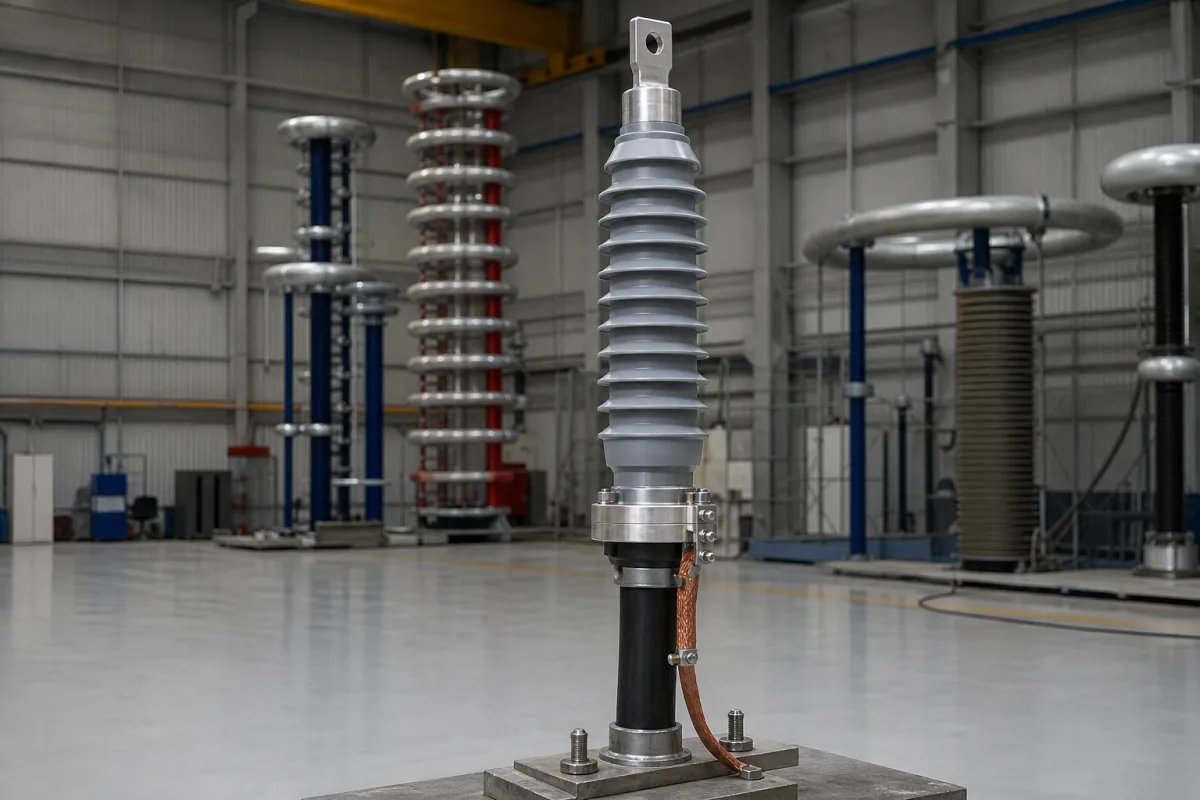
High-Voltage Insulated Cable Termination

Based on aggregated insights from multiple verified factory profiles within the CNFX directory, the standard High-Voltage Insulated Cable Termination used in the Electrical Equipment Manufacturing sector typically supports operational capacities ranging from standard industrial configurations to heavy-duty production requirements.

Technical Definition & Core Assembly

A canonical High-Voltage Insulated Cable Termination is characterized by the integration of Stress Cone and Insulation Body. In industrial production environments, manufacturers listed on CNFX commonly emphasize EPDM Rubber construction to support stable, high-cycle operation across diverse manufacturing scenarios.

Electrical termination component for high-voltage cable systems providing insulation and connection.
Product Specifications

Technical details and manufacturing context for High-Voltage Insulated Cable Termination

Definition
A specialized wiring component designed to terminate high-voltage power cables in industrial and utility applications. It provides electrical insulation, mechanical protection, and reliable connection points for power distribution systems. This component is essential in B2B supply chains for electrical infrastructure projects, enabling safe and efficient power transmission. Manufacturers supply these terminations to electrical contractors, utility companies, and industrial facilities for installation in substations, power plants, and heavy industrial equipment.
Working Principle
Creates a controlled electrical field gradient and provides physical insulation at cable ends using dielectric materials and stress control elements to prevent corona discharge and electrical breakdown.
Common Materials
EPDM Rubber, Silicone Rubber, Copper Conductor, Stress Control Material
Technical Parameters
  • Maximum continuous operating voltage (kV) Standard Spec
  • Rated current carrying capacity (A) Standard Spec
Components / BOM
  • Stress Cone
    Controls electrical field gradient to prevent corona discharge
    Material: Semi-conductive EPDM
  • Insulation Body
    Provides primary electrical insulation between conductor and ground
    Material: EPDM or Silicone Rubber
  • Conductor Connector
    Mechanical and electrical connection to cable conductor
    Material: Copper Alloy
  • Grounding Shield Optional
    Provides grounding connection for cable shield
    Material: Copper Braid
  • Sealing Boot Optional
    Environmental seal at cable entry point
    Material: EPDM Rubber
Engineering Reasoning
1-550 kV AC, 1-800 kV DC
Electric field strength exceeding 15 kV/mm at conductor interface
Design Rationale: Partial discharge inception voltage threshold breach causing insulation degradation through treeing propagation
Risk Mitigation (FMEA)
Trigger Moisture ingress exceeding 1000 ppm at stress cone interface
Mode: Tracking discharge along insulator surface
Strategy: Hermetic sealing with triple O-ring design and moisture-absorbing gel compound
Trigger Thermal cycling exceeding ΔT=85°C at 2 cycles/hour
Mode: Interfacial delamination between semiconductor layer and XLPE insulation
Strategy: Graded permittivity stress control with conductive polymer layers (εr=20-5 gradient)

Industry Taxonomies & Aliases

Commonly used trade names and technical identifiers for High-Voltage Insulated Cable Termination.

Industrial Ecosystem & Supply Chain DNA

Complementary Systems
Downstream Applications
Specialized Tooling

Application Fit & Sizing Matrix

Operational Limits
pressure: Up to 15 bar internal pressure, 1 bar external minimum
other spec: IP68 ingress protection, UV resistant for outdoor use
temperature: -40°C to +90°C continuous, up to +130°C short-term
voltage rating: Up to 36 kV AC, 52 kV DC
Media Compatibility
✓ XLPE insulated power cables ✓ EPR insulated medium voltage cables ✓ Oil-filled high voltage transmission cables
Unsuitable: Direct immersion in corrosive chemicals or saltwater spray environments
Sizing Data Required
  • Cable conductor cross-sectional area (mm²)
  • System nominal voltage and BIL (Basic Insulation Level)
  • Installation environment (indoor/outdoor, altitude, pollution degree)

Reliability & Engineering Risk Analysis

Failure Mode & Root Cause
Partial Discharge (Corona) Degradation
Cause: Poor stress control at termination interface leading to localized electrical discharges that erode insulation material over time
Moisture Ingress and Tracking
Cause: Inadequate sealing or damaged weatherproofing allowing water penetration, creating conductive paths and insulation breakdown
Maintenance Indicators
  • Audible corona discharge (hissing/crackling sounds) near termination points
  • Visible tracking marks, carbon deposits, or oil/compound leakage on termination surfaces
Engineering Tips
  • Implement regular infrared thermography scans to detect hot spots indicating poor contact or insulation degradation before failure
  • Use proper cable bending radius guides during installation and apply manufacturer-specified torque values on all termination hardware to maintain stress control integrity

Compliance & Manufacturing Standards

Reference Standards
IEC 60502-2: Power cables with extruded insulation and their accessories for rated voltages from 1 kV up to 30 kV ANSI/NEMA WC 74: Standard for Extruded Insulation Power Cables Rated Above 2000 Volts DIN VDE 0276-620: Power cables with extruded insulation and their accessories for rated voltages from 1 kV (Um = 1,2 kV) up to 30 kV (Um = 36 kV)
Manufacturing Precision
  • Cable insulation thickness: +/- 10% of nominal value per IEC 60502-2
  • Termination interface concentricity: +/- 0.5 mm relative to cable axis
Quality Inspection
  • Partial Discharge Test (per IEC 60270) at 1.73 times rated voltage
  • High Voltage Withstand Test (per IEC 60502-2) at 3.5 times rated voltage for 5 minutes

Factories Producing High-Voltage Insulated Cable Termination

Verified manufacturers with capability to produce this product in China

✓ 97% Supplier Capability Match Found

T Technical Director from Canada Jan 26, 2026
★★★★★
"Impressive build quality. Especially the Rated Voltage (kV) is very stable during long-term operation."
Technical Specifications Verified
P Project Engineer from United States Jan 23, 2026
★★★★☆
"As a professional in the Electrical Equipment Manufacturing sector, I confirm this High-Voltage Insulated Cable Termination meets all ISO standards. (Delivery took slightly longer than expected, but technical support was excellent.)"
Technical Specifications Verified
S Sourcing Manager from United Arab Emirates Jan 20, 2026
★★★★★
"Standard OEM quality for Electrical Equipment Manufacturing applications. The High-Voltage Insulated Cable Termination arrived with full certification."
Technical Specifications Verified
Verification Protocol

“Feedback is collected from verified sourcing managers during RFQ (Request for Quote) and factory evaluation processes on CNFX. These reports represent historical performance data and technical audit summaries from our B2B manufacturing network.”

15 sourcing managers are analyzing this specification now. Last inquiry for High-Voltage Insulated Cable Termination from India (1h ago).

Supply Chain Commonly Integrated Components

Rotor Assembly

The rotating component of an actuator motor that converts electrical energy into mechanical motion

Explore Specs →
Stator Assembly

The stationary component of an electric motor that generates a rotating magnetic field when energized.

Explore Specs →
Wire Tensioner

A device that applies and maintains precise tension on electrical wire during the winding process of transformers.

Explore Specs →
Wire Guide System

A precision mechanical system that guides and positions wire during the winding process on a transformer winding machine.

Explore Specs →

Frequently Asked Questions

What materials are used in these high-voltage cable terminations?

Our terminations use premium EPDM or silicone rubber for insulation, copper conductors for optimal conductivity, and specialized stress control materials to manage electrical fields.

What cable sizes and voltage ratings do these terminations support?

These terminations accommodate various cable sizes (mm²) and are rated for specific kV and current (A) levels, with insulation levels measured by BIL (Basic Insulation Level) standards.

How do these terminations ensure durability and safety?

They feature IP-rated sealing for environmental protection, operate within specified temperature ranges, and include stress cones and grounding shields to prevent electrical failures and ensure long-term reliability.

Can I contact factories directly on CNFX?

CNFX is an open directory, not a transaction platform. Each factory profile provides direct contact information and production details to help you initiate direct inquiries with Chinese suppliers.

Get Quote for High-Voltage Insulated Cable Termination

Request technical pricing, lead times, or customized specifications for High-Voltage Insulated Cable Termination directly from verified manufacturing units.

Your business information is encrypted and only shared with verified High-Voltage Insulated Cable Termination suppliers.

Thank you! Your message has been sent. We'll respond within 1–3 business days.

Need to Manufacture High-Voltage Insulated Cable Termination?

Connect with verified factories specializing in this product category

Add Your Factory Contact Us
Previous Product
High-Voltage Bushings
Next Product
High-Voltage Insulating Bushing