Industry-Verified Manufacturing Data (2026)

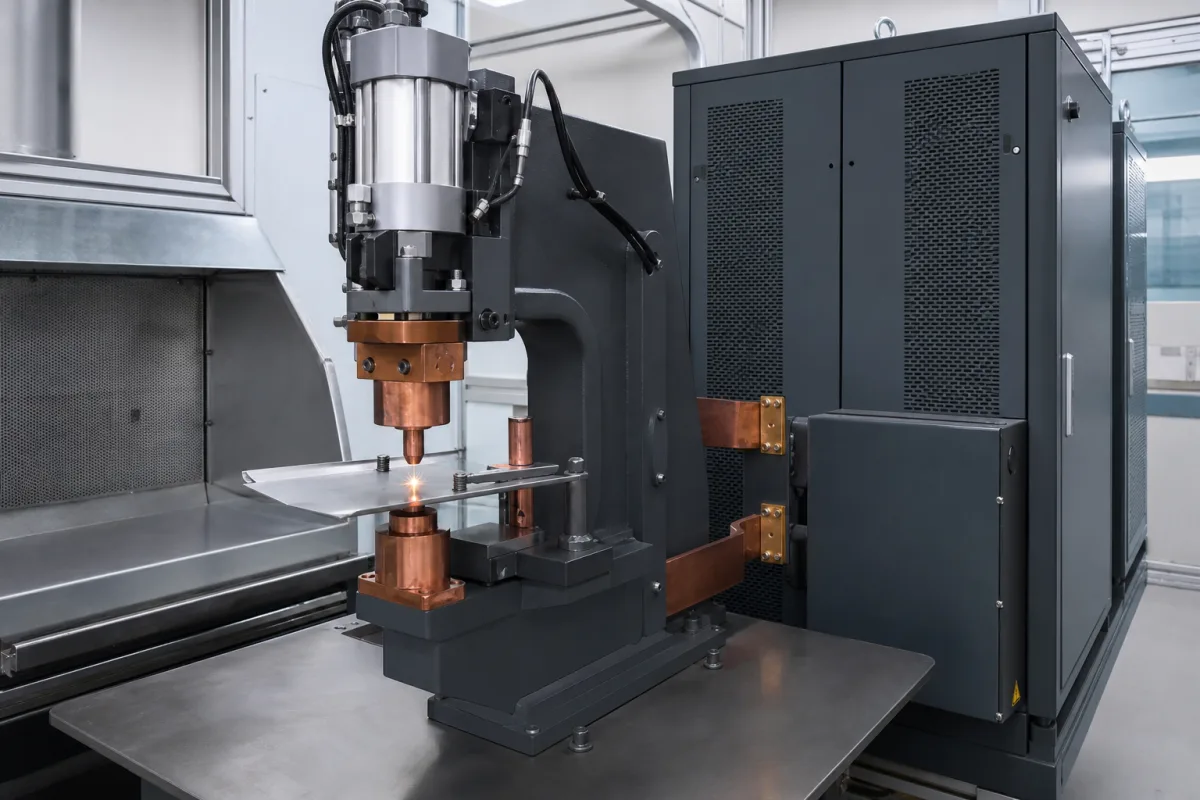
Industrial Capacitor Discharge Welding Machine

Based on aggregated insights from multiple verified factory profiles within the CNFX directory, the standard Industrial Capacitor Discharge Welding Machine used in the Electrical Equipment Manufacturing sector typically supports operational capacities ranging from standard industrial configurations to heavy-duty production requirements.

Technical Definition & Core Assembly

A canonical Industrial Capacitor Discharge Welding Machine is characterized by the integration of Capacitor Bank and Charging Circuit. In industrial production environments, manufacturers listed on CNFX commonly emphasize Stainless Steel Housing construction to support stable, high-cycle operation across diverse manufacturing scenarios.

Electrical equipment for precision welding using stored capacitor energy discharge.
Product Specifications

Technical details and manufacturing context for Industrial Capacitor Discharge Welding Machine

Definition
An industrial welding machine that stores electrical energy in high-capacity capacitors and releases it in a controlled, high-current pulse to create precise welds. This equipment is essential in manufacturing environments requiring consistent, low-heat welding of dissimilar metals or delicate components. It serves critical roles in automotive electronics assembly, aerospace component fabrication, and precision instrument manufacturing where traditional welding methods would cause thermal damage. The machine integrates into automated production lines as a standalone unit for specialized joining applications.
Working Principle
Electrical energy is stored in capacitor banks, then discharged through electrodes in a controlled pulse, creating instantaneous localized heat for fusion welding without significant heat-affected zones.
Common Materials
Stainless Steel Housing, Copper Electrodes, Polymer Insulation
Technical Parameters
  • Maximum stored energy capacity (kJ) Standard Spec
  • Peak discharge current (kA) Standard Spec
Components / BOM
  • Capacitor Bank
    Stores electrical energy for discharge welding
    Material: Electrolytic/Electrochemical
  • Charging Circuit
    Converts AC power to DC for capacitor charging
    Material: Copper/Electronic Components
  • Discharge Controller
    Regulates timing and current of welding pulse
    Material: Electronic Circuitry
  • Welding Electrodes
    Transfers discharge current to workpiece
    Material: Copper Alloy
  • Cooling System Optional
    Maintains operational temperature of components
    Material: Aluminum/Copper
Engineering Reasoning
200-800 V discharge voltage, 1000-10000 A peak current, 1-10 ms discharge duration
Dielectric breakdown at 850 V/mm for polypropylene film capacitors, electrode erosion beyond 0.5 mm material loss
Design Rationale: Dielectric breakdown due to electric field exceeding 850 V/mm, electrode vaporization from current densities exceeding 10^8 A/m²
Risk Mitigation (FMEA)
Trigger Capacitor dielectric aging reducing capacitance below 90% of rated value
Mode: Insufficient weld energy causing incomplete fusion
Strategy: Implement capacitance monitoring with 95% threshold alarm and automatic bank isolation
Trigger Thyristor gate trigger timing error exceeding ±5 μs
Mode: Uncontrolled discharge causing electrode sticking
Strategy: Precision timing circuit with 1 μs resolution and redundant trigger verification

Industry Taxonomies & Aliases

Commonly used trade names and technical identifiers for Industrial Capacitor Discharge Welding Machine.

Industrial Ecosystem & Supply Chain DNA

Complementary Systems
Downstream Applications
Specialized Tooling

Application Fit & Sizing Matrix

Operational Limits
pressure: Atmospheric (non-pressurized system)
other spec: Discharge energy: 10-5000 J, Voltage: 200-1000 V DC, Discharge time: 1-10 ms
temperature: 0°C to 40°C (operating ambient), -20°C to 70°C (storage)
Media Compatibility
✓ Thin metal sheets (steel, aluminum, copper) ✓ Precision electronic components ✓ Dissimilar metal joints
Unsuitable: High-moisture or corrosive atmospheres (risk of electrical arcing and component degradation)
Sizing Data Required
  • Material thickness and type
  • Required weld strength/nugget size
  • Production rate (welds per minute)

Reliability & Engineering Risk Analysis

Failure Mode & Root Cause
Capacitor bank degradation
Cause: Electrolyte drying or leakage due to thermal cycling, overvoltage stress, or aging, leading to reduced capacitance and increased equivalent series resistance (ESR), which impairs energy delivery and weld quality.
Electrode wear and contamination
Cause: High-current arcing and material transfer during welding cycles cause pitting, mushrooming, or alloy buildup on electrode tips, resulting in inconsistent contact resistance, poor weld penetration, and increased heat generation.
Maintenance Indicators
  • Audible arcing or popping sounds during discharge, indicating poor electrode contact or insulation breakdown.
  • Visible discoloration, sparking, or smoke from the capacitor bank or welding head, signaling overheating or electrical faults.
Engineering Tips
  • Implement regular capacitor bank testing using an LCR meter to monitor capacitance and ESR trends, replacing units that deviate by more than 10% from specifications to maintain energy consistency.
  • Establish a preventive electrode dressing schedule using a dedicated tip dresser to maintain proper geometry and cleanliness, ensuring optimal current density and reducing thermal stress on the welding circuit.

Compliance & Manufacturing Standards

Reference Standards
ISO 12100:2010 - Safety of machinery ANSI Z49.1 - Safety in Welding, Cutting, and Allied Processes CE Marking - EU Machinery Directive 2006/42/EC
Manufacturing Precision
  • Electrode alignment: +/- 0.05mm
  • Capacitor discharge timing: +/- 0.5ms
Quality Inspection
  • High-voltage insulation resistance test
  • Weld shear strength destructive test

Factories Producing Industrial Capacitor Discharge Welding Machine

Verified manufacturers with capability to produce this product in China

✓ 95% Supplier Capability Match Found

P Procurement Specialist from Brazil Feb 04, 2026
★★★★★
"Impressive build quality. Especially the Stored Energy Capacity (kJ) is very stable during long-term operation."
Technical Specifications Verified
T Technical Director from Canada Feb 01, 2026
★★★★★
"As a professional in the Electrical Equipment Manufacturing sector, I confirm this Industrial Capacitor Discharge Welding Machine meets all ISO standards."
Technical Specifications Verified
P Project Engineer from United States Jan 29, 2026
★★★★★
"Standard OEM quality for Electrical Equipment Manufacturing applications. The Industrial Capacitor Discharge Welding Machine arrived with full certification."
Technical Specifications Verified
Verification Protocol

“Feedback is collected from verified sourcing managers during RFQ (Request for Quote) and factory evaluation processes on CNFX. These reports represent historical performance data and technical audit summaries from our B2B manufacturing network.”

6 sourcing managers are analyzing this specification now. Last inquiry for Industrial Capacitor Discharge Welding Machine from Brazil (57m ago).

Supply Chain Commonly Integrated Components

Rotor Assembly

The rotating component of an actuator motor that converts electrical energy into mechanical motion

Explore Specs →
Stator Assembly

The stationary component of an electric motor that generates a rotating magnetic field when energized.

Explore Specs →
Wire Tensioner

A device that applies and maintains precise tension on electrical wire during the winding process of transformers.

Explore Specs →
Wire Guide System

A precision mechanical system that guides and positions wire during the winding process on a transformer winding machine.

Explore Specs →

Frequently Asked Questions

What are the main advantages of capacitor discharge welding for electrical equipment manufacturing?

Capacitor discharge welding provides precise, localized heat with minimal thermal distortion, making it ideal for delicate electrical components. The rapid discharge cycle ensures consistent weld quality and high production efficiency.

How does the cooling system affect welding performance and machine longevity?

The integrated cooling system maintains optimal operating temperatures for the capacitor bank and electrodes, preventing overheating that could reduce weld quality or damage components. Proper cooling ensures consistent cycle rates and extends machine service life.

What maintenance is required for the capacitor bank and discharge controller?

Regular inspection of capacitor health, cleaning of electrode contacts, and calibration of discharge timing are essential. The polymer insulation should be checked for wear, and the charging circuit tested periodically to maintain precise energy storage and discharge characteristics.

Can I contact factories directly on CNFX?

CNFX is an open directory, not a transaction platform. Each factory profile provides direct contact information and production details to help you initiate direct inquiries with Chinese suppliers.

Get Quote for Industrial Capacitor Discharge Welding Machine

Request technical pricing, lead times, or customized specifications for Industrial Capacitor Discharge Welding Machine directly from verified manufacturing units.

Your business information is encrypted and only shared with verified Industrial Capacitor Discharge Welding Machine suppliers.

Thank you! Your message has been sent. We'll respond within 1–3 business days.

Need to Manufacture Industrial Capacitor Discharge Welding Machine?

Connect with verified factories specializing in this product category

Add Your Factory Contact Us
Previous Product
Inductor/Transformer
Next Product
Industrial Dielectric Strength Tester