Automatic Wiring System
View system integration details
This page explains how Termination Head is classified within Electrical Equipment Manufacturing. Technical values and manufacturer relationships are research references; confirm the current specification and supplier evidence for each order.
A component in an Automatic Wiring System that provides the electrical connection point for terminating wires or cables.
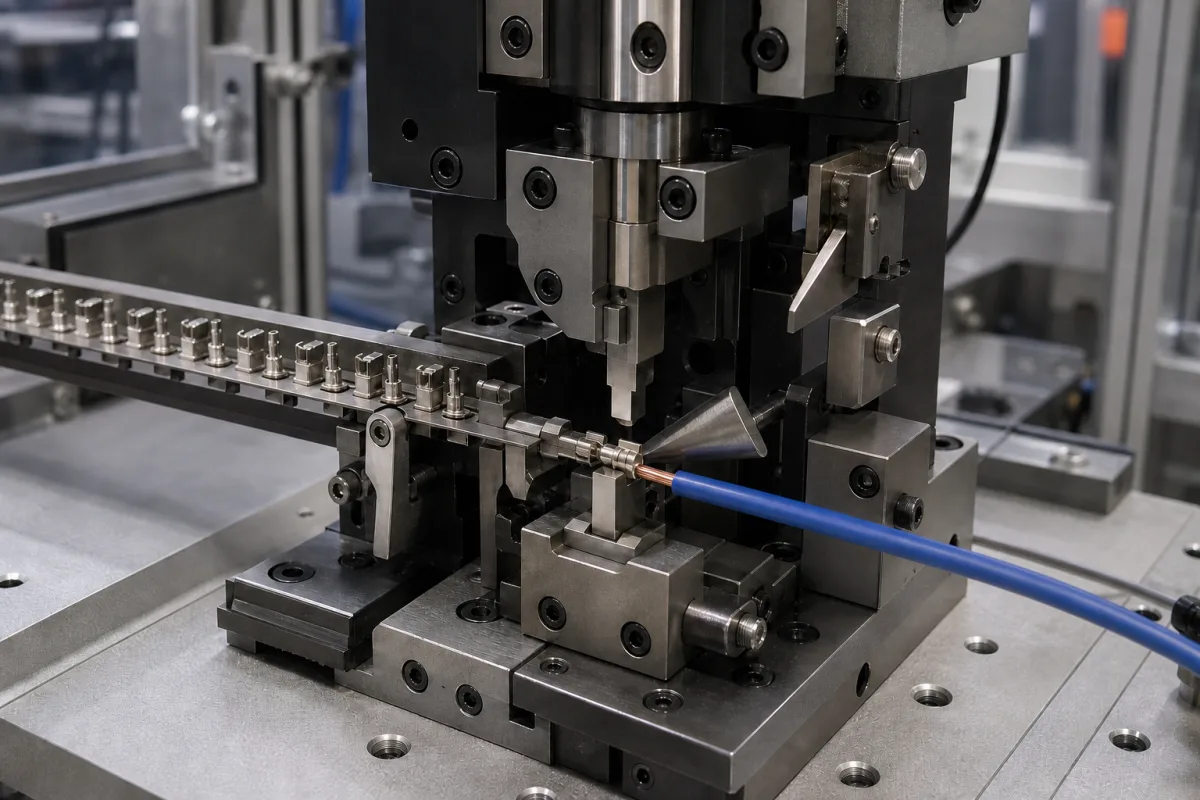
Technical details and manufacturing context for Termination Head
What to specify in your RFQ
These are the quantities to specify to the manufacturer when sizing or requesting a quote. The manufacturer's own documentation governs the exact figures and applicable standard.
| pressure: | Up to 10 bar (145 psi) |
| other spec: | Wire gauge range: 0.5-10 mm² (20-8 AWG), IP rating: IP20 for basic protection |
| temperature: | -40°C to +105°C |
Indicative industry ranges for design and RFQ preparation. Confirm the exact figures and applicable standard with the manufacturer before specifying.
Quoted from the published standard.
A practical evidence checklist for RFQ preparation and supplier evaluation.
Compare the published product scope and source details, then include your specifications and quantity in an enquiry.
Manufacturer profiles associated with Termination Head.
Explore company information and manufacturing capabilities, then discuss the scope of your project with a relevant supplier.
Ask for use case, specification boundaries, supplier type, and RFQ preparation information for this product.
The Termination Head provides a secure electrical and mechanical connection point for wires or cables in an Automatic Wiring System, ensuring electrical continuity and preventing disconnections.
According to the directory, the Termination Head is made of copper alloy for conductive parts and plastic insulation for electrical isolation. Specific material grades may vary and should be confirmed with the manufacturer.
You must check the dimensions (length, width, height) in millimeters against your wiring system's requirements, and confirm compatibility with wire gauge, current rating, and environmental conditions. Always consult the legal manufacturer or supplier for model-specific specifications.
Common methods include clamping mechanisms, screw terminals, or insulation displacement contacts. These methods establish a reliable connection while preventing wire pull-out or damage.
This component is essential for the following industrial systems and equipment:
Editorial classification, named public sources where available, and source-reviewed manufacturer records.
Compare manufacturer profiles with relevant product and process capability.