Industry-Verified Manufacturing Data (2026)

Conductivity Probe

Based on aggregated insights from multiple verified factory profiles within the CNFX directory, the standard Conductivity Probe used in the Food Manufacturing sector typically supports operational capacities ranging from standard industrial configurations to heavy-duty production requirements.

Technical Definition & Core Assembly

A canonical Conductivity Probe is characterized by the integration of Electrode Pair and Probe Body. In industrial production environments, manufacturers listed on CNFX commonly emphasize Stainless Steel (316L) construction to support stable, high-cycle operation across diverse manufacturing scenarios.

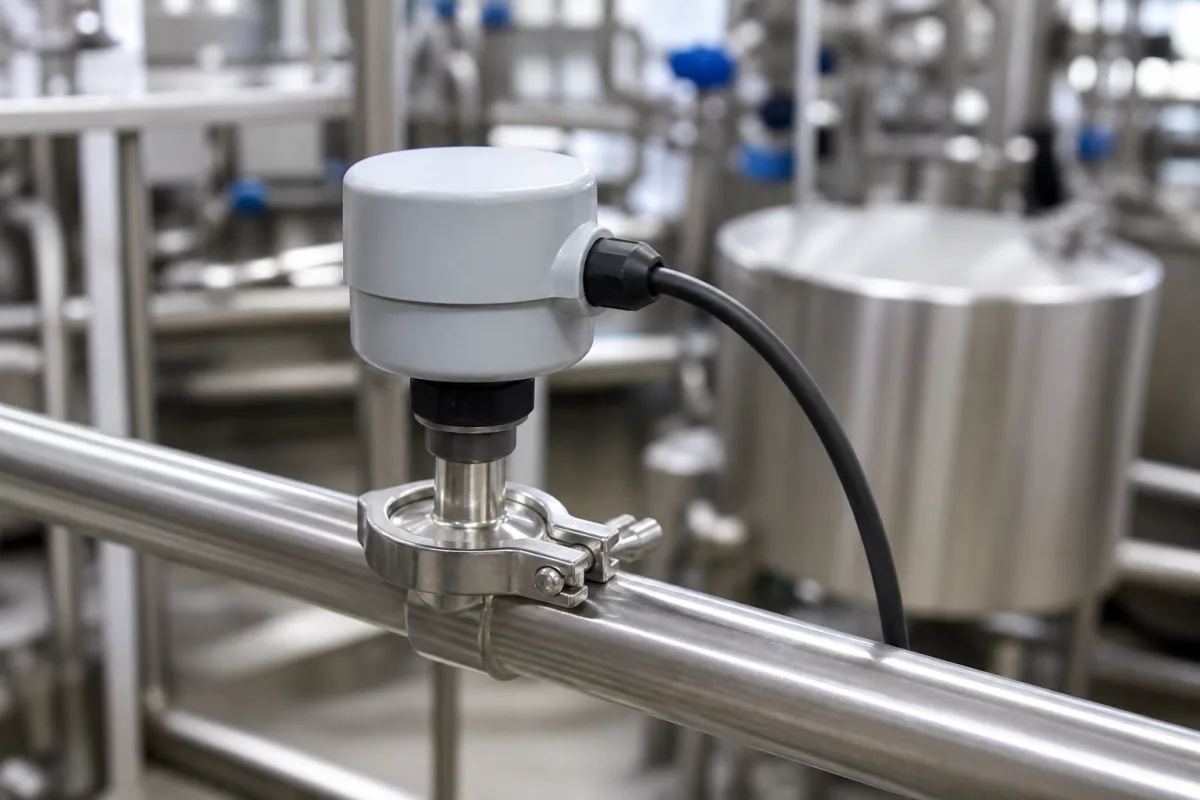
A sensor that measures the electrical conductivity of a solution to monitor cleaning effectiveness in CIP systems.
Product Specifications

Technical details and manufacturing context for Conductivity Probe

Definition
A conductivity probe is a critical component within a Clean-in-Place (CIP) system used to measure the electrical conductivity of cleaning solutions in real-time. It ensures proper chemical concentration during cleaning cycles by detecting changes in solution conductivity, which correlates with detergent or sanitizer strength. This allows for automated control of chemical dosing and rinse cycles to maintain cleaning efficacy while optimizing water and chemical usage.
Working Principle
The probe measures the ability of an aqueous solution to conduct an electric current between two electrodes. Higher ion concentration (from cleaning chemicals) increases conductivity, which is measured in microsiemens per centimeter (μS/cm). The probe transmits this signal to the CIP controller for process monitoring and adjustment.
Common Materials
Stainless Steel (316L), Platinum Electrodes, PTFE Insulation
Technical Parameters
  • Measurement range for conductivity detection (μS/cm) Customizable
Components / BOM
  • Electrode Pair
    Creates electrical field for conductivity measurement
    Material: Platinum
  • Probe Body
    Houses electrodes and provides process connection
    Material: Stainless Steel 316L
  • Cable Connection
    Transmits electrical signal to controller
    Material: Stainless Steel/PTFE
Engineering Reasoning
0.1-200 mS/cm at 25°C with ±0.5% accuracy
Electrode polarization occurs at current densities exceeding 0.1 A/cm², causing non-linear response
Design Rationale: Faradaic electrode reactions at high current densities create concentration gradients and gas bubbles that insulate the electrode surface
Risk Mitigation (FMEA)
Trigger Electrochemical fouling by protein deposits forming insulating layers >10 μm thick
Mode: Signal drift exceeding ±2% per hour due to increased electrode impedance
Strategy: Platinum-iridium alloy electrodes with pulsed AC excitation at 1 kHz to prevent DC polarization
Trigger Thermal shock from >50°C/min temperature gradients during CIP cycles
Mode: Glass-to-metal seal fracture creating >10^-6 m³/hr leak rate
Strategy: Kovar alloy housing with matched thermal expansion coefficient of 5.3×10^-6/°C to borosilicate glass

Industry Taxonomies & Aliases

Commonly used trade names and technical identifiers for Conductivity Probe.

Applied To / Applications

This component is essential for the following industrial systems and equipment:

Industrial Ecosystem & Supply Chain DNA

Complementary Systems
Downstream Applications
Specialized Tooling

Application Fit & Sizing Matrix

Operational Limits
pressure: 0 to 10 bar
flow rate: 0.1 to 5 m/s
temperature: -10°C to 130°C
slurry concentration: Up to 15% solids by weight
Media Compatibility
✓ Aqueous cleaning solutions (acidic/alkaline) ✓ Food-grade CIP fluids (caustic, acid, sanitizer) ✓ Deionized water and rinse solutions
Unsuitable: Hydrofluoric acid or highly concentrated sulfuric acid environments
Sizing Data Required
  • Required conductivity measurement range (μS/cm or mS/cm)
  • Pipe diameter or vessel size for installation
  • Process temperature and pressure conditions

Reliability & Engineering Risk Analysis

Failure Mode & Root Cause
Electrode Fouling/Coating
Cause: Accumulation of scale, biological growth, or process deposits on electrode surfaces, which insulates the electrodes and causes inaccurate or drifting conductivity readings.
Cable/Connector Degradation
Cause: Moisture ingress, chemical attack, mechanical stress, or corrosion at cable terminations or probe connectors, leading to signal loss, noise, or short circuits.
Maintenance Indicators
  • Erratic or drifting conductivity readings that do not stabilize, especially when compared to lab samples or other instruments.
  • Visible physical damage to the probe body, such as cracks, severe corrosion, or a compromised cable sheath near the connection point.
Engineering Tips
  • Implement a regular cleaning schedule using manufacturer-recommended methods (e.g., mild acid wash for scale, soft brush for biofilms) to prevent persistent electrode fouling.
  • Ensure proper cable management and use waterproof, chemically resistant junction boxes or connectors to protect the electrical connections from environmental and mechanical stress.

Compliance & Manufacturing Standards

Reference Standards
ISO 7888:1985 - Water quality - Determination of electrical conductivity ASTM D1125-23 - Standard Test Methods for Electrical Conductivity and Resistivity of Water IEC 60746-3:2002 - Expression of performance of electrochemical analyzers - Part 3: Electrolytic conductivity
Manufacturing Precision
  • Electrode spacing tolerance: +/- 0.05 mm
  • Cell constant accuracy: +/- 1% of nominal value
Quality Inspection
  • Calibration verification against certified reference solutions
  • Leak test under pressure to ensure housing integrity

Factories Producing Conductivity Probe

Verified manufacturers with capability to produce this product in China

✓ 96% Supplier Capability Match Found

P Project Engineer from Australia Jan 21, 2026
★★★★★
"Reliable performance in harsh Food Manufacturing environments. No issues with the Conductivity Probe so far."
Technical Specifications Verified
S Sourcing Manager from Singapore Jan 18, 2026
★★★★★
"Testing the Conductivity Probe now; the technical reliability results are within 1% of the laboratory datasheet."
Technical Specifications Verified
P Procurement Specialist from Germany Jan 15, 2026
★★★★★
"Impressive build quality. Especially the technical reliability is very stable during long-term operation."
Technical Specifications Verified
Verification Protocol

“Feedback is collected from verified sourcing managers during RFQ (Request for Quote) and factory evaluation processes on CNFX. These reports represent historical performance data and technical audit summaries from our B2B manufacturing network.”

17 sourcing managers are analyzing this specification now. Last inquiry for Conductivity Probe from Thailand (1h ago).

Supply Chain Compatible Machinery & Devices

Intelligent Food Grade Metal Detector

Automated metal contamination detection system for food processing lines.

Explore Specs →
Automated Food Packaging Integrity Tester

Automated system for non-destructive testing of food package seals and integrity.

Explore Specs →
Automated Food Moisture Analyzer

Automated system for precise moisture content measurement in food products

Explore Specs →
Automated Food Color Consistency Analyzer

Automated inline system for real-time color measurement and consistency control in food processing.

Explore Specs →

Frequently Asked Questions

How does a conductivity probe monitor CIP cleaning effectiveness in food manufacturing?

The probe measures electrical conductivity of cleaning solutions; changes indicate detergent concentration, rinse water purity, and soil removal, ensuring proper cleaning cycles in CIP systems.

Why use 316L stainless steel and platinum electrodes in food-grade conductivity probes?

316L stainless steel offers corrosion resistance to harsh CIP chemicals, while platinum electrodes provide stable, accurate conductivity readings and durability in high-temperature cleaning environments.

What maintenance is required for conductivity probes in CIP systems?

Regular calibration against standard solutions, visual inspection for fouling or damage, and cleaning of electrodes to prevent buildup that could affect accuracy in food manufacturing applications.

Can I contact factories directly on CNFX?

CNFX is an open directory, not a transaction platform. Each factory profile provides direct contact information and production details to help you initiate direct inquiries with Chinese suppliers.

Get Quote for Conductivity Probe

Request technical pricing, lead times, or customized specifications for Conductivity Probe directly from verified manufacturing units.

Your business information is encrypted and only shared with verified Conductivity Probe suppliers.

Thank you! Your message has been sent. We'll respond within 1–3 business days.

Need to Manufacture Conductivity Probe?

Connect with verified factories specializing in this product category

Add Your Factory Contact Us
Previous Product
Condensate Traps
Next Product
Continuous Flow Pasteurization System