Industry-Verified Manufacturing Data (2026)

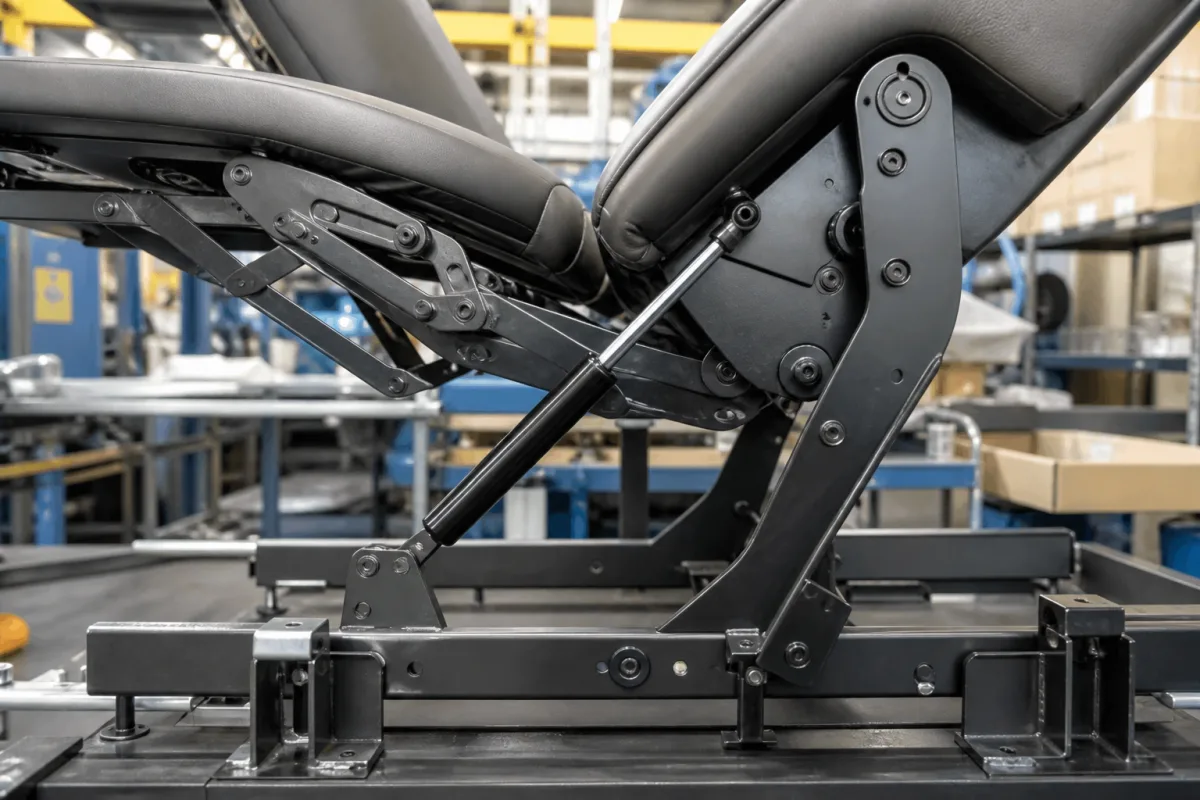
Damping Cylinder

Based on aggregated insights from multiple verified factory profiles within the CNFX directory, the standard Damping Cylinder used in the Furniture Manufacturing sector typically supports operational capacities ranging from standard industrial configurations to heavy-duty production requirements.

Technical Definition & Core Assembly

A canonical Damping Cylinder is characterized by the integration of Cylinder Body and Piston. In industrial production environments, manufacturers listed on CNFX commonly emphasize Stainless Steel construction to support stable, high-cycle operation across diverse manufacturing scenarios.

A hydraulic or pneumatic cylinder that provides controlled resistance to slow down the closing motion of furniture hinges.
Product Specifications

Technical details and manufacturing context for Damping Cylinder

Definition
A damping cylinder is a key component in modern furniture hinges that uses hydraulic or pneumatic pressure to create controlled resistance, ensuring smooth, quiet, and safe closing of cabinet doors, drawers, and other furniture elements. It prevents slamming and extends the lifespan of both the hinge and furniture.
Working Principle
The damping cylinder contains a piston that moves within a sealed chamber filled with hydraulic fluid or air. As the hinge closes, the piston compresses the fluid/air through small orifices, creating resistance that slows the motion. The rate of damping is controlled by the viscosity of the fluid, orifice size, and piston design.
Common Materials
Stainless Steel, Aluminum Alloy, Engineering Plastic, Hydraulic Oil
Technical Parameters
  • Cylinder diameter and stroke length (mm) Customizable
Components / BOM
  • Cylinder Body
    Houses the hydraulic/pneumatic system and provides structural integrity
    Material: Aluminum Alloy
  • Piston
    Moves within the cylinder to compress fluid/air and create damping resistance
    Material: Stainless Steel
  • Hydraulic Fluid Chamber
    Contains the hydraulic oil that provides damping through controlled flow resistance
    Material: Engineering Plastic
  • Seals
    Prevent leakage of hydraulic fluid and maintain pressure within the system
    Material: Synthetic Rubber
  • Mounting Bracket
    Connects the damping cylinder to the furniture hinge mechanism
    Material: Steel
Engineering Reasoning
2.0-10.0 bar hydraulic pressure, 0.5-2.0 bar pneumatic pressure, -20°C to +80°C ambient temperature
Hydraulic: 12.5 bar burst pressure, Pneumatic: 3.0 bar seal extrusion limit, 100°C thermal degradation of nitrile seals, 0.1 mm rod deflection at 500 N side load
Design Rationale: Seal extrusion failure at 3.0 bar due to 70 Shore A hardness nitrile rubber exceeding 25% compression set, cavitation at 0.5 bar absolute pressure causing vapor bubble collapse and pitting, thermal fatigue from 10⁴ cycles between -20°C and +80°C exceeding 0.2% strain limit of 6061-T6 aluminum
Risk Mitigation (FMEA)
Trigger Particulate contamination exceeding ISO 4406 18/16/13 cleanliness level in hydraulic fluid
Mode: Spool valve stiction causing 0.5 second response delay and inconsistent damping force
Strategy: Install 10 μm absolute beta₃≥200 filter with 0.5 bar differential pressure sensor and bypass valve
Trigger Rod seal extrusion at 3.0 bar due to 0.15 mm clearance exceeding Parker PR1 design limit
Mode: Hydraulic fluid leakage at 5 mL/min causing 20% damping force reduction per 1000 cycles
Strategy: Implement 0.05 mm clearance tolerance with PTFE-filled bronze wear rings and 90 Shore A polyurethane rod seals

Industry Taxonomies & Aliases

Commonly used trade names and technical identifiers for Damping Cylinder.

Applied To / Applications

This component is essential for the following industrial systems and equipment:

Industrial Ecosystem & Supply Chain DNA

Complementary Systems
Downstream Applications
Specialized Tooling

Application Fit & Sizing Matrix

Operational Limits
pressure: Max 10 bar (hydraulic), Max 8 bar (pneumatic)
flow rate: 0.1 to 2.0 L/min (hydraulic), 10 to 100 L/min (pneumatic)
temperature: -20°C to +80°C
slurry concentration: Not applicable - clean fluids only
Media Compatibility
✓ Hydraulic oil (ISO VG 32-46) ✓ Compressed air (filtered, lubricated) ✓ Water-glycol hydraulic fluids
Unsuitable: Abrasive slurry environments
Sizing Data Required
  • Required damping force (N)
  • Desired closing time (seconds)
  • Available mounting space (mm)

Reliability & Engineering Risk Analysis

Failure Mode & Root Cause
Seal degradation
Cause: Chemical incompatibility with hydraulic fluid leading to swelling, hardening, or cracking of elastomeric seals
Piston rod scoring
Cause: Contaminant ingress due to inadequate wiper seal protection or improper rod surface finish
Maintenance Indicators
  • Irregular damping performance or inconsistent deceleration
  • Visible hydraulic fluid leakage around rod seals or cylinder body
Engineering Tips
  • Implement regular fluid analysis to monitor contamination levels and chemical compatibility
  • Establish preventive maintenance schedule for seal replacement based on operating cycles rather than time intervals

Compliance & Manufacturing Standards

Reference Standards
ISO 6432: Hydraulic fluid power - Single-rod cylinders, 16 MPa (160 bar) series - Mounting dimensions ANSI/B93.5: Hydraulic fluid power - Cylinders - Dimensions and tolerances for mounting DIN ISO 6020-2: Hydraulic fluid power - Mounting dimensions for single rod cylinders, compact series - Part 2: 25 MPa (250 bar) series
Manufacturing Precision
  • Bore diameter: +/-0.02 mm
  • Rod straightness: 0.05 mm per 100 mm length
Quality Inspection
  • Leakage test: Pressure hold test at 1.5x operating pressure for 5 minutes
  • Surface finish verification: Ra ≤ 0.4 μm on rod surface

Factories Producing Damping Cylinder

Verified manufacturers with capability to produce this product in China

✓ 96% Supplier Capability Match Found

T Technical Director from Australia Jan 30, 2026
★★★★★
"The Damping Cylinder we sourced perfectly fits our Furniture Manufacturing production line requirements."
Technical Specifications Verified
P Project Engineer from Singapore Jan 27, 2026
★★★★☆
"Found 50+ suppliers for Damping Cylinder on CNFX, but this spec remains the most cost-effective. (Delivery took slightly longer than expected, but technical support was excellent.)"
Technical Specifications Verified
S Sourcing Manager from Germany Jan 24, 2026
★★★★★
"The technical documentation for this Damping Cylinder is very thorough, especially regarding technical reliability."
Technical Specifications Verified
Verification Protocol

“Feedback is collected from verified sourcing managers during RFQ (Request for Quote) and factory evaluation processes on CNFX. These reports represent historical performance data and technical audit summaries from our B2B manufacturing network.”

9 sourcing managers are analyzing this specification now. Last inquiry for Damping Cylinder from Poland (1h ago).

Supply Chain Compatible Machinery & Devices

Drawer Slide

Linear bearing system enabling smooth drawer extension and retraction.

Explore Specs →
Panel Saw

Industrial machine for cutting large wood panels with precision

Explore Specs →
Furniture Assembly Line

Integrated production system for furniture assembly operations

Explore Specs →
Furniture Caster

Swiveling wheel assembly for furniture mobility

Explore Specs →

Frequently Asked Questions

What is the purpose of a damping cylinder in furniture manufacturing?

A damping cylinder provides controlled resistance to slow down the closing motion of furniture hinges, preventing slamming and ensuring smooth, quiet operation for doors and cabinets.

What materials are commonly used in damping cylinders for furniture?

Common materials include stainless steel for corrosion resistance, aluminum alloy for lightweight durability, engineering plastic for components, and hydraulic oil for smooth damping action.

How do I install a damping cylinder on furniture hinges?

Installation typically involves mounting the cylinder body with brackets to the furniture frame and connecting it to the hinge mechanism, ensuring proper alignment for smooth operation.

Can I contact factories directly on CNFX?

CNFX is an open directory, not a transaction platform. Each factory profile provides direct contact information and production details to help you initiate direct inquiries with Chinese suppliers.

Get Quote for Damping Cylinder

Request technical pricing, lead times, or customized specifications for Damping Cylinder directly from verified manufacturing units.

Your business information is encrypted and only shared with verified Damping Cylinder suppliers.

Thank you! Your message has been sent. We'll respond within 1–3 business days.

Need to Manufacture Damping Cylinder?

Connect with verified factories specializing in this product category

Add Your Factory Contact Us
Previous Product
Cold-Rolled Steel Sheet
Next Product
Drawer Slide