Editorial Technical Reference

Lumbar Support

This page explains how Lumbar Support is classified within Furniture Manufacturing. Technical values and manufacturer relationships are research references; confirm the current specification and supplier evidence for each order.

Technical Definition & Core Assembly

A specialized component integrated into ergonomic office chairs that provides adjustable support to the lumbar region of the spine, maintaining proper spinal alignment and reducing pressure on intervertebral discs during prolonged sitting.
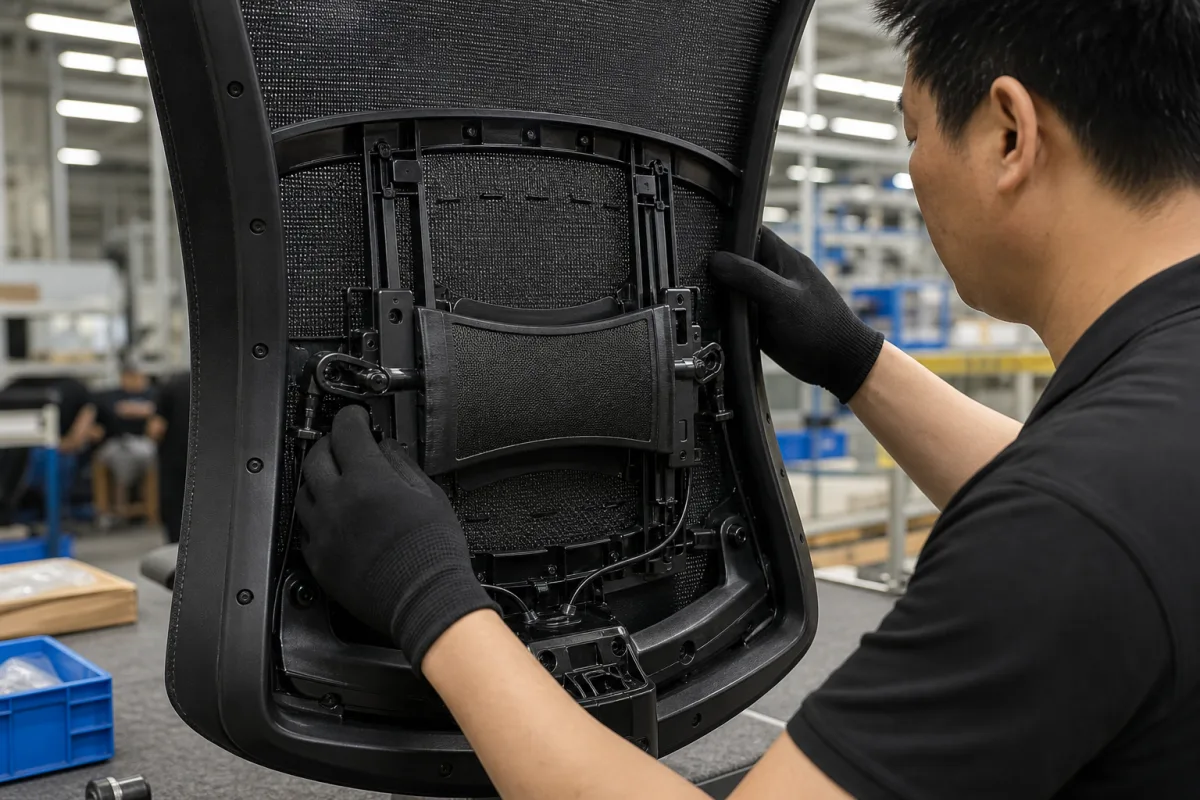
Lumbar Support in a manufacturing environment
Representative product image. Confirm appearance and specifications with the manufacturer.

Product Specifications

Technical details and manufacturing context for Lumbar Support

Definition
A specialized component integrated into ergonomic office chairs that provides adjustable support to the lumbar region of the spine, maintaining proper spinal alignment and reducing pressure on intervertebral discs during prolonged sitting. This component is typically mounted within the backrest of an office chair and features mechanisms that allow the user to adjust its height, depth, and firmness to match their individual lumbar curve. By conforming to the user's back, it distributes body weight evenly across the backrest, promoting a neutral spine posture and reducing the risk of lower back discomfort. The component is constructed from materials such as polyurethane foam for cushioning, polypropylene plastic for structural parts, and steel reinforcement for durability. Key parameters include a load capacity of 100–150 kg, an adjustment range of 50–80 mm in forward/backward travel, and an adjustment force of 20–40 N for manual operation. It operates within a temperature range of -20 to 60 °C and a relative humidity of 10–90% (non-condensing). The ingress protection rating is IP40–IP54 per IEC 60529, indicating dust and splash resistance. The material grade for structural components is PA66+30%GF (glass-fiber reinforced nylon). Visible surfaces have a surface finish of Ra 0.8–1.6 μm per ISO 1302. The component weighs 0.8–1.5 kg per unit and is designed for a minimum of 50,000 adjustment cycles per ISO 15512. These values are reference ranges for directory purposes; actual specifications must be confirmed with the legal manufacturer or supplier for the specific model and application.
Working Principle
The lumbar support operates through adjustable mechanical structures that allow the user to modify the support's height, depth, and firmness. These adjustments enable the support to conform to the user's lumbar curve, distributing body weight evenly across the backrest. By promoting a neutral spine posture, the support reduces pressure on intervertebral discs and helps maintain proper spinal alignment during prolonged sitting. The mechanism typically involves a manual adjustment system, such as a lever or knob, that moves the support forward or backward within a range of 50–80 mm. The firmness can be adjusted by changing the tension of the support surface, often using a mechanism that compresses or releases the foam padding. The load capacity of 100–150 kg ensures the support can accommodate a wide range of users. The adjustment force of 20–40 N ensures that users can easily make changes without excessive effort. The materials used, including polyurethane foam, polypropylene plastic, and steel reinforcement, provide a balance of comfort, structural integrity, and durability. The support is designed to operate within specified environmental conditions, including temperature and humidity ranges, and has an ingress protection rating that indicates resistance to dust and splashes.
Common Materials
Polyurethane foam, Polypropylene plastic, Steel reinforcement
Technical Parameters
ParameterTypical rangeNotes & selection driver
Load Capacity100–150 kgMaximum user weight
Adjustment Range50–80 mmForward/backward travel
Adjustment Force20–40 NManual operation
Operating Temperature-20–60 °CNon-condensing
Relative Humidity10–90 %Non-condensing
Ingress ProtectionIP40–IP54Dust and splash resistanceIEC 60529
Material GradePA66+30%GFGlass-fiber reinforced nylon
Surface FinishRa 0.8–1.6 μmVisible surfacesISO 1302
Weight0.8–1.5 kgPer unit
Durability50000 cyclesMinimum adjustment cyclesISO 15512

Ranges are indicative industry figures for RFQ preparation, not a supplier commitment. Confirm every value and standard with the legal manufacturer before ordering.

Components / BOM
  • Support Pad Part
    Primary contact surface that distributes pressure across lumbar region
    Material: Polyurethane foam with breathable fabric cover
  • Adjustment Mechanism
    Enables height and depth positioning via manual or automatic controls
    Material: Steel or reinforced plastic
  • Mounting Bracket Part
    Secures lumbar support to chair back frame
    Material: Steel or aluminum alloy

Industrial Ecosystem & Supply Chain Structure

Complementary Systems
Downstream Applications
Specialized Tooling

Application Fit & Sizing Matrix

Operational Limits
pressure: 0-100 kPa (contact pressure)
other spec: Max deflection: 30mm, Fatigue cycles: >1,000,000
temperature: -20°C to 60°C
Media Compatibility
✓ Office chairs ✓ Automotive seats ✓ Medical seating
Unsuitable: High-vibration industrial machinery
Sizing Data Required
  • User lumbar curve radius (anthropometric data)
  • Seat backrest dimensions
  • Required adjustability range (vertical/horizontal)

Reliability & Engineering Risk Analysis

Failure Mode & Root Cause
Mechanical fatigue of support structure
Cause: Cyclic loading from repeated adjustments and user movements leading to stress concentration at pivot points and attachment interfaces
Degradation of cushioning materials
Cause: Compression set and loss of elasticity due to continuous static loading, temperature variations, and material aging
Maintenance Indicators
  • Audible creaking, grinding, or popping sounds during adjustment or movement
  • Visible sagging, deformation, or uneven support surface indicating structural compromise
Engineering Tips
  • Implement periodic lubrication of mechanical joints and adjustment mechanisms using manufacturer-recommended lubricants to reduce friction and wear
  • Establish regular inspection intervals to check for loose fasteners, worn components, and material degradation, with prompt replacement of compromised parts

Indicative industry ranges for design and RFQ preparation. Confirm the exact figures and applicable standard with the manufacturer before specifying.

Compliance & Manufacturing Standards

Applicable Standards
ISO 7174-1: Furniture - Chairs - Determination of stability ANSI/BIFMA X5.1: General Purpose Office Chairs - Tests EN 1335-1: Office furniture - Office work chair - Part 1: Dimensions - Determination of dimensions

Quoted from the published standard.

Manufacturing Precision
  • Curvature radius: +/- 5mm
  • Mounting hole alignment: +/- 1.5mm
Quality Inspection
  • Static load test: 150kg for 1 minute
  • Ergonomic adjustment verification: 10,000 cycles minimum

Manufacturers of Lumbar Support

1 company lists this product among what they make. Company figures are quoted from each company's own website; every card states where the relationship came from.

Zhejiang Rina Home Technology Co., Ltd.
Deqing, Zhejiang, CN
Listed on the company's own website · profile compiled by CNFX from public sources
Listed there as: “TPE Lumbar Support”
View source page ↗ chinarina.com · checked 2026-09-07

Manufacturer listings support early research and capability understanding. They are not certification, ranking, or transaction guarantees.

Share this page
Technical documentation
Request current drawings, revision history, and a signed specification sheet.
Manufacturing capability
Verify equipment lists, process limits, capacity, and representative production evidence.
Inspection readiness
Confirm test methods, calibrated equipment, sampling plans, and traceable reports.
Supplier transparency
Check the legal entity, factory address, ownership, certifications, and direct contacts.

CNFX does not score or rank suppliers. Buyers must verify all claims and documents with the legal manufacturer before ordering.

Supply Chain Compatible Machinery & Devices

Drawer Slide

A drawer slide is a precision-engineered mechanical component used in furniture manufacturing to facilitate the smooth, stable, and quiet movement of drawers.

Explore Specs →
Panel Saw

A panel saw is a stationary industrial machine used in furniture manufacturing to cut large sheets of wood-based panels like plywood, MDF, and particleboard.

Explore Specs →
Furniture Caster

A furniture caster is a wheeled component mounted to the base of furniture items to enable easy movement and repositioning.

Explore Specs →
Ergonomic Office Chair

Industrial-scale manufactured seating solution for workplace ergonomics and comfort.

Explore Specs →

Frequently Asked Questions

What is the load capacity of this lumbar support?

The load capacity is specified as 100–150 kg. This is a reference range for directory purposes; the actual load capacity for a specific model must be confirmed with the legal manufacturer or supplier.

How does the adjustment mechanism work?

The lumbar support features manual adjustment mechanisms that allow the user to change the height, depth, and firmness. The depth adjustment typically moves the support forward or backward within a range of 50–80 mm, and the adjustment force required is 20–40 N. The exact mechanism may vary by model.

What materials are used in the construction?

The component is made from polyurethane foam for cushioning, polypropylene plastic for structural parts, and steel reinforcement for added strength. The material grade for structural components is PA66+30%GF (glass-fiber reinforced nylon).

What environmental conditions can it withstand?

The lumbar support is designed to operate in non-condensing conditions within a temperature range of -20 to 60 °C and a relative humidity of 10–90%. It has an ingress protection rating of IP40–IP54 per IEC 60529, indicating resistance to dust and splashes.

Data Basis

Editorial classification, named public sources where available, and source-reviewed manufacturer records.

Preliminary Technical Classification
This page supports structured research, RFQ preparation, and supplier evaluation. It does not replace buyer-led supplier qualification, standards review, or technical approval.
Buyer enquiry

Request manufacturing insight for Lumbar Support

Ask for use case, specification boundaries, supplier type, and RFQ preparation information for this product.

Where it goes
Straight to the CNFX editorial desk, and to the manufacturer if this product is linked to a claimed profile. Nothing is broadcast to a supplier list.
Your details stay here
We do not sell or rent enquiry data, and we do not add you to a mailing list. Used only to answer this request.
No commission, no middleman
CNFX is a directory. We take no cut of any order and never negotiate on a supplier's behalf.
What we don't claim
A listing is not an endorsement. Qualify every supplier and verify every figure yourself before ordering.

Your business information is used only to process this request.

Thank you! Your message has been sent. We'll respond within 1–3 business days.
Sorry, we couldn't send your message. Please try again, or email us at [email protected].

Need to Manufacture Lumbar Support?

Compare manufacturer profiles with relevant product and process capability.

Previous Product
Soft-Close Damper
Last Product
Get QuotesChat