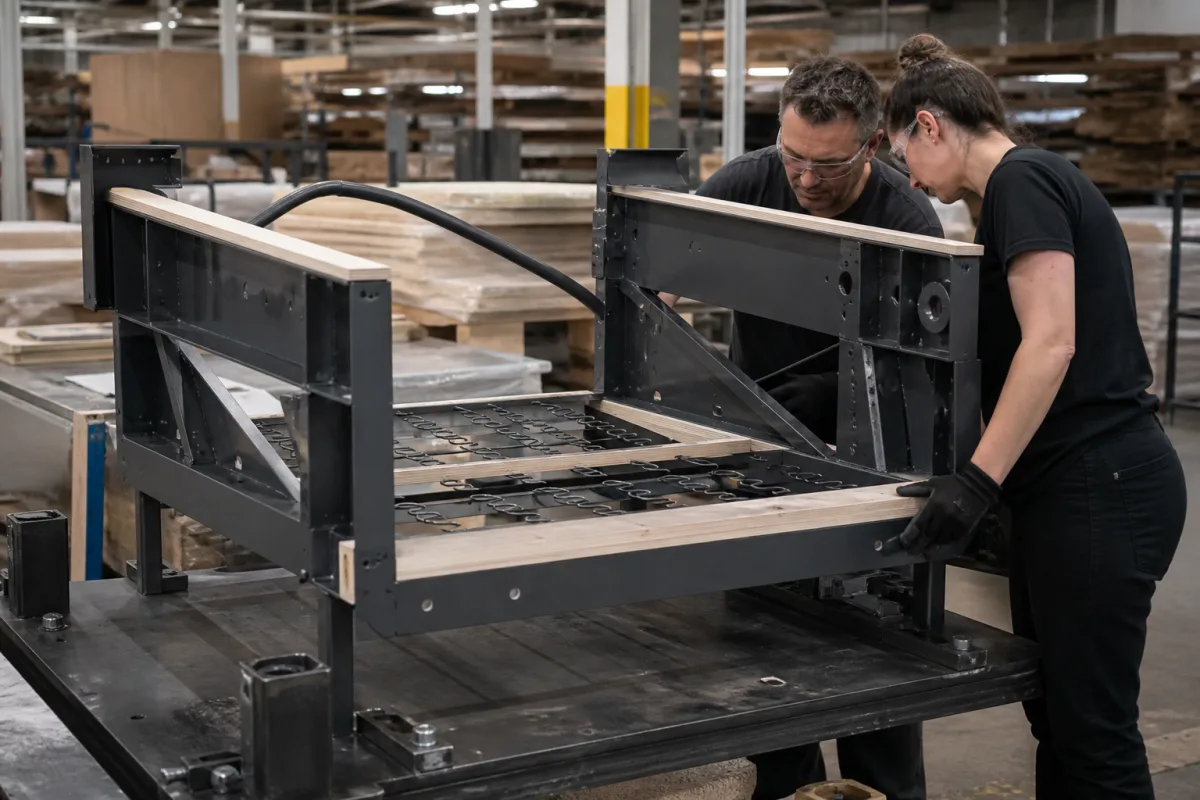
The Seating Module Frame is the foundational structural component of a modular sectional sofa system, providing the rigid support structure for individual seating units. It determines the shape, dimensions, and load-bearing capacity of each module, ensuring stability and durability while allowing for modular connection and reconfiguration within the overall sofa system. The frame is typically constructed from materials such as hardwood, plywood, engineered wood, or steel tubing, each offering different trade-offs in weight, strength, and cost. Its design must accommodate the intended seating load, which for residential use typically ranges from 150 to 250 kg per seat, as referenced in EN 12520. The frame's overall width, depth, and height are specified in millimeters, with typical ranges of 600–900 mm, 500–800 mm, and 300–450 mm respectively, excluding cushions. These dimensions influence the module's footprint and seating comfort. The frame weight, ranging from 8 to 15 kg, affects shipping and handling logistics. Material thickness, particularly for steel frames, is typically 1.5–3.0 mm, and tensile strength for steel is referenced to ASTM A36 with values between 350 and 550 MPa. Surface treatments, such as epoxy coatings of 60–120 μm, are applied to enhance corrosion resistance, with performance verified through salt spray testing per ISO 9227. Dimensional tolerances are maintained within ±2 mm to ensure proper alignment during assembly, as per ISO 2768-m. The frame is designed to operate within a temperature range of -20 to 60 °C and withstand humidity up to 95% RH without warping or rusting. Fire retardancy is addressed through compliance with EN 1021-1, which is a cigarette test required for public seating applications. As a component, the frame serves as the attachment base for upholstery, cushions, and connecting mechanisms, ensuring stability under normal seating loads. It is essential to verify model-specific values and standards with the legal manufacturer or supplier, as the listed ranges are for reference only.
The frame provides structural integrity through its rigid construction, distributing weight evenly across its support points. It serves as the attachment base for upholstery, cushions, and connecting mechanisms, while maintaining dimensional stability under normal seating loads and usage conditions. The frame's geometry and material selection determine its load-bearing capacity and resistance to deformation. For steel frames, the tensile strength and material thickness are critical factors. The frame's dimensional tolerance ensures that modules align correctly when connected, allowing for reconfiguration. The surface treatment protects against corrosion, and the fire retardancy standard ensures safety in public settings. The frame must be verified for specific load requirements and environmental conditions.