Editorial Technical Reference

Thread Tension System

This page explains how Thread Tension System is classified within Leather and Related Product Manufacturing. Technical values and manufacturer relationships are research references; confirm the current specification and supplier evidence for each order.

Technical Definition & Core Assembly

A mechanical system that regulates and maintains consistent thread tension during the stitching process in leather sewing machines.
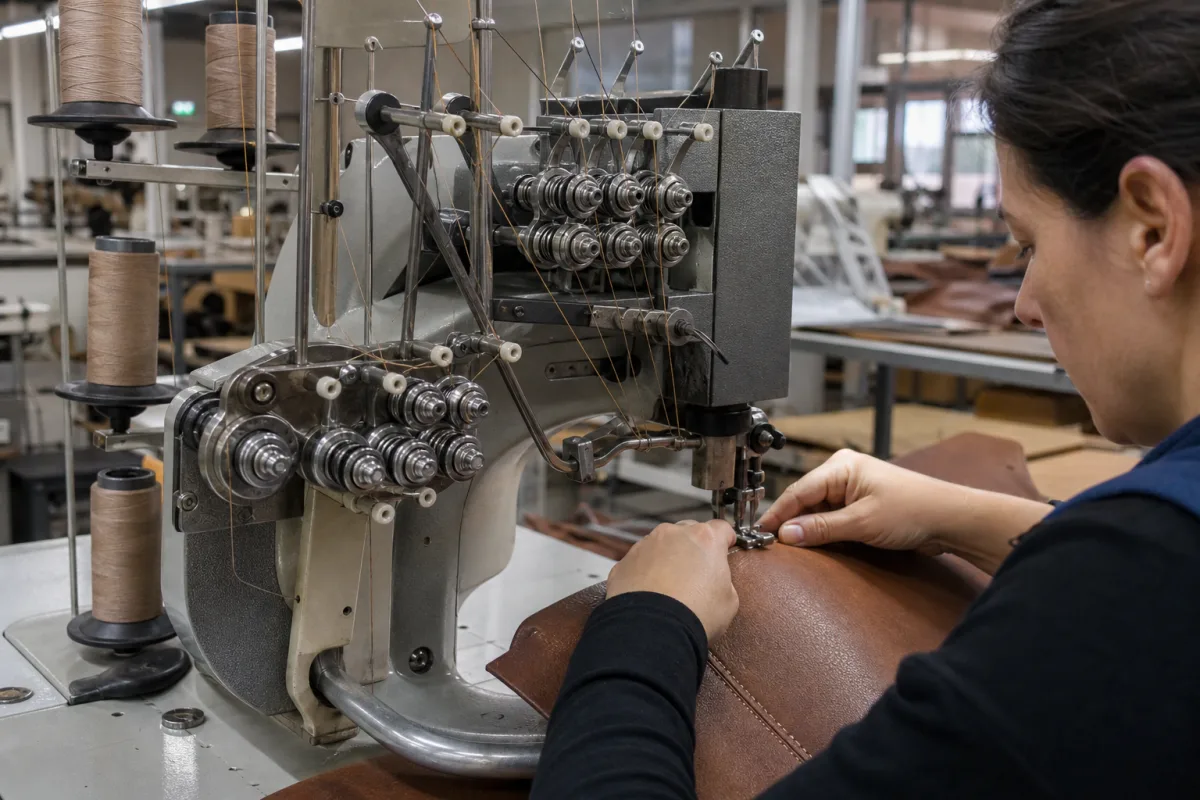
Thread Tension System in a manufacturing environment
Representative product image. Confirm appearance and specifications with the manufacturer.

Product Specifications

Technical details and manufacturing context for Thread Tension System

Definition
The Thread Tension System is a critical component of Industrial Leather Stitching Machines responsible for controlling the tightness and consistency of both upper and lower threads. It ensures uniform stitch formation, prevents thread breakage, and maintains proper seam quality by applying precise, adjustable tension to the thread as it feeds through the machine's needle and bobbin mechanisms. This system is designed for integration into leather sewing machines used in the manufacturing of leather goods, where consistent tension is essential for durable and aesthetically pleasing seams. The system operates within a specified thread tension range of 0.5–5.0 N, adjustable to suit thread thickness and material, with a tension adjustment precision of ±0.1 N to ensure consistent stitch quality. It requires an operating pressure of 0.4–0.6 MPa for adequate tension control; below 0.4 MPa, insufficient tension control may occur. The maximum thread speed is 10–15 m/s, with higher speeds potentially causing tension fluctuation. The system is designed to operate in temperatures from 0–50 °C and humidity levels of 20–80% RH; outside these ranges, material properties may be affected, and high humidity may cause thread swelling. The ingress protection rating is IP54 (per IEC 60529), protecting against dust and water splashes. The system is constructed from aluminum or steel, with materials on file including spring steel, hardened steel, and precision bearings, ensuring corrosion resistance for industrial use. The weight ranges from 0.5–1.5 kg, and dimensions are 80×40×30 mm (L×W×H), making it lightweight and compact for easy integration into most machines. As a directory listing, these values are reference ranges that must be confirmed for the specific model and application with the legal manufacturer or supplier. The system is a component, not a standalone product, and its performance depends on proper installation and calibration within the sewing machine.
Working Principle
The system uses tension discs, springs, and adjustment mechanisms to create controlled friction on the thread path. As thread passes between tension discs, the spring-loaded pressure creates resistance that can be precisely calibrated via tension dials or knobs. This maintains consistent thread pull throughout the stitching cycle, compensating for variations in thread thickness, material resistance, and sewing speed. The operating pressure of 0.4–0.6 MPa assists in maintaining the required tension, and the system is designed to operate within specified temperature and humidity ranges to ensure reliable performance.
Common Materials
Spring steel, Hardened steel, Precision bearings
Technical Parameters
ParameterTypical rangeNotes & selection driver
Thread Tension Range0.5–5.0 NAdjustable to suit thread thickness and material
Tension Adjustment Precision±0.1 NEnsures consistent stitch quality
Operating Pressure0.4–0.6 MPaBelow 0.4 MPa insufficient tension control
Max Thread Speed10–15 m/sHigher speeds may cause tension fluctuation
Operating Temperature0–50 °COutside range affects material properties
Humidity Range20–80 % RHHigh humidity may cause thread swelling
Ingress ProtectionIP54Protects against dust and water splashesIEC 60529
MaterialAluminum/SteelCorrosion-resistant for industrial use
Weight0.5–1.5 kgLightweight for easy integration
Dimensions (L×W×H)80×40×30 mmCompact design fits most machines

Ranges are indicative industry figures for RFQ preparation, not a supplier commitment. Confirm every value and standard with the legal manufacturer before ordering.

Components / BOM
  • Tension Discs Part
    Create controlled friction on thread by applying pressure between precision discs
    Material: Hardened steel
  • Tension Spring Part
    Provides consistent pressure to tension discs and allows for adjustment
    Material: Spring steel
  • Tension Adjustment Knob Part
    Allows operator to calibrate tension force by compressing or releasing spring pressure
    Material: Plastic or metal alloy
  • Thread Guide Part
    Directs thread through tension system at optimal angle to prevent twisting or snagging
    Material: Ceramic or hardened steel

Industrial Ecosystem & Supply Chain Structure

Complementary Systems
Downstream Applications
Specialized Tooling

Application Fit & Sizing Matrix

Operational Limits
pressure: Max thread tension: 0.5-5.0 N (adjustable), mechanical spring pressure only
other spec: Thread diameter range: 0.1-1.0 mm, vibration tolerance: < 0.5 mm amplitude at 10-100 Hz
temperature: 0°C to 50°C (operating), -10°C to 60°C (storage)
Media Compatibility
✓ Synthetic sewing threads (polyester, nylon) ✓ Natural fiber threads (cotton, silk) ✓ Coated/waxed leatherworking threads
Unsuitable: High-abrasion metallic wires or carbon fiber threads
Sizing Data Required
  • Thread diameter and material type
  • Required tension force range (N)
  • Sewing machine model and mounting interface

Reliability & Engineering Risk Analysis

Failure Mode & Root Cause
Thread slippage or inconsistent tension
Cause: Wear or contamination of tensioning components (rollers, guides, sensors) leading to loss of precision control
Mechanical fatigue or fracture of tensioning elements
Cause: Cyclic loading exceeding material endurance limits due to improper tension settings or shock loads
Maintenance Indicators
  • Audible clicking, grinding, or irregular noise from tensioning mechanism during operation
  • Visible thread breakage, fraying, or inconsistent thread path indicating tension instability
Engineering Tips
  • Implement predictive maintenance using vibration analysis and tension sensor trend monitoring to detect early degradation
  • Establish precision alignment protocols and controlled break-in procedures for new tensioning components to prevent premature wear

Indicative industry ranges for design and RFQ preparation. Confirm the exact figures and applicable standard with the manufacturer before specifying.

Compliance & Manufacturing Standards

Applicable Standards
ANSI/ASME B1.1-2019 - Unified Inch Screw Threads DIN 103-1:1999 - ISO metric screw threads

Quoted from the published standard.

Manufacturing Precision
  • Thread pitch: +/-0.01mm
  • Tension force accuracy: +/-2% of set value
Quality Inspection
  • Torque calibration verification
  • Thread profile measurement using optical comparator

Manufacturers of Thread Tension System

Manufacturer profiles associated with Thread Tension System.

Sourcing Thread Tension System from China?
Tell us your specification and target quantity — we will match it against manufacturer records and come back with the factories that fit.
Request manufacturers We manufacture this

Manufacturer listings support early research and capability understanding. They are not certification, ranking, or transaction guarantees.

Share this page
Technical documentation
Request current drawings, revision history, and a signed specification sheet.
Manufacturing capability
Verify equipment lists, process limits, capacity, and representative production evidence.
Inspection readiness
Confirm test methods, calibrated equipment, sampling plans, and traceable reports.
Supplier transparency
Check the legal entity, factory address, ownership, certifications, and direct contacts.

CNFX does not score or rank suppliers. Buyers must verify all claims and documents with the legal manufacturer before ordering.

Supply Chain Compatible Machinery & Devices

Integrated Leather Processing System

The Integrated Leather Processing System is a coordinated multi-module production line designed for the tanning and dressing of leather.

Explore Specs →
Industrial Leather Skiving Machine

Precision machine for thinning leather edges in luggage, handbag, and saddlery manufacturing

Explore Specs →
Automated Footwear Assembly System

Integrated production line for automated footwear manufacturing with modular assembly stations.

Explore Specs →
Leather Hydraulic Piston Seal

This precision-engineered leather seal is designed specifically for hydraulic piston applications.

Explore Specs →

Frequently Asked Questions

What is the thread tension range of this system?

The thread tension range is 0.5–5.0 N, adjustable to suit thread thickness and material. The adjustment precision is ±0.1 N to ensure consistent stitch quality. These are reference values; confirm for your specific model.

What operating pressure is required?

The operating pressure is 0.4–0.6 MPa. Below 0.4 MPa, tension control may be insufficient. Verify the required pressure with the manufacturer for your application.

What are the environmental limits?

The system operates in temperatures from 0–50 °C and humidity of 20–80% RH. Outside these ranges, material properties may be affected, and high humidity may cause thread swelling. The ingress protection is IP54 per IEC 60529.

What materials are used in construction?

The system is made of aluminum or steel, with components such as spring steel, hardened steel, and precision bearings. These materials provide corrosion resistance for industrial use. Confirm material grades with the supplier.

Data Basis

Editorial classification, named public sources where available, and source-reviewed manufacturer records.

Preliminary Technical Classification
This page supports structured research, RFQ preparation, and supplier evaluation. It does not replace buyer-led supplier qualification, standards review, or technical approval.
Buyer enquiry

Request manufacturing insight for Thread Tension System

Ask for use case, specification boundaries, supplier type, and RFQ preparation information for this product.

Where it goes
Straight to the CNFX editorial desk, and to the manufacturer if this product is linked to a claimed profile. Nothing is broadcast to a supplier list.
Your details stay here
We do not sell or rent enquiry data, and we do not add you to a mailing list. Used only to answer this request.
No commission, no middleman
CNFX is a directory. We take no cut of any order and never negotiate on a supplier's behalf.
What we don't claim
A listing is not an endorsement. Qualify every supplier and verify every figure yourself before ordering.

Your business information is used only to process this request.

Thank you! Your message has been sent. We'll respond within 1–3 business days.
Sorry, we couldn't send your message. Please try again, or email us at [email protected].

Need to Manufacture Thread Tension System?

Compare manufacturer profiles with relevant product and process capability.

Previous Product
Loading/Unloading Door
Last Product
Get QuotesChat