Crimping Head Assembly
View system integration details
This page explains how Actuator (e.g., hydraulic cylinder) is classified within Machinery and Equipment Manufacturing. Technical values and manufacturer relationships are research references; confirm the current specification and supplier evidence for each order.
A mechanical device that converts energy into motion to apply force in a crimping head assembly.
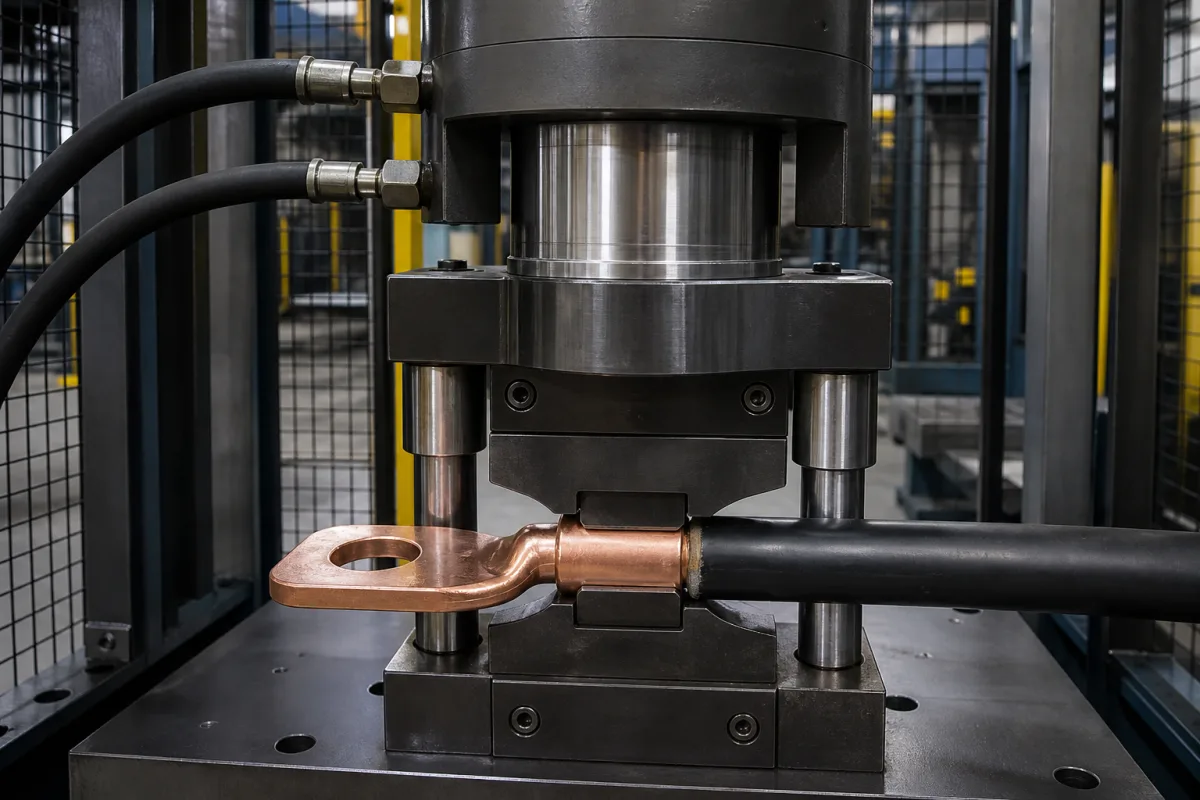
Technical details and manufacturing context for Actuator (e.g., hydraulic cylinder)
What to specify in your RFQ
These are the quantities to specify to the manufacturer when sizing or requesting a quote. The manufacturer's own documentation governs the exact figures and applicable standard.
| pressure: | Up to 300 bar (4350 psi) |
| flow rate: | 5-100 L/min (1.3-26.4 GPM) |
| temperature: | -20°C to 80°C |
| slurry concentration: | Not applicable (hydraulic fluid only) |
Indicative industry ranges for design and RFQ preparation. Confirm the exact figures and applicable standard with the manufacturer before specifying.
Quoted from the published standard.
A practical evidence checklist for RFQ preparation and supplier evaluation.
Compare the published product scope and source details, then include your specifications and quantity in an enquiry.
Manufacturer profiles associated with Actuator (e.g., hydraulic cylinder).
Explore company information and manufacturing capabilities, then discuss the scope of your project with a relevant supplier.
Ask for use case, specification boundaries, supplier type, and RFQ preparation information for this product.
The actuator provides the linear force needed to compress or deform materials during crimping. It converts energy into motion, driving the crimping dies to create a secure connection.
Selection depends on required force, stroke, cycle time, and available power source. Consult the manufacturer for model-specific specifications and verify that the actuator meets your application's demands.
Regularly inspect seals, rods, and connections for leaks or wear. Monitor for reduced force output or unusual noises, and replace worn seals or components as needed.
Common failures include seal leakage, piston rod damage, and exceeding rated force or stroke limits. These can lead to loss of pressure, reduced force, or mechanical failure.
This component is essential for the following industrial systems and equipment:
Editorial classification, named public sources where available, and source-reviewed manufacturer records.
Compare manufacturer profiles with relevant product and process capability.