Bending Arm Assembly
View system integration details
This page explains how Bending Arm Frame is classified within Machinery and Equipment Manufacturing. Technical values and manufacturer relationships are research references; confirm the current specification and supplier evidence for each order.
The structural support component of a bending arm assembly that provides rigidity and mounting points for other parts.
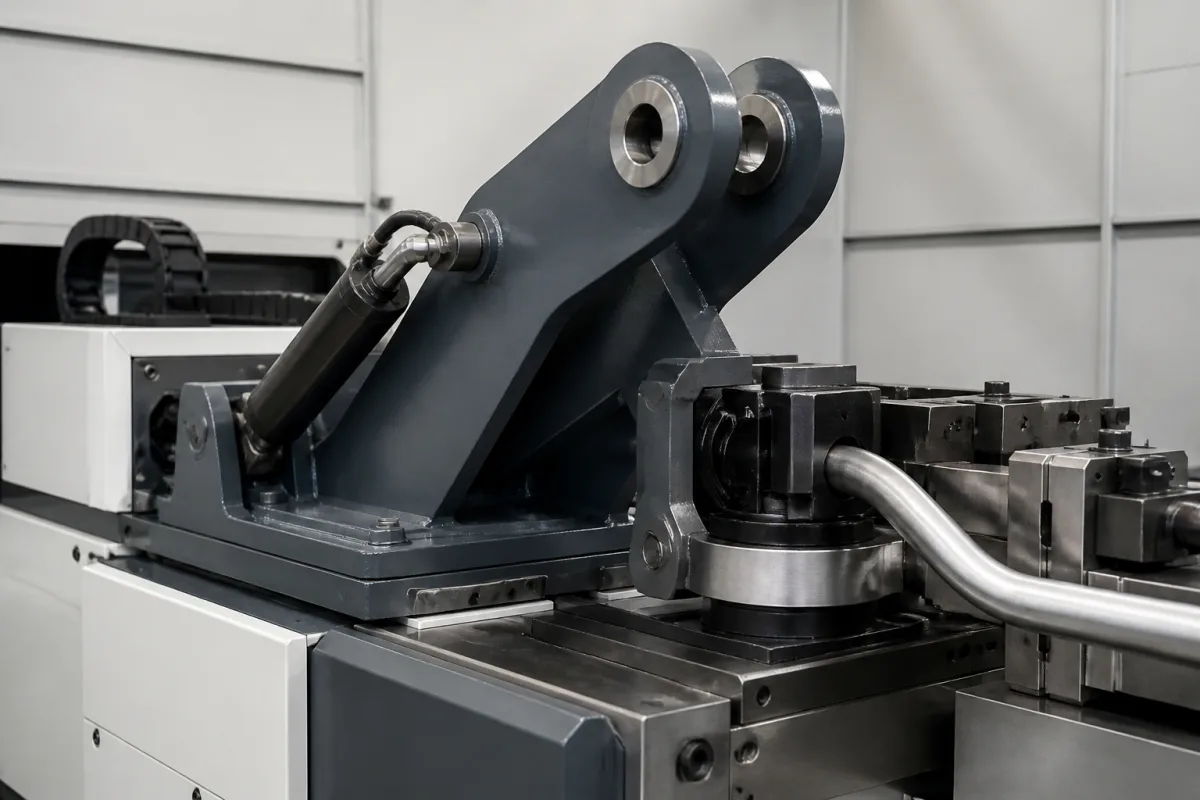
Technical details and manufacturing context for Bending Arm Frame
| Parameter | Typical range | Notes & selection driver |
|---|---|---|
| Rated Load Capacity | 500–2000 kg | Maximum load the frame can support without permanent deformation |
| Bending Arm Length | 300–1200 mm | Determines reach and bending capacity |
| Frame Width | 150–500 mm | Affects mounting compatibility |
| Frame Height | 200–600 mm | Affects mounting compatibility |
| Material Grade | Q235–Q345 | Higher grade for higher strength requirementsGB/T 700 |
| Surface Treatment | 20–40 μm | Hot-dip galvanizing thickness for corrosion resistanceISO 1461 |
| Mounting Hole Diameter | 10–20 mm | Must match mating components |
| Mounting Hole Tolerance | ±0.1 mm | Ensures proper fitISO 2768-m |
| Flatness Tolerance | 0.5–1.0 mm | Critical for even load distributionISO 2768-m |
| Weight | 50–300 kg | Affects handling and installation |
| Operating Temperature | -20–80 °C | Beyond this range material properties may degrade |
| Surface Hardness | 150–250 HB | Resistance to wear and indentationISO 6506-1 |
Ranges are indicative industry figures for RFQ preparation, not a supplier commitment. Confirm every value and standard with the legal manufacturer before ordering.
| pressure: | Up to 10 MPa (static load) |
| other spec: | Max dynamic load: 5 kN, Vibration tolerance: 5-200 Hz at 0.5g max |
| temperature: | -40°C to 150°C |
Indicative industry ranges for design and RFQ preparation. Confirm the exact figures and applicable standard with the manufacturer before specifying.
Quoted from the published standard.
A practical evidence checklist for RFQ preparation and supplier evaluation.
Compare the published product scope and source details, then include your specifications and quantity in an enquiry.
Manufacturer profiles associated with Bending Arm Frame.
Explore company information and manufacturing capabilities, then discuss the scope of your project with a relevant supplier.
Ask for use case, specification boundaries, supplier type, and RFQ preparation information for this product.
The primary function is to provide a rigid structural foundation that supports and aligns all other components of a bending arm assembly, ensuring accurate and stable bending operations.
Common materials include structural steel and cast iron, as listed in the product data. The specific material grade should be confirmed with the manufacturer for the intended application.
The rated load capacity typically ranges from 500 to 2000 kg, but this is a reference range. Always verify the exact capacity for the specific model with the manufacturer.
Check the product datasheet for parameters such as dimensions, tolerances, material grade, and surface treatment. Confirm that these values meet your application requirements and consult the manufacturer for any clarifications.
This component is essential for the following industrial systems and equipment:
Editorial classification, named public sources where available, and source-reviewed manufacturer records.
Compare manufacturer profiles with relevant product and process capability.