Industry-Verified Manufacturing Data (2026)

Brake/Drive Unit

Based on aggregated insights from multiple verified factory profiles within the CNFX directory, the standard Brake/Drive Unit used in the Machinery and Equipment Manufacturing sector typically supports operational capacities ranging from standard industrial configurations to heavy-duty production requirements.

Technical Definition & Core Assembly

A canonical Brake/Drive Unit is characterized by the integration of Electromagnetic Brake Assembly and Torque Transmission Shaft. In industrial production environments, manufacturers listed on CNFX commonly emphasize Electromagnetic coil steel construction to support stable, high-cycle operation across diverse manufacturing scenarios.

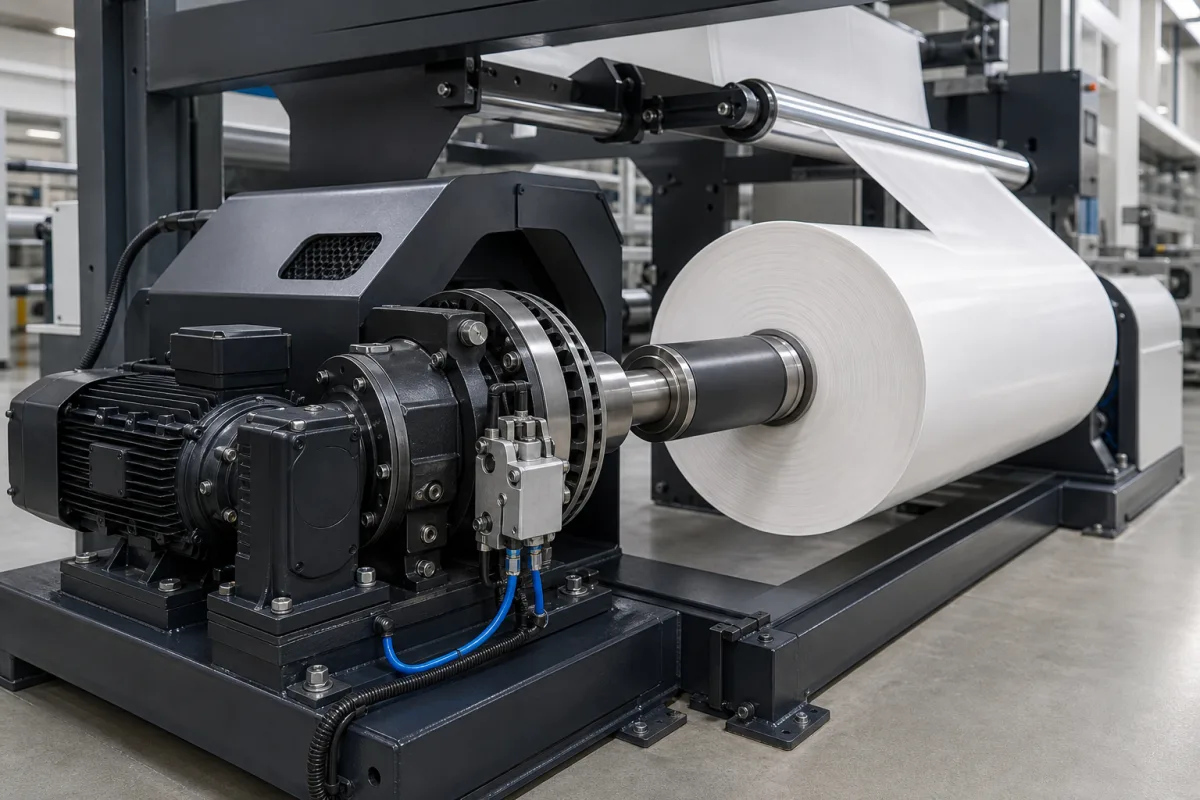
A mechanical-electrical component that provides controlled braking and driving force to regulate web tension in continuous material processing systems.
Product Specifications

Technical details and manufacturing context for Brake/Drive Unit

Definition
The Brake/Drive Unit is a critical subassembly within Web Tension Control Units, responsible for applying precise braking torque to decelerate or maintain tension on moving webs (such as paper, film, textiles, or metal foil), and/or providing controlled driving force to accelerate or maintain web speed. It ensures consistent material handling by dynamically adjusting force output based on tension feedback signals.
Working Principle
The unit operates by converting electrical control signals (typically from a tension controller) into mechanical force. For braking, electromagnetic or pneumatic systems engage friction surfaces to generate resistance. For driving, electric motors or servo systems provide rotational force. Force modulation is achieved through variable current, pressure, or torque control to match real-time tension requirements.
Common Materials
Electromagnetic coil steel, Friction composite material, Aluminum alloy housing, Copper windings
Technical Parameters
  • Maximum braking/driving torque capacity (N·m) Customizable
Components / BOM
  • Electromagnetic Brake Assembly
    Generates braking force through electromagnetic engagement of friction surfaces
    Material: Steel core with copper coil
  • Torque Transmission Shaft
    Transfers rotational force between the unit and web handling rollers
    Material: Hardened steel
  • Cooling System
    Dissipates heat generated during continuous braking operations
    Material: Aluminum fins with thermal paste
Engineering Reasoning
0.5-15 kN braking force, 0-3000 rpm rotational speed, 24-48 VDC control voltage
Brake lining temperature exceeding 350°C causes thermal degradation, friction coefficient dropping below 0.25 initiates uncontrolled slip
Design Rationale: Thermal runaway from continuous slip energy dissipation exceeding 2.5 kW heat dissipation capacity, leading to brake fade through Arrhenius-type material degradation
Risk Mitigation (FMEA)
Trigger Electromagnetic coil insulation breakdown at 150°C Curie point
Mode: Loss of magnetic flux density below 0.8 Tesla, resulting in 70% reduction in braking torque
Strategy: Embedded PTC thermistors with automatic power cutoff at 130°C, Class H insulation rated for 180°C continuous operation
Trigger Harmonic distortion exceeding 8% THD in PWM drive signals
Mode: Resonant vibration at 1200-1800 Hz natural frequency causing bearing race spalling
Strategy: LC filter network with 3 dB cutoff at 500 Hz, vibration monitoring with ISO 10816-3 Category II limits

Industry Taxonomies & Aliases

Commonly used trade names and technical identifiers for Brake/Drive Unit.

Applied To / Applications

This component is essential for the following industrial systems and equipment:

Industrial Ecosystem & Supply Chain DNA

Complementary Systems
Downstream Applications
Specialized Tooling

Application Fit & Sizing Matrix

Operational Limits
pressure: 0 to 150 psi
other spec: Max web speed: 1000 m/min, Tension range: 5-500 N
temperature: -10°C to +80°C
Media Compatibility
✓ Paper webs ✓ Plastic films ✓ Textile fabrics
Unsuitable: Abrasive slurries or corrosive chemical environments
Sizing Data Required
  • Maximum web tension required (N)
  • Web width (mm)
  • Material coefficient of friction

Reliability & Engineering Risk Analysis

Failure Mode & Root Cause
Brake Lining Degradation
Cause: Excessive heat generation from frequent or prolonged braking, leading to glazing, cracking, or delamination of friction material, reducing stopping power.
Drive Unit Bearing Failure
Cause: Contamination ingress (dust, moisture) or improper lubrication causing pitting, spalling, or seizure, leading to increased vibration and eventual catastrophic failure.
Maintenance Indicators
  • Unusual grinding or screeching noises during braking or acceleration
  • Excessive vibration or shudder felt through the vehicle or machinery frame during operation
Engineering Tips
  • Implement condition-based monitoring using vibration analysis and thermal imaging to detect early bearing wear and brake overheating before failure.
  • Establish strict preventive maintenance schedules for lubrication replacement and brake lining inspection, using manufacturer-recommended fluids and materials to prevent contamination and ensure optimal performance.

Compliance & Manufacturing Standards

Reference Standards
ISO 26262:2018 (Functional Safety for Road Vehicles) ANSI/SAE J2521:2016 (Brake System Dynamometer Test Procedure) DIN 743-1:2012 (Calculation of Load Capacity of Shafts and Axles)
Manufacturing Precision
  • Bore Diameter: +/-0.02mm
  • Parallelism of Mounting Surfaces: 0.1mm
Quality Inspection
  • Dye Penetrant Test for Surface Defects
  • Torque Performance Verification Test

Factories Producing Brake/Drive Unit

Verified manufacturers with capability to produce this product in China

✓ 96% Supplier Capability Match Found

P Project Engineer from Australia Feb 02, 2026
★★★★★
"Reliable performance in harsh Machinery and Equipment Manufacturing environments. No issues with the Brake/Drive Unit so far."
Technical Specifications Verified
S Sourcing Manager from Singapore Jan 30, 2026
★★★★★
"Testing the Brake/Drive Unit now; the technical reliability results are within 1% of the laboratory datasheet."
Technical Specifications Verified
P Procurement Specialist from Germany Jan 27, 2026
★★★★★
"Impressive build quality. Especially the technical reliability is very stable during long-term operation."
Technical Specifications Verified
Verification Protocol

“Feedback is collected from verified sourcing managers during RFQ (Request for Quote) and factory evaluation processes on CNFX. These reports represent historical performance data and technical audit summaries from our B2B manufacturing network.”

7 sourcing managers are analyzing this specification now. Last inquiry for Brake/Drive Unit from Turkey (17m ago).

Supply Chain Compatible Machinery & Devices

Hydraulic Press

Industrial machine using hydraulic pressure to compress, form, or assemble materials

Explore Specs →
Heavy-Duty CNC Plasma Cutting Machine

Industrial machine for precision metal cutting using plasma arc technology

Explore Specs →
Automated Assembly Line System

Integrated production system for sequential component assembly operations

Explore Specs →
Automated Powder Coating System

Integrated industrial system for applying dry powder coatings to metal substrates.

Explore Specs →

Frequently Asked Questions

What is the primary function of a Brake/Drive Unit in machinery manufacturing?

The Brake/Drive Unit provides controlled braking and driving force to precisely regulate web tension in continuous material processing systems, ensuring consistent material handling and production quality.

What materials are used in the construction of this Brake/Drive Unit?

This unit is constructed from electromagnetic coil steel for magnetic components, friction composite material for braking surfaces, aluminum alloy housing for durability and heat dissipation, and copper windings for electrical efficiency.

What are the key components included in the Brake/Drive Unit BOM?

The Bill of Materials includes a Cooling System for thermal management, an Electromagnetic Brake Assembly for controlled braking, and a Torque Transmission Shaft for force transfer within continuous processing systems.

Can I contact factories directly on CNFX?

CNFX is an open directory, not a transaction platform. Each factory profile provides direct contact information and production details to help you initiate direct inquiries with Chinese suppliers.

Get Quote for Brake/Drive Unit

Request technical pricing, lead times, or customized specifications for Brake/Drive Unit directly from verified manufacturing units.

Your business information is encrypted and only shared with verified Brake/Drive Unit suppliers.

Thank you! Your message has been sent. We'll respond within 1–3 business days.

Need to Manufacture Brake/Drive Unit?

Connect with verified factories specializing in this product category

Add Your Factory Contact Us
Previous Product
Brake/Drag Unit
Next Product
Brake/Locking Mechanism