Condensate Recovery System
View system integration details
This page explains how Condensate Collection Vessel is classified within Machinery and Equipment Manufacturing. Technical values and manufacturer relationships are research references; confirm the current specification and supplier evidence for each order.
A pressure vessel designed to collect and temporarily store condensate from steam systems before further processing or disposal.
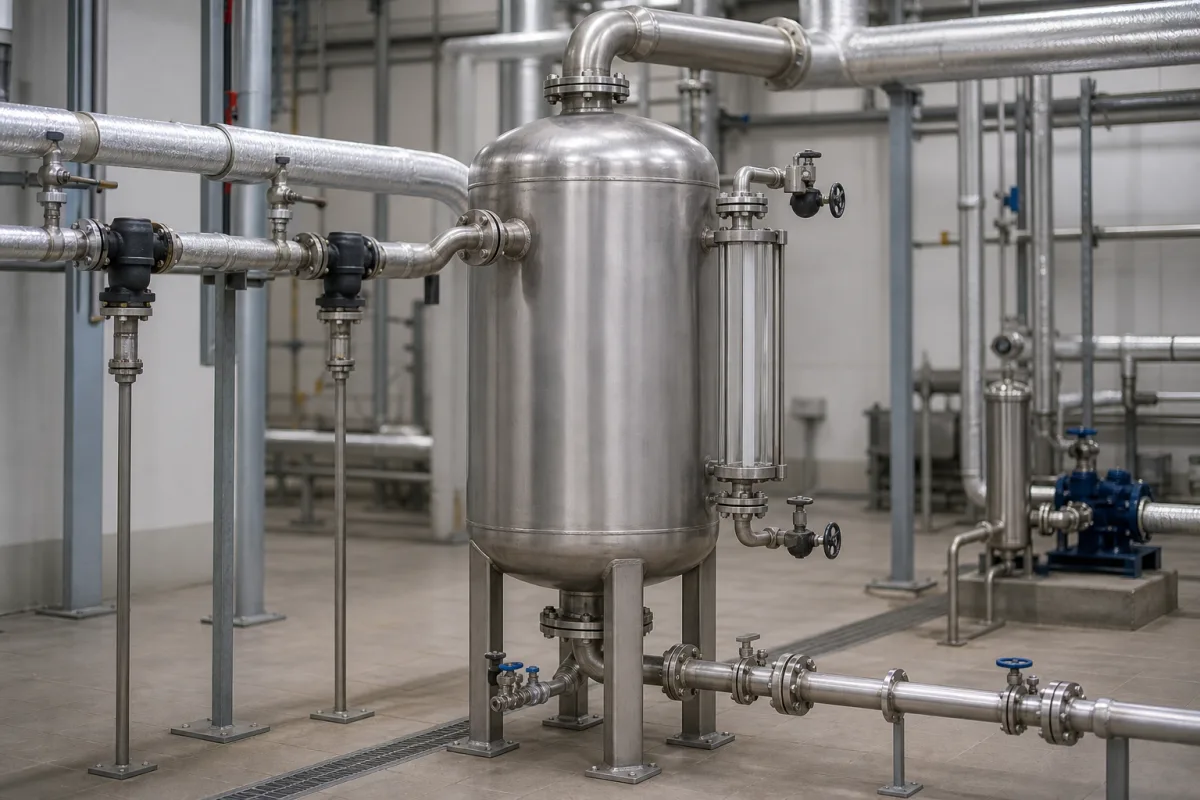
Technical details and manufacturing context for Condensate Collection Vessel
| Parameter | Typical range | Notes & selection driver |
|---|---|---|
| Design Pressure | 1.0–1.6 MPa | Above 1.6 MPa requires special designGB/T 150 |
| Design Temperature | 150–200 °C | Higher temperature reduces material strengthGB/T 150 |
| Volume | 0.5–5 m³ | Select based on condensate flow rate |
| Material | Q345R | Carbon steel for general serviceGB/T 713 |
| Corrosion Allowance | 1.5–3 mm | Higher for corrosive condensateGB/T 150 |
| Wall Thickness | 6–20 mm | Calculated from pressure and diameterGB/T 150 |
| Inlet/Outlet Diameter | DN50–DN200 mm | Match piping sizeGB/T 9119 |
| Weight | 200–2000 kg | Affects installation and foundation |
| Leak Test Pressure | 1.5–2.4 MPa | 1.5 times design pressureGB/T 150 |
| Insulation Thickness | 50–100 mm | For thermal efficiencyGB/T 4272 |
Ranges are indicative industry figures for RFQ preparation, not a supplier commitment. Confirm every value and standard with the legal manufacturer before ordering.
| pressure: | 0 to 10 bar (g) |
| flow rate: | Up to 50 m³/h |
| temperature: | -20°C to 200°C |
| slurry concentration: | Up to 5% solids by weight |
Indicative industry ranges for design and RFQ preparation. Confirm the exact figures and applicable standard with the manufacturer before specifying.
Quoted from the published standard.
A practical evidence checklist for RFQ preparation and supplier evaluation.
Compare the published product scope and source details, then include your specifications and quantity in an enquiry.
Manufacturer profiles associated with Condensate Collection Vessel.
Explore company information and manufacturing capabilities, then discuss the scope of your project with a relevant supplier.
Ask for use case, specification boundaries, supplier type, and RFQ preparation information for this product.
The primary function is to collect and temporarily store condensate from steam systems, providing a buffer for temperature stabilization, pressure equalization, and controlled transfer to treatment or reuse stages.
Common materials include carbon steel, stainless steel (304/316L), and pressure-rated alloy materials. The specific material grade, such as Q345R, should be confirmed based on the application and service conditions.
Key parameters include design pressure, design temperature, volume, material, corrosion allowance, wall thickness, inlet/outlet diameter, weight, leak test pressure, and insulation thickness. These values must be confirmed with the manufacturer for the specific model.
Relevant standards may include GB/T 150 for pressure vessels, GB/T 713 for steel plates, GB/T 9119 for pipe flanges, and GB/T 4272 for insulation. These standards serve as references for design, manufacturing, and testing.
This component is essential for the following industrial systems and equipment:
Editorial classification, named public sources where available, and source-reviewed manufacturer records.
Compare manufacturer profiles with relevant product and process capability.