Industry-Verified Manufacturing Data (2026)

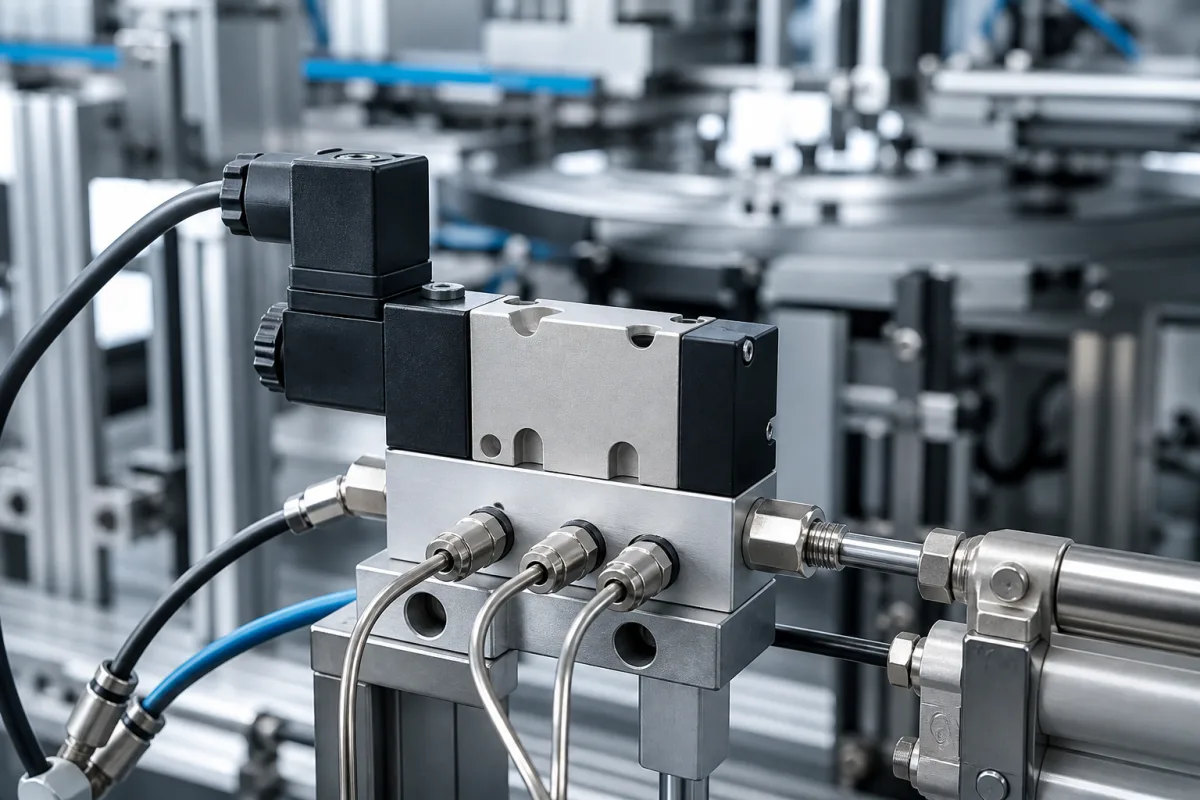
Control Solenoid Valve

Based on aggregated insights from multiple verified factory profiles within the CNFX directory, the standard Control Solenoid Valve used in the Machinery and Equipment Manufacturing sector typically supports operational capacities ranging from standard industrial configurations to heavy-duty production requirements.

Technical Definition & Core Assembly

A canonical Control Solenoid Valve is characterized by the integration of Solenoid Coil and Plunger/Armature. In industrial production environments, manufacturers listed on CNFX commonly emphasize Brass construction to support stable, high-cycle operation across diverse manufacturing scenarios.

An electrically operated valve that controls fluid flow in automated systems.

Product Specifications

Technical details and manufacturing context for Control Solenoid Valve

Definition
A control solenoid valve is an electromechanical component within a reject mechanism that precisely regulates the flow of air or liquid to actuate rejection actions. It converts electrical signals into mechanical movement to open or close fluid pathways, enabling rapid and controlled rejection of defective items on production lines.
Working Principle
When an electrical current is applied to the solenoid coil, it generates a magnetic field that moves a plunger or armature. This mechanical movement either opens or closes the valve orifice, allowing or blocking fluid flow. When current is removed, a spring typically returns the valve to its default position.
Common Materials
Brass, Stainless Steel, Plastic (POM/Nylon)
Technical Parameters
  • Orifice diameter determining flow capacity (mm) Standard Spec
Components / BOM
  • Solenoid Coil
    Generates magnetic field when energized
    Material: Copper wire with insulation
  • Plunger/Armature
    Moves to open/close valve orifice
    Material: Magnetic stainless steel
  • Valve Body
    Houses internal components and provides fluid connections
    Material: Brass or stainless steel
  • Return Spring
    Returns plunger to default position when de-energized
    Material: Stainless steel
Engineering Reasoning
0.5-20 bar
25 bar (burst pressure) or 0.3 bar (minimum operating pressure)
Design Rationale: Coil insulation breakdown at 155°C (Class F insulation thermal limit) or seal extrusion at 25 bar differential pressure
Risk Mitigation (FMEA)
Trigger Coil overheating to 180°C
Mode: Insulation breakdown causing short circuit
Strategy: PTC thermistor embedded in coil with 140°C trip point
Trigger Contaminant particles >15 μm in fluid
Mode: Spool valve sticking in open/closed position
Strategy: 10 μm absolute filtration with differential pressure monitoring

Industry Taxonomies & Aliases

Commonly used trade names and technical identifiers for Control Solenoid Valve.

Applied To / Applications

This component is essential for the following industrial systems and equipment:

Industrial Ecosystem & Supply Chain DNA

Complementary Systems
Downstream Applications
Specialized Tooling

Application Fit & Sizing Matrix

Operational Limits
pressure: 0 to 10 bar (max operating pressure)
flow rate: 0.1 to 100 L/min (depending on orifice size)
temperature: -20°C to 120°C
slurry concentration: Not recommended for slurries >5% solids by volume
Media Compatibility
✓ Compressed air ✓ Hydraulic oil (mineral-based) ✓ Water (deionized or filtered)
Unsuitable: Corrosive chemicals (e.g., strong acids, chlorinated solvents)
Sizing Data Required
  • Required flow rate (L/min)
  • System pressure (bar)
  • Fluid viscosity (cSt)

Reliability & Engineering Risk Analysis

Failure Mode & Root Cause
Coil Burnout
Cause: Excessive voltage, prolonged energization beyond duty cycle, or overheating due to inadequate cooling or ambient temperature
Spool Sticking or Binding
Cause: Contamination from particulates, moisture, or oil degradation; wear from abrasive particles; or corrosion due to moisture ingress
Maintenance Indicators
  • Audible buzzing or chattering from the valve during operation
  • Visible leakage from valve body or solenoid housing
Engineering Tips
  • Implement regular filtration maintenance and moisture control in the fluid system to prevent contamination
  • Ensure proper voltage regulation and install thermal protection devices to prevent coil overheating

Compliance & Manufacturing Standards

Reference Standards
ISO 5599-1: Pneumatic fluid power - Five-port directional control valves - Part 1: Mounting interface surfaces without electrical connector ANSI/NFPA T3.21.4: Fluid Power Standards - Solenoid Valves DIN EN 175301-803: Detail specification: Rectangular connectors for frequencies below 3 MHz - Solenoid valve connectors
Manufacturing Precision
  • Bore diameter: +/-0.01mm
  • Sealing surface flatness: 0.05mm
Quality Inspection
  • Pressure decay leak test
  • Coil electrical resistance and insulation test

Factories Producing Control Solenoid Valve

Verified manufacturers with capability to produce this product in China

✓ 96% Supplier Capability Match Found

P Project Engineer from Australia Jan 17, 2026
★★★★★
"The technical documentation for this Control Solenoid Valve is very thorough, especially regarding technical reliability."
Technical Specifications Verified
S Sourcing Manager from Singapore Jan 14, 2026
★★★★★
"Reliable performance in harsh Machinery and Equipment Manufacturing environments. No issues with the Control Solenoid Valve so far."
Technical Specifications Verified
P Procurement Specialist from Germany Jan 11, 2026
★★★★★
"Testing the Control Solenoid Valve now; the technical reliability results are within 1% of the laboratory datasheet."
Technical Specifications Verified
Verification Protocol

“Feedback is collected from verified sourcing managers during RFQ (Request for Quote) and factory evaluation processes on CNFX. These reports represent historical performance data and technical audit summaries from our B2B manufacturing network.”

6 sourcing managers are analyzing this specification now. Last inquiry for Control Solenoid Valve from UAE (1h ago).

Supply Chain Compatible Machinery & Devices

Heavy-Duty CNC Plasma Cutting Machine

Industrial machine for precision metal cutting using plasma arc technology

Explore Specs →
Automated Assembly Line System

Integrated production system for sequential component assembly operations

Explore Specs →
Automated Powder Coating System

Integrated industrial system for applying dry powder coatings to metal substrates.

Explore Specs →
Centrifugal Pump Impeller

Rotating component that transfers energy to fluid in centrifugal pumps.

Explore Specs →

Frequently Asked Questions

What materials are used in this control solenoid valve?

This control solenoid valve is constructed from durable materials including brass, stainless steel, and engineering plastics like POM (Polyoxymethylene) or Nylon, ensuring corrosion resistance and longevity in industrial environments.

How does a control solenoid valve work in automated machinery?

An electrically operated control solenoid valve uses a solenoid coil to generate a magnetic field, moving a plunger/armature to open or close the valve, precisely controlling fluid flow in automated systems without manual intervention.

What are the key components in the BOM for this solenoid valve?

The bill of materials includes essential components: plunger/armature for actuation, return spring for resetting, solenoid coil for electromagnetic operation, and valve body housing the assembly, ensuring reliable performance in machinery applications.

Can I contact factories directly on CNFX?

CNFX is an open directory, not a transaction platform. Each factory profile provides direct contact information and production details to help you initiate direct inquiries with Chinese suppliers.

Get Quote for Control Solenoid Valve

Request technical pricing, lead times, or customized specifications for Control Solenoid Valve directly from verified manufacturing units.

Your business information is encrypted and only shared with verified Control Solenoid Valve suppliers.

Thank you! Your message has been sent. We'll respond within 1–3 business days.

Need to Manufacture Control Solenoid Valve?

Connect with verified factories specializing in this product category

Add Your Factory Contact Us
Previous Product
Control Sensors
Next Product
Control Solenoid/Driver