Editorial Technical Reference

End-Effector (Gripper/Tool)

This page explains how End-Effector (Gripper/Tool) is classified within Machinery and Equipment Manufacturing. Technical values and manufacturer relationships are research references; confirm the current specification and supplier evidence for each order.

Technical Definition & Core Assembly

The interface component at the end of a robotic arm that directly interacts with workpieces or tools to perform assembly tasks.
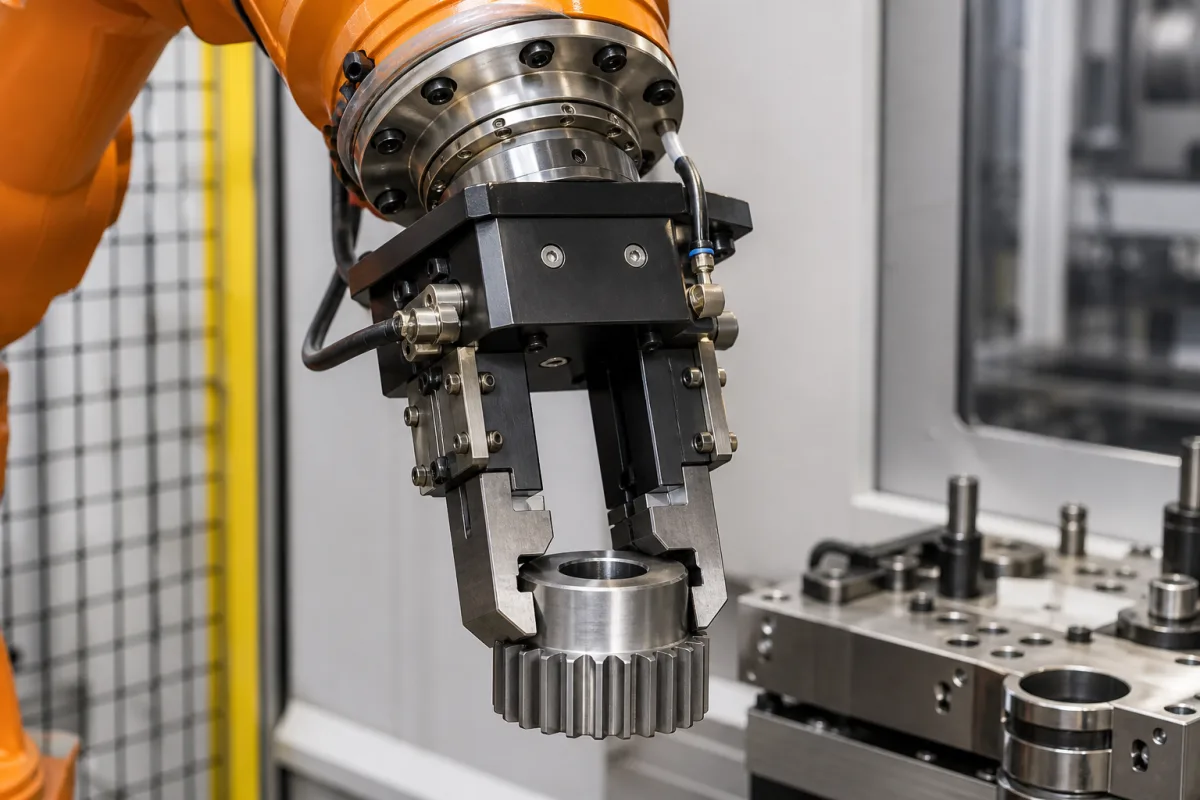
Representative product image. Confirm appearance and specifications with the manufacturer.

Product Specifications

Technical details and manufacturing context for End-Effector (Gripper/Tool)

Definition
In a Robotic Assembly Station, the end-effector is the critical component mounted on the robot's wrist that enables physical manipulation of parts. It serves as the robot's 'hand,' equipped with grippers, suction cups, or specialized tools to pick, place, hold, orient, and assemble components with precision. Its design and functionality are tailored to specific assembly operations, directly impacting the station's efficiency, flexibility, and capability to handle diverse parts. The end-effector is a component within the broader machinery and equipment manufacturing sector, and its selection is driven by the workpiece characteristics and the assembly task requirements. Typical configurations include 2-finger parallel grippers, with a per-finger stroke of 10–50 mm and a gripping force of 20–200 N. Repeatability is critical for precise assembly, typically ±0.02–±0.05 mm. Operating pressure ranges from 4–8 bar, and operating temperature is -10 to 60 °C. Ingress protection is rated IP54–IP65 per IEC 60529, and supply voltage for electric grippers is 24 V DC ±10%. The weight of the end-effector, typically 0.5–5 kg, affects the robot's payload capacity. Materials commonly used include aluminum alloy for lightweight applications and steel for high wear resistance, along with engineering plastics and composite materials. When selecting an end-effector, verify model-specific values and standards with the legal manufacturer or supplier, as the listed ranges are reference values for directory purposes. The end-effector's performance directly influences the assembly station's throughput and quality, making proper selection and integration essential.
Working Principle
The end-effector operates by receiving control signals (electrical, pneumatic, or hydraulic) from the robot controller. For grippers, this typically involves actuation (via motors, pistons, or solenoids) to open and close jaws or fingers, applying controlled force to grasp or release objects. Tool-type end-effectors (e.g., screwdrivers, welders) activate their specific function upon command. It often includes sensors (e.g., force/torque, vision) to provide feedback for adaptive control, ensuring precise and reliable interaction with the workpiece. The control signals determine the gripping force, speed, and timing, which are set based on the workpiece's weight, shape, and fragility. For pneumatic grippers, the operating pressure must be within the specified range to achieve sufficient force. The end-effector's repeatability ensures consistent positioning, which is vital for high-precision assembly. The integration of sensors allows real-time adjustments, compensating for variations in part dimensions or orientation. The working principle is designed to be robust and adaptable, enabling the end-effector to handle a variety of tasks within the assembly station.
Common Materials
Aluminum alloy, Steel, Engineering plastics, Composite materials
Technical Parameters
ParameterTypical rangeNotes & selection driver
Gripper Type2-Finger ParallelSelect based on workpiece shape and handling requirements
Stroke per Finger10–50 mmDetermines maximum workpiece size range
Gripping Force20–200 NMust exceed workpiece weight and acceleration forces
Repeatability±0.02–±0.05 mmCritical for precise assembly tasks
Operating Pressure4–8 barBelow 4 bar gripping force may be insufficient
Operating Temperature-10–60 °COutside range may affect seals and materials
Ingress ProtectionIP54–IP65IP65 for dusty or wet environmentsIEC 60529
Supply Voltage24 ±10% V DCFor electric grippers with integrated control
Weight0.5–5 kgAffects robot payload capacity
MaterialAluminum/SteelAluminum for lightweight, steel for high wear resistance

Ranges are indicative industry figures for RFQ preparation, not a supplier commitment. Confirm every value and standard with the legal manufacturer before ordering.

Components / BOM
  • Gripper Jaws/Fingers Part
    Direct contact surfaces that grasp and hold the workpiece; often customizable with different shapes or materials for specific parts.
    Material: Steel, aluminum, polyurethane, or rubber
  • Actuator
    Provides mechanical motion to open/close gripper jaws or operate tools; converts control signals into physical movement.
    Material: Aluminum alloy, steel
  • Mounting Interface Part
    Mechanical and electrical connection point that attaches the end-effector to the robot wrist; ensures secure mounting and signal/power transmission.
    Material: Steel
  • Sensors Optional
    Optional components (e.g., force sensors, proximity sensors) that provide feedback on grip status, part presence, or alignment for adaptive control.
    Material: Various (e.g., semiconductor, metal)

Applied To / Applications

This component is essential for the following industrial systems and equipment:

Industrial Ecosystem & Supply Chain Structure

Complementary Systems
Downstream Applications
Specialized Tooling

Application Fit & Sizing Matrix

Operational Limits
pressure: 0 to 10 bar
other spec: Max grip force: 500 N, IP rating: IP67, Cycle life: 1M cycles
temperature: -20°C to 80°C
Media Compatibility
✓ Metal components (steel, aluminum) ✓ Plastic parts (ABS, polycarbonate) ✓ Electronic assemblies (PCBs, connectors)
Unsuitable: Highly corrosive chemical baths
Sizing Data Required
  • Workpiece weight and dimensions
  • Required grip force and precision
  • Robot arm payload capacity and interface

Reliability & Engineering Risk Analysis

Failure Mode & Root Cause
Wear and contamination of gripping surfaces
Cause: Accumulation of debris, particulates, or process residues leading to reduced friction, misalignment, and eventual slippage or failure to grip. Root causes include inadequate sealing, lack of cleaning protocols, and abrasive materials in the work environment.
Actuator or pneumatic system failure
Cause: Degradation of seals, diaphragms, or solenoid valves due to fatigue, pressure cycling, or contamination. Root causes involve poor air quality (moisture, oil, particulates), excessive operating pressure, and lack of preventive maintenance on pneumatic components.
Maintenance Indicators
  • Inconsistent or delayed gripping response, such as hesitation, partial closure, or failure to achieve full grip force, indicating potential actuator or sensor issues.
  • Unusual audible cues like hissing (air leaks in pneumatic grippers), grinding noises (mechanical wear), or excessive vibration during operation.
Engineering Tips
  • Implement a routine cleaning and inspection schedule for gripping surfaces and seals, using manufacturer-recommended methods to remove contaminants and check for wear before performance degrades.
  • Install and maintain proper filtration (e.g., coalescing filters for pneumatic systems) and regulate air pressure to specifications, reducing wear on actuators and extending component life.

Indicative industry ranges for design and RFQ preparation. Confirm the exact figures and applicable standard with the manufacturer before specifying.

Compliance & Manufacturing Standards

Applicable Standards
ISO 9409-1:2004 (Robotic end-effectors - Connecting dimensions) ANSI/RIA R15.06-2012 (Industrial Robots and Robot Systems - Safety Requirements) DIN EN ISO 10218-1:2011 (Robots and robotic devices - Safety requirements for industrial robots)

Quoted from the published standard.

Manufacturing Precision
  • Bore diameter for mounting interface: ±0.01 mm
  • Parallelism between mounting face and gripping surface: 0.05 mm
Quality Inspection
  • Dimensional verification using CMM (Coordinate Measuring Machine)
  • Load capacity and repeatability testing under operational conditions

Manufacturers of End-Effector (Gripper/Tool)

Manufacturer profiles associated with End-Effector (Gripper/Tool).

Sourcing End-Effector (Gripper/Tool) from China?
Tell us your specification and target quantity — we will match it against manufacturer records and come back with the factories that fit.
Request manufacturers We manufacture this

Manufacturer listings support early research and capability understanding. They are not certification, ranking, or transaction guarantees.

Technical documentation
Request current drawings, revision history, and a signed specification sheet.
Manufacturing capability
Verify equipment lists, process limits, capacity, and representative production evidence.
Inspection readiness
Confirm test methods, calibrated equipment, sampling plans, and traceable reports.
Supplier transparency
Check the legal entity, factory address, ownership, certifications, and direct contacts.

CNFX does not score or rank suppliers. Buyers must verify all claims and documents with the legal manufacturer before ordering.

Supply Chain Compatible Machinery & Devices

Automated Powder Coating System

Integrated industrial system for applying dry powder coatings to metal substrates.

Explore Specs →
Centrifugal Pump Impeller

The centrifugal pump impeller is a critical rotating component that converts mechanical energy from the motor into kinetic energy in fluid systems.

Explore Specs →
High-Precision CNC Laser Cutting Machine

Computer-controlled industrial machine using focused laser beams to cut sheet metal with micron-level accuracy.

Explore Specs →
Industrial-Grade Hydraulic Cylinder Piston Rod

This industrial-grade piston rod is a precision-ground cylindrical component designed for use in hydraulic cylinders.

Explore Specs →

Frequently Asked Questions

What is an end-effector in a robotic assembly station?

An end-effector is the component mounted on the robot's wrist that directly interacts with workpieces or tools. It can be a gripper, suction cup, or specialized tool, enabling the robot to pick, place, hold, orient, and assemble parts. Its design is tailored to specific assembly tasks, affecting the station's efficiency and flexibility.

How do I select the right gripper type for my application?

Selection depends on the workpiece shape, size, weight, and handling requirements. For example, a 2-finger parallel gripper is suitable for parts with parallel surfaces. Consider the required stroke per finger (10–50 mm) and gripping force (20–200 N) to ensure the gripper can handle the workpiece without damage. Always verify with the manufacturer for specific models.

What are the typical operating parameters for an end-effector?

Typical parameters include operating pressure (4–8 bar), operating temperature (-10 to 60 °C), ingress protection (IP54–IP65 per IEC 60529), and supply voltage (24 V DC ±10% for electric grippers). Repeatability is ±0.02–±0.05 mm, and weight ranges from 0.5–5 kg. These are reference ranges; confirm with the supplier for your specific model.

Why is repeatability important for an end-effector?

Repeatability ensures that the end-effector can position parts consistently within a small tolerance, typically ±0.02–±0.05 mm. This is critical for precise assembly tasks where parts must align accurately. Poor repeatability can lead to assembly errors, reduced quality, and increased scrap rates.

Data Basis

Editorial classification, named public sources where available, and source-reviewed manufacturer records.

Preliminary Technical Classification
This page supports structured research, RFQ preparation, and supplier evaluation. It does not replace buyer-led supplier qualification, standards review, or technical approval.
Buyer enquiry

Request manufacturing insight for End-Effector (Gripper/Tool)

Ask for use case, specification boundaries, supplier type, and RFQ preparation information for this product.

Where it goes
Straight to the CNFX editorial desk, and to the manufacturer if this product is linked to a claimed profile. Nothing is broadcast to a supplier list.
Your details stay here
We do not sell or rent enquiry data, and we do not add you to a mailing list. Used only to answer this request.
No commission, no middleman
CNFX is a directory. We take no cut of any order and never negotiate on a supplier's behalf.
What we don't claim
A listing is not an endorsement. Qualify every supplier and verify every figure yourself before ordering.

Your business information is used only to process this request.

Thank you! Your message has been sent. We'll respond within 1–3 business days.
Sorry, we couldn't send your message. Please try again, or email us at contact@cnfx.com.

Need to Manufacture End-Effector (Gripper/Tool)?

Compare manufacturer profiles with relevant product and process capability.

Previous Product
End Effector/Gripper
Next Product
Environmental Control System
Get QuotesChat