Stacking Mechanism
View system integration details
This page explains how End-Effector (Gripper/Vacuum Cup) is classified within Machinery and Equipment Manufacturing. Technical values and manufacturer relationships are research references; confirm the current specification and supplier evidence for each order.
The interface component of a stacking mechanism that physically interacts with objects to grasp, lift, and place them.
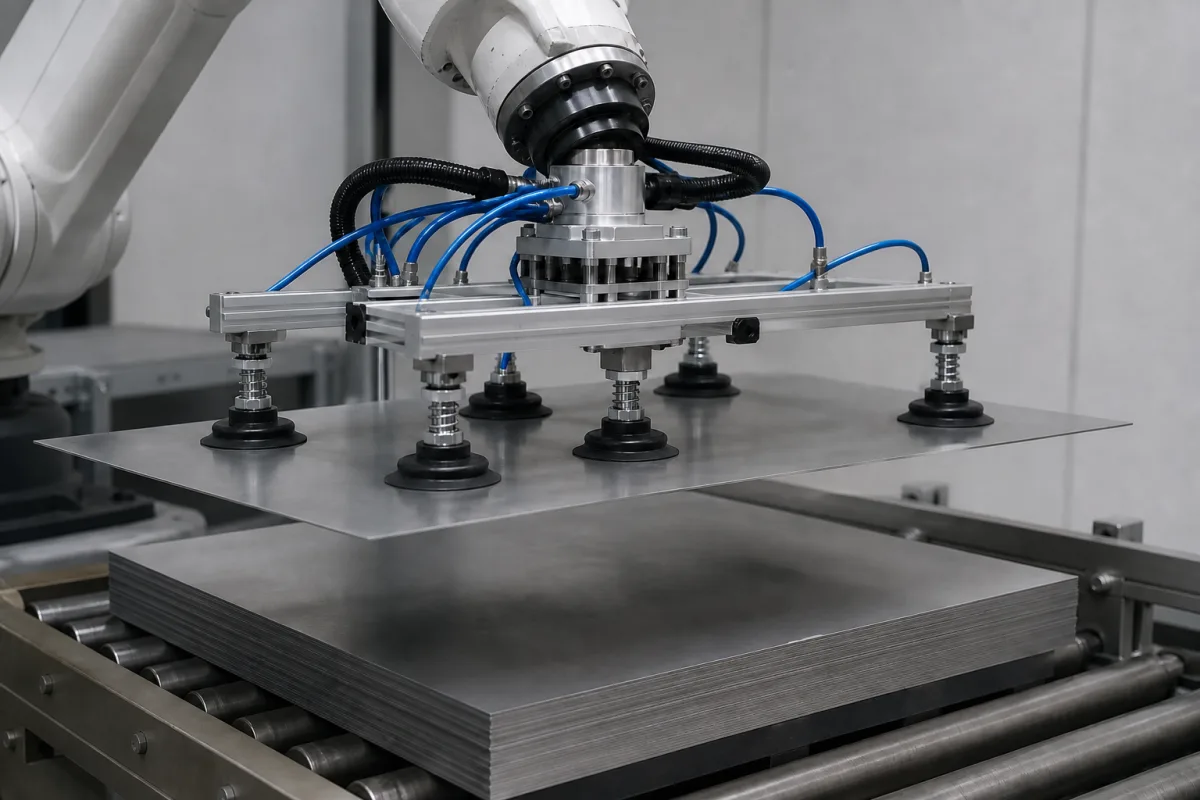
Technical details and manufacturing context for End-Effector (Gripper/Vacuum Cup)
| Parameter | Typical range | Notes & selection driver |
|---|---|---|
| Gripper Jaw Width | 10–200 mm | Determines maximum workpiece size |
| Gripping Force | 20–500 N | Must exceed workpiece weight and acceleration forces |
| Stroke per Jaw | 5–50 mm | Defines range of part sizes that can be handled |
| Repeatability | ±0.01–±0.05 mm | Critical for precise placement |
| Operating Pressure | 4–8 bar | Below 4 bar force drops; above 8 bar may damage seals |
| Operating Temperature | -10–60 °C | Outside range seals and lubricants degrade |
| Protection Class | IP54–IP67 | IP67 for washdown environmentsIEC 60529 |
| Weight | 0.5–10 kg | Affects robot payload capacity |
| Vacuum Flow Rate | 10–100 L/min | Determines evacuation time for suction cups |
| Vacuum Degree | -60–-90 kPa | Higher vacuum increases holding force |
| Suction Cup Diameter | 5–100 mm | Larger diameter for heavier or porous parts |
| Material | Aluminum/Steel/NBR | Aluminum for lightweight, steel for durability, NBR for oil resistance |
Ranges are indicative industry figures for RFQ preparation, not a supplier commitment. Confirm every value and standard with the legal manufacturer before ordering.
| pressure: | 0 to 6 bar (vacuum) or 0 to 10 bar (gripper) |
| flow rate: | 10-50 L/min (vacuum system dependent) |
| temperature: | -20°C to 80°C |
| slurry concentration: | Not applicable for vacuum cups; for grippers: clean, dry surfaces only |
Indicative industry ranges for design and RFQ preparation. Confirm the exact figures and applicable standard with the manufacturer before specifying.
Quoted from the published standard.
A practical evidence checklist for RFQ preparation and supplier evaluation.
Compare the published product scope and source details, then include your specifications and quantity in an enquiry.
Manufacturer profiles associated with End-Effector (Gripper/Vacuum Cup).
Explore company information and manufacturing capabilities, then discuss the scope of your project with a relevant supplier.
Ask for use case, specification boundaries, supplier type, and RFQ preparation information for this product.
A gripper uses mechanical jaws or fingers to clamp onto an object, providing a secure hold suitable for irregular shapes or heavy items. A vacuum cup uses suction to adhere to a smooth surface, which is non-marking and ideal for delicate or porous materials. The choice depends on the workpiece's surface, weight, and required handling.
Consider the workpiece's weight, size, surface texture, and fragility. For grippers, ensure the jaw width and gripping force match the part dimensions and weight. For vacuum cups, select a cup diameter and vacuum degree that provide sufficient holding force. Also consider the operating environment (temperature, dust, washdown) and the robot's payload capacity.
Regularly inspect gripper jaws for wear and ensure proper lubrication of moving parts. For vacuum cups, check for cracks or wear on the cup lip and clean the suction surface. Verify that seals and hoses are intact and that the vacuum system maintains the required degree. Replace worn components promptly to avoid performance degradation.
Common failures include loss of gripping force due to worn jaws or low pressure, vacuum leaks from damaged cups or seals, and misalignment causing inaccurate placement. Operating outside the specified temperature or pressure ranges can degrade seals and lubricants. Regular inspection and adherence to operating limits help prevent failures.
This component is essential for the following industrial systems and equipment:
Editorial classification, named public sources where available, and source-reviewed manufacturer records.
Compare manufacturer profiles with relevant product and process capability.