Industry-Verified Manufacturing Data (2026)

Exhaust Dampers

Based on aggregated insights from multiple verified factory profiles within the CNFX directory, the standard Exhaust Dampers used in the Machinery and Equipment Manufacturing sector typically supports operational capacities ranging from standard industrial configurations to heavy-duty production requirements.

Technical Definition & Core Assembly

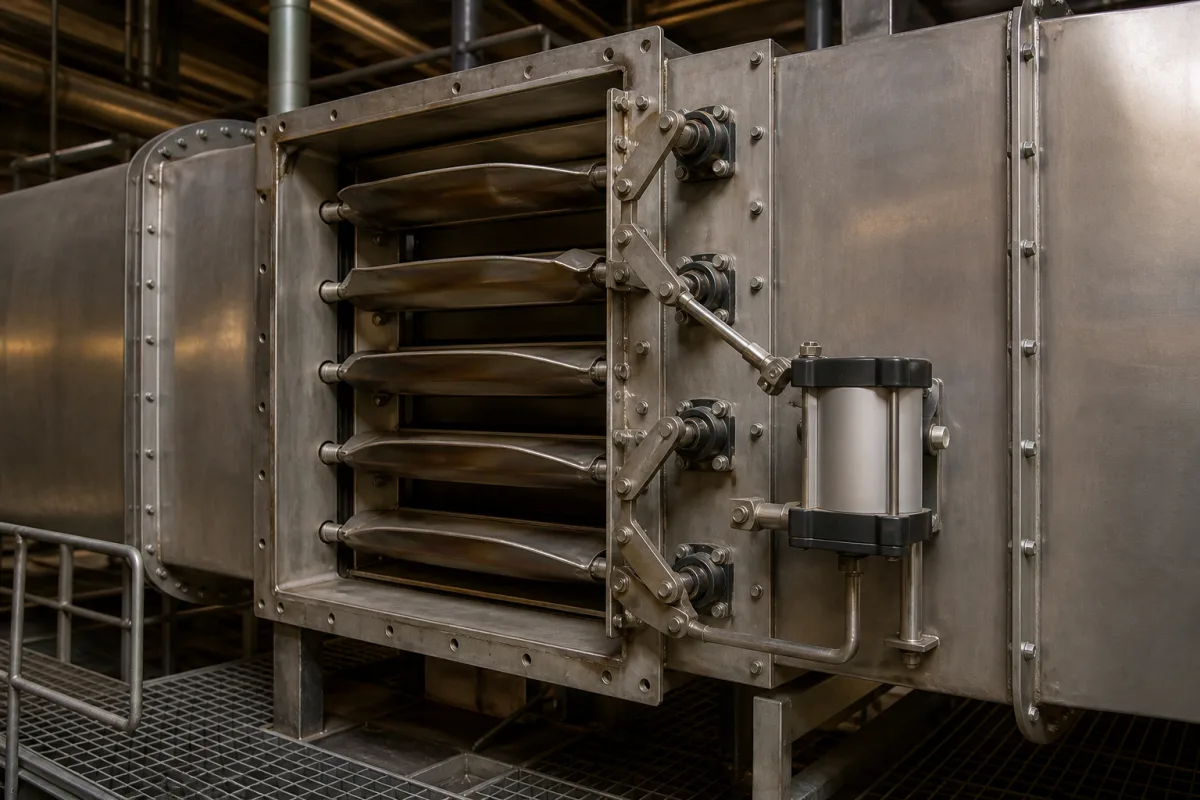
A canonical Exhaust Dampers is characterized by the integration of Damper Blade and Shaft. In industrial production environments, manufacturers listed on CNFX commonly emphasize Stainless steel construction to support stable, high-cycle operation across diverse manufacturing scenarios.

Mechanical devices that regulate, control, or modulate the flow of exhaust gases in industrial systems.
Product Specifications

Technical details and manufacturing context for Exhaust Dampers

Definition
Exhaust dampers are critical components within exhaust gas management systems that control the volume, pressure, and direction of exhaust gas flow. They function as adjustable valves or gates installed in exhaust ducts, chimneys, or ventilation systems to optimize system performance, maintain backpressure, prevent backdraft, and ensure safe operation of connected equipment like boilers, furnaces, and industrial ovens.
Working Principle
Exhaust dampers operate by physically obstructing or opening the exhaust passageway. They typically consist of a blade, vane, or louver mechanism that rotates or slides within a housing. When activated (manually or via actuators), the damper adjusts its position to increase or decrease the cross-sectional area available for gas flow, thereby regulating flow rate and pressure. Some dampers use counterweight or spring mechanisms for automatic operation based on pressure differentials.
Common Materials
Stainless steel, Carbon steel, Galvanized steel, Aluminum alloys
Technical Parameters
  • Diameter or rectangular dimensions of the damper housing/duct connection (mm) Standard Spec
Components / BOM
  • Damper Blade
    Primary moving part that regulates gas flow by changing position
    Material: Stainless steel
  • Shaft
    Connects the blade to the actuator and provides rotational axis
    Material: Carbon steel
  • Seals/Gaskets
    Prevent gas leakage around the blade edges and shaft penetrations
    Material: Silicone rubber or high-temperature fiber
  • Housing/Frame
    Structural enclosure that mounts within the exhaust duct
    Material: Galvanized steel
Engineering Reasoning
0-850°C temperature, 0-25 kPa pressure differential
Material yield strength exceeded at 900°C (creep deformation) or 40 kPa pressure differential (structural buckling)
Design Rationale: Thermal expansion mismatch between 316L stainless steel blades (17.3 μm/m·K) and carbon steel housing (11.7 μm/m·K) causing binding at >850°C
Risk Mitigation (FMEA)
Trigger Particulate accumulation exceeding 2.5 kg/m³ density in exhaust stream
Mode: Actuator torque requirement exceeds 120 N·m design limit causing gear train failure
Strategy: Install upstream cyclone separator with 15 μm cut-point and automated blowback system
Trigger Thermal cycling between 150-800°C exceeding 3 cycles/hour
Mode: Low-cycle fatigue crack initiation at blade root fillet radius (R=1.5 mm)
Strategy: Implement controlled cooling rate of 50°C/minute using auxiliary air injection system

Industry Taxonomies & Aliases

Commonly used trade names and technical identifiers for Exhaust Dampers.

Applied To / Applications

This component is essential for the following industrial systems and equipment:

Industrial Ecosystem & Supply Chain DNA

Complementary Systems
Downstream Applications
Specialized Tooling

Application Fit & Sizing Matrix

Operational Limits
pressure: Up to 25 bar (standard), up to 40 bar with reinforced construction
flow rate: 0.5 to 50 m/s gas velocity
temperature: -40°C to 650°C (standard), up to 1000°C with special alloys
slurry concentration: Not recommended for slurry applications above 5% solids by volume
Media Compatibility
✓ Combustion exhaust gases (natural gas, diesel) ✓ Steam systems ✓ Industrial process air (non-corrosive)
Unsuitable: Highly corrosive environments with chlorides, acids, or alkaline mists
Sizing Data Required
  • Maximum exhaust gas flow rate (Nm³/h)
  • System operating pressure differential (bar)
  • Required modulation range (% of full flow)

Reliability & Engineering Risk Analysis

Failure Mode & Root Cause
Seal degradation and leakage
Cause: High-temperature exposure and chemical corrosion from exhaust gases, leading to seal material breakdown and loss of tight closure
Actuator mechanism failure
Cause: Mechanical wear, corrosion, or electrical faults in the actuator system, preventing proper damper blade positioning
Maintenance Indicators
  • Visible exhaust gas leakage around damper seals during operation
  • Unusual grinding or sticking noises during damper actuation
Engineering Tips
  • Implement regular seal inspection and replacement schedule using high-temperature resistant materials compatible with exhaust chemistry
  • Establish preventive maintenance for actuator components including lubrication, corrosion protection, and position verification testing

Compliance & Manufacturing Standards

Reference Standards
ISO 14617-4:2004 - Graphical symbols for diagrams - Actuators and related devices ANSI/AMCA 500-D - Laboratory Methods of Testing Dampers for Rating DIN EN 1751:2014 - Ventilation for buildings - Air terminal devices - Aerodynamic testing of damper and valves
Manufacturing Precision
  • Blade alignment: +/- 0.5° angular deviation
  • Seal gap: ≤ 0.8 mm under rated pressure differential
Quality Inspection
  • Leakage test per AMCA 500-D at specified pressure differentials
  • Operational torque verification with calibrated torque wrench

Factories Producing Exhaust Dampers

Verified manufacturers with capability to produce this product in China

✓ 94% Supplier Capability Match Found

T Technical Director from United Arab Emirates Jan 26, 2026
★★★★★
"The technical documentation for this Exhaust Dampers is very thorough, especially regarding technical reliability."
Technical Specifications Verified
P Project Engineer from Australia Jan 23, 2026
★★★★☆
"Reliable performance in harsh Machinery and Equipment Manufacturing environments. No issues with the Exhaust Dampers so far. (Delivery took slightly longer than expected, but technical support was excellent.)"
Technical Specifications Verified
S Sourcing Manager from Singapore Jan 20, 2026
★★★★★
"Testing the Exhaust Dampers now; the technical reliability results are within 1% of the laboratory datasheet."
Technical Specifications Verified
Verification Protocol

“Feedback is collected from verified sourcing managers during RFQ (Request for Quote) and factory evaluation processes on CNFX. These reports represent historical performance data and technical audit summaries from our B2B manufacturing network.”

12 sourcing managers are analyzing this specification now. Last inquiry for Exhaust Dampers from India (1h ago).

Supply Chain Compatible Machinery & Devices

Heavy-Duty CNC Plasma Cutting Machine

Industrial machine for precision metal cutting using plasma arc technology

Explore Specs →
Automated Assembly Line System

Integrated production system for sequential component assembly operations

Explore Specs →
Automated Powder Coating System

Integrated industrial system for applying dry powder coatings to metal substrates.

Explore Specs →
Centrifugal Pump Impeller

Rotating component that transfers energy to fluid in centrifugal pumps.

Explore Specs →

Frequently Asked Questions

What materials are best for corrosive exhaust environments?

Stainless steel and aluminum alloys offer superior corrosion resistance for dampers handling aggressive exhaust gases in industrial settings.

How do exhaust dampers improve machinery efficiency?

By precisely regulating exhaust flow, dampers optimize backpressure and temperature control, reducing energy consumption and extending equipment lifespan.

What maintenance do industrial exhaust dampers require?

Regular inspection of blades, shafts, and seals, plus lubrication of moving parts, ensures smooth operation and prevents gas leakage in manufacturing systems.

Can I contact factories directly on CNFX?

CNFX is an open directory, not a transaction platform. Each factory profile provides direct contact information and production details to help you initiate direct inquiries with Chinese suppliers.

Get Quote for Exhaust Dampers

Request technical pricing, lead times, or customized specifications for Exhaust Dampers directly from verified manufacturing units.

Your business information is encrypted and only shared with verified Exhaust Dampers suppliers.

Thank you! Your message has been sent. We'll respond within 1–3 business days.

Need to Manufacture Exhaust Dampers?

Connect with verified factories specializing in this product category

Add Your Factory Contact Us
Previous Product
Execution Scheduler
Next Product
Exhaust Duct