Industry-Verified Manufacturing Data (2026)

Exhaust Gas Management

Based on aggregated insights from multiple verified factory profiles within the CNFX directory, the standard Exhaust Gas Management used in the Food Manufacturing sector typically supports operational capacities ranging from standard industrial configurations to heavy-duty production requirements.

Technical Definition & Core Assembly

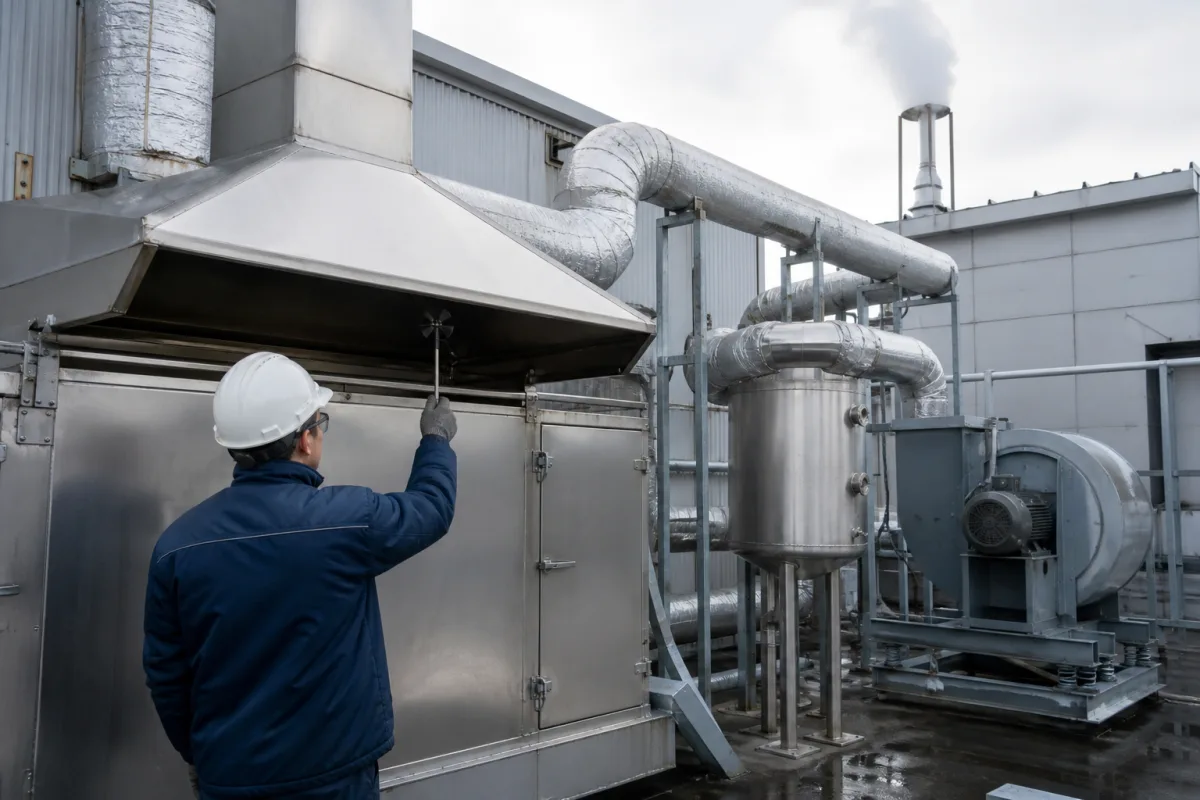
A canonical Exhaust Gas Management is characterized by the integration of Exhaust Fan Assembly and Ductwork System. In industrial production environments, manufacturers listed on CNFX commonly emphasize Stainless steel construction to support stable, high-cycle operation across diverse manufacturing scenarios.

A subsystem within cryogenic freezing equipment that safely removes and treats exhaust gases generated during the freezing process.

Product Specifications

Technical details and manufacturing context for Exhaust Gas Management

Definition
The Exhaust Gas Management component in an Automated Cryogenic Fish Freezing Tunnel System is responsible for the controlled extraction, filtration, and safe discharge of exhaust gases produced during the cryogenic freezing process. It ensures proper ventilation, maintains optimal freezing conditions, prevents gas buildup that could affect product quality, and complies with environmental regulations by treating emissions before release.
Working Principle
The system uses exhaust fans or blowers to create negative pressure, drawing gases from the freezing chamber through ductwork. The gases pass through filtration stages (which may include particulate filters, activated carbon filters, or cryogenic condensers depending on the specific gases involved) to remove contaminants, moisture, and odors. Treated gases are then safely discharged through exhaust vents, while monitoring sensors ensure proper airflow and gas concentration levels.
Common Materials
Stainless steel, Aluminum alloy, High-temperature resistant polymers, Activated carbon filter media
Technical Parameters
  • Exhaust airflow capacity (m³/h) Per Request
Components / BOM
  • Exhaust Fan Assembly
    Creates negative pressure to extract gases from the freezing chamber
    Material: Stainless steel housing with aluminum alloy blades
  • Ductwork System
    Channels exhaust gases from freezing chamber to filtration and discharge points
    Material: Insulated stainless steel
  • Particulate Filter
    Removes solid particles and ice crystals from exhaust stream
    Material: Synthetic filter media in stainless steel frame
  • Activated Carbon Filter
    Adsorbs odors and volatile organic compounds from exhaust gases
    Material: Activated carbon granules in polymer housing
  • Exhaust Dampers
    Regulates airflow and prevents backflow when system is idle
    Material: Stainless steel with silicone seals
  • Gas Concentration Sensors
    Monitors oxygen, carbon dioxide, and refrigerant gas levels in exhaust stream
    Material: Electronic sensors with stainless steel probes
Engineering Reasoning
0.1-2.0 bar absolute pressure, -196°C to 25°C temperature range
Pressure exceeding 2.5 bar absolute or temperature dropping below -210°C
Design Rationale: Brittle fracture of stainless steel 316L at cryogenic temperatures below -210°C due to ductile-to-brittle transition, combined with pressure vessel rupture at 2.5 bar exceeding yield strength of 205 MPa
Risk Mitigation (FMEA)
Trigger Condensate accumulation in exhaust lines forming ice plugs at -196°C
Mode: Backpressure surge to 3.0 bar causing pressure relief valve activation
Strategy: Heated exhaust lines with PID-controlled trace heating maintaining 5°C minimum temperature
Trigger Nitrogen oxide formation at 1800°C plasma temperatures during defrost cycles
Mode: Corrosion rate acceleration to 0.5 mm/year on 316L stainless steel surfaces
Strategy: Catalytic reduction unit with platinum-rhodium catalyst operating at 300-400°C

Industry Taxonomies & Aliases

Commonly used trade names and technical identifiers for Exhaust Gas Management.

Industrial Ecosystem & Supply Chain DNA

Complementary Systems
Downstream Applications
Specialized Tooling

Application Fit & Sizing Matrix

Operational Limits
pressure: 0.1 to 10 bar (vacuum to moderate pressure)
flow rate: 10 to 1000 Nm³/h (typical industrial scale)
temperature: -196°C to 50°C (cryogenic to ambient handling range)
slurry concentration: 0 to 5% solids by volume (for particulate carryover)
Media Compatibility
✓ Nitrogen-rich exhaust ✓ Argon purge gases ✓ Food-grade CO₂ mixtures
Unsuitable: Chlorinated hydrocarbon vapors (risk of corrosion and contamination)
Sizing Data Required
  • Maximum exhaust gas flow rate (Nm³/h)
  • Peak contaminant concentration (ppm)
  • Required outlet purity specification

Reliability & Engineering Risk Analysis

Failure Mode & Root Cause
Corrosion-induced perforation
Cause: Condensation of acidic compounds (sulfuric acid, nitric acid) from exhaust gases reacting with metal surfaces, accelerated by temperature cycling and moisture ingress.
Thermal fatigue cracking
Cause: Repeated thermal cycling from high-temperature exhaust gases causing expansion/contraction stresses, leading to crack initiation and propagation in welds and heat-affected zones.
Maintenance Indicators
  • Visible white or blue smoke from exhaust indicating incomplete combustion or oil burning
  • Abnormal knocking or rattling sounds from the exhaust system suggesting loose components or internal damage
Engineering Tips
  • Implement regular exhaust gas temperature monitoring and control to minimize thermal cycling and maintain above dew point to prevent acid condensation
  • Use corrosion-resistant materials (stainless steel grades, ceramic coatings) in critical areas and ensure proper drainage to prevent moisture accumulation

Compliance & Manufacturing Standards

Reference Standards
ISO 16183:2002 (Heavy-duty engines - Measurement of gaseous emissions) ANSI/ASME PTC 19.10-1981 (Flue and Exhaust Gas Analyses) DIN EN 15267-3:2008 (Air quality - Certification of automated measuring systems - Part 3: Performance criteria and test procedures for automated measuring systems for monitoring emissions from stationary sources)
Manufacturing Precision
  • Flange Flatness: 0.1mm per 100mm
  • Catalyst Substrate Cell Density: +/- 5 cells per square inch
Quality Inspection
  • Pressure Decay Leak Test (for exhaust system integrity)
  • Emission Gas Composition Analysis (using FTIR or NDIR analyzers)

Factories Producing Exhaust Gas Management

Verified manufacturers with capability to produce this product in China

✓ 98% Supplier Capability Match Found

T Technical Director from Singapore Feb 03, 2026
★★★★★
"Testing the Exhaust Gas Management now; the technical reliability results are within 1% of the laboratory datasheet."
Technical Specifications Verified
P Project Engineer from Germany Jan 31, 2026
★★★★☆
"Impressive build quality. Especially the technical reliability is very stable during long-term operation. (Delivery took slightly longer than expected, but technical support was excellent.)"
Technical Specifications Verified
S Sourcing Manager from Brazil Jan 28, 2026
★★★★★
"As a professional in the Food Manufacturing sector, I confirm this Exhaust Gas Management meets all ISO standards."
Technical Specifications Verified
Verification Protocol

“Feedback is collected from verified sourcing managers during RFQ (Request for Quote) and factory evaluation processes on CNFX. These reports represent historical performance data and technical audit summaries from our B2B manufacturing network.”

7 sourcing managers are analyzing this specification now. Last inquiry for Exhaust Gas Management from Vietnam (1h ago).

Supply Chain Compatible Machinery & Devices

Automated Food Moisture Analyzer

Automated system for precise moisture content measurement in food products

Explore Specs →
Automated Food Color Consistency Analyzer

Automated inline system for real-time color measurement and consistency control in food processing.

Explore Specs →
Control Panel

A centralized interface for monitoring and controlling industrial equipment and processes

Explore Specs →
Industrial Vacuum Tumbler

Industrial machine for massaging and marinating meat under vacuum to enhance texture and flavor.

Explore Specs →

Frequently Asked Questions

How does the exhaust gas management system ensure food safety during cryogenic freezing?

The system uses activated carbon filters and particulate filtration to remove contaminants and odors from exhaust gases, preventing cross-contamination and maintaining hygienic conditions in food processing environments.

What maintenance is required for the exhaust gas management components?

Regular maintenance includes replacing activated carbon filters every 6-12 months, cleaning particulate filters monthly, inspecting ductwork for buildup, and calibrating gas concentration sensors quarterly for optimal performance.

Why are stainless steel and aluminum alloys used in this exhaust system?

Stainless steel provides corrosion resistance for hygiene and durability, while aluminum alloys offer lightweight strength for ductwork. Both materials withstand cryogenic temperatures and are food-safe for manufacturing environments.

Can I contact factories directly on CNFX?

CNFX is an open directory, not a transaction platform. Each factory profile provides direct contact information and production details to help you initiate direct inquiries with Chinese suppliers.

Get Quote for Exhaust Gas Management

Request technical pricing, lead times, or customized specifications for Exhaust Gas Management directly from verified manufacturing units.

Your business information is encrypted and only shared with verified Exhaust Gas Management suppliers.

Thank you! Your message has been sent. We'll respond within 1–3 business days.

Need to Manufacture Exhaust Gas Management?

Connect with verified factories specializing in this product category

Add Your Factory Contact Us
Previous Product
Discharge Gate
Next Product
Extrusion Screw