Industry-Verified Manufacturing Data (2026)

Fluid Port Connectors

Based on aggregated insights from multiple verified factory profiles within the CNFX directory, the standard Fluid Port Connectors used in the Machinery and Equipment Manufacturing sector typically supports operational capacities ranging from standard industrial configurations to heavy-duty production requirements.

Technical Definition & Core Assembly

A canonical Fluid Port Connectors is characterized by the integration of Connection Body and Sealing Gasket. In industrial production environments, manufacturers listed on CNFX commonly emphasize Stainless Steel construction to support stable, high-cycle operation across diverse manufacturing scenarios.

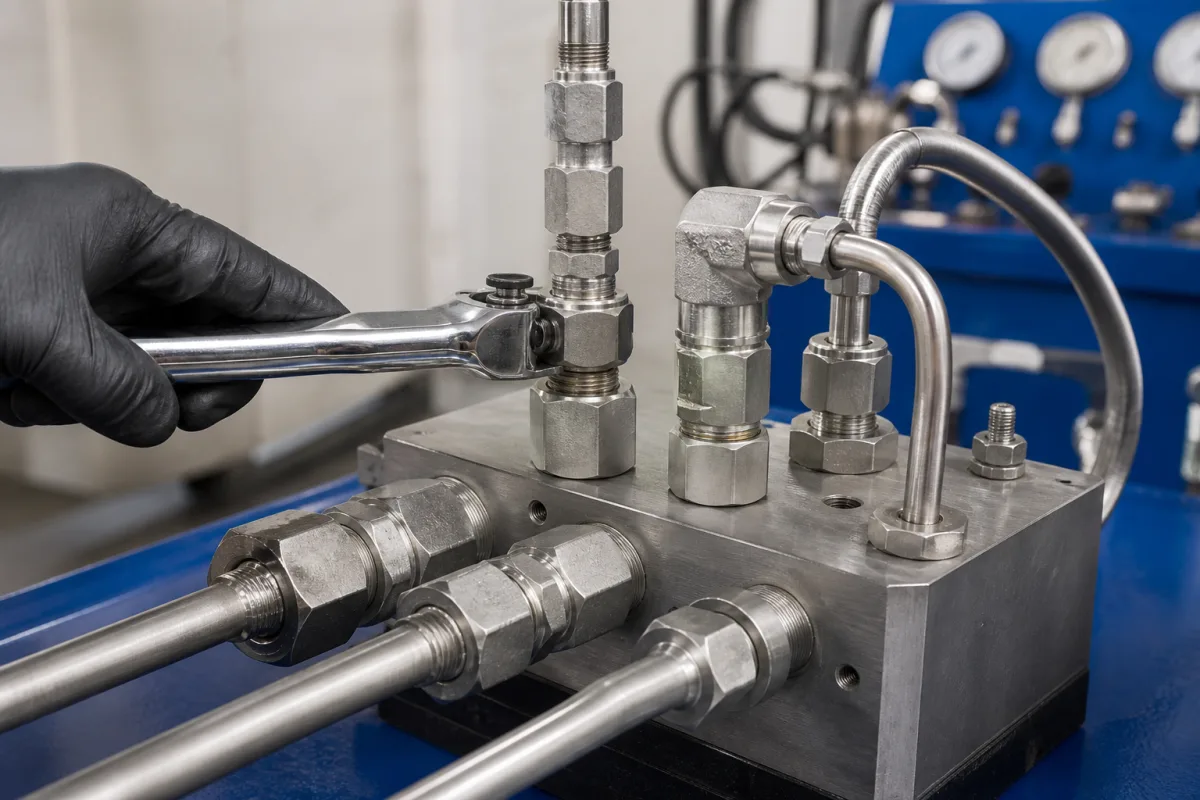
Specialized connectors that interface fluid lines with thermal management plates in casting molds
Product Specifications

Technical details and manufacturing context for Fluid Port Connectors

Definition
Fluid port connectors are critical interface components that securely attach fluid supply and return lines to the thermal management plates used in casting molds. They ensure leak-proof connections for coolant or heating fluid circulation, enabling precise temperature control during metal casting processes.
Working Principle
These connectors create sealed mechanical interfaces between fluid lines and thermal management plates using threaded, flanged, or quick-connect mechanisms. They maintain pressure integrity while allowing fluid to flow between external systems and internal plate channels for heat transfer.
Common Materials
Stainless Steel, Brass, High-Temperature Plastics
Technical Parameters
  • Connection thread size and port diameter specifications (mm) Standard Spec
Components / BOM
  • Connection Body
    Main structural component providing fluid passage and mounting interface
    Material: Stainless Steel
  • Sealing Gasket
    Creates leak-proof seal between connector and thermal plate
    Material: Silicone or Viton Rubber
  • Locking Nut
    Secures connector to thermal plate with proper torque
    Material: Stainless Steel
Engineering Reasoning
0-100 bar at -40°C to 200°C
150 bar burst pressure at 250°C
Design Rationale: Thermal expansion mismatch between stainless steel (17.3 μm/m·K) and aluminum (23.1 μm/m·K) causing seal extrusion at 0.5 mm displacement
Risk Mitigation (FMEA)
Trigger Hydraulic hammer pressure spike to 180 bar
Mode: O-ring seal extrusion through 0.1 mm clearance gap
Strategy: Integral pressure relief valve with 120 bar cracking pressure
Trigger Thermal cycling between 20°C and 180°C at 10 cycles/hour
Mode: Stress corrosion cracking in 316L stainless steel at 90 MPa stress
Strategy: Shot peening surface treatment to induce 200 MPa compressive residual stress

Industry Taxonomies & Aliases

Commonly used trade names and technical identifiers for Fluid Port Connectors.

Industrial Ecosystem & Supply Chain DNA

Complementary Systems
Downstream Applications
Specialized Tooling

Application Fit & Sizing Matrix

Operational Limits
pressure: 0 to 150 bar (2175 psi)
flow rate: Up to 50 L/min
temperature: -40°C to 200°C
slurry concentration: Max 30% solids by weight
Media Compatibility
✓ Water-glycol coolants ✓ Hydraulic oils (ISO VG 32-68) ✓ Synthetic heat transfer fluids
Unsuitable: Highly corrosive acids (e.g., hydrochloric acid, sulfuric acid)
Sizing Data Required
  • Fluid line inner diameter (mm/in)
  • Required flow rate (L/min or GPM)
  • Connection thread standard (e.g., NPT, BSPP, SAE)

Reliability & Engineering Risk Analysis

Failure Mode & Root Cause
Leakage at seal interface
Cause: Improper installation torque causing seal deformation, material incompatibility with fluid leading to seal degradation, or thermal cycling causing gasket fatigue
Thread galling or stripping
Cause: Cross-threading during installation, excessive torque beyond design limits, or corrosion buildup between mating threads
Maintenance Indicators
  • Visible fluid weeping or dripping around connection points
  • Audible hissing or whistling indicating pressure loss through compromised seals
Engineering Tips
  • Use calibrated torque wrenches and follow manufacturer specifications precisely during installation to ensure proper sealing without damaging components
  • Implement regular inspection schedules using ultrasonic leak detection equipment to identify early-stage failures before catastrophic leaks occur

Compliance & Manufacturing Standards

Reference Standards
ISO 1179-1:2013 (Connections for general use and fluid power - Ports and stud ends) ANSI/B93.5M-1985 (Hydraulic Fluid Power - Four-Bolt Split Flange Connections) DIN 3852-2 (Connections for use in fluid power systems and general applications - Part 2: Stud ends with elastomeric or metal-to-metal sealing)
Manufacturing Precision
  • Bore diameter: +/-0.025 mm
  • Flatness of sealing surface: 0.05 mm
Quality Inspection
  • Pressure test (hydrostatic/pneumatic) for leak integrity
  • Dimensional verification using coordinate measuring machine (CMM)

Factories Producing Fluid Port Connectors

Verified manufacturers with capability to produce this product in China

✓ 96% Supplier Capability Match Found

S Sourcing Manager from Australia Feb 01, 2026
★★★★★
"Impressive build quality. Especially the technical reliability is very stable during long-term operation."
Technical Specifications Verified
P Procurement Specialist from Singapore Jan 29, 2026
★★★★☆
"As a professional in the Machinery and Equipment Manufacturing sector, I confirm this Fluid Port Connectors meets all ISO standards. (Delivery took slightly longer than expected, but technical support was excellent.)"
Technical Specifications Verified
T Technical Director from Germany Jan 26, 2026
★★★★★
"Standard OEM quality for Machinery and Equipment Manufacturing applications. The Fluid Port Connectors arrived with full certification."
Technical Specifications Verified
Verification Protocol

“Feedback is collected from verified sourcing managers during RFQ (Request for Quote) and factory evaluation processes on CNFX. These reports represent historical performance data and technical audit summaries from our B2B manufacturing network.”

6 sourcing managers are analyzing this specification now. Last inquiry for Fluid Port Connectors from Mexico (1h ago).

Supply Chain Compatible Machinery & Devices

Heavy-Duty CNC Plasma Cutting Machine

Industrial machine for precision metal cutting using plasma arc technology

Explore Specs →
Automated Assembly Line System

Integrated production system for sequential component assembly operations

Explore Specs →
Automated Powder Coating System

Integrated industrial system for applying dry powder coatings to metal substrates.

Explore Specs →
Centrifugal Pump Impeller

Rotating component that transfers energy to fluid in centrifugal pumps.

Explore Specs →

Frequently Asked Questions

What materials are best for high-temperature applications in fluid port connectors?

For high-temperature applications in casting molds, stainless steel offers superior heat resistance and durability, while high-temperature plastics provide corrosion resistance and lighter weight options.

How do fluid port connectors interface with thermal management plates?

These specialized connectors create secure, leak-proof connections between fluid lines and thermal management plates using a BOM that typically includes a connection body, locking nut, and sealing gasket for optimal performance.

What industries commonly use these fluid port connectors?

Primarily used in machinery and equipment manufacturing, especially in metal casting and mold-making industries where precise thermal management is critical for production quality and efficiency.

Can I contact factories directly on CNFX?

CNFX is an open directory, not a transaction platform. Each factory profile provides direct contact information and production details to help you initiate direct inquiries with Chinese suppliers.

Get Quote for Fluid Port Connectors

Request technical pricing, lead times, or customized specifications for Fluid Port Connectors directly from verified manufacturing units.

Your business information is encrypted and only shared with verified Fluid Port Connectors suppliers.

Thank you! Your message has been sent. We'll respond within 1–3 business days.

Need to Manufacture Fluid Port Connectors?

Connect with verified factories specializing in this product category

Add Your Factory Contact Us
Previous Product
Fluid Path Assembly
Next Product
Fluid Pump