Editorial Technical Reference

Humidifier

This page explains how Humidifier is classified within Machinery and Equipment Manufacturing. Technical values and manufacturer relationships are research references; confirm the current specification and supplier evidence for each order.

Technical Definition & Core Assembly

A humidifier is a component used in air conditioning and ventilation systems to regulate and maintain optimal humidity levels by introducing moisture into the air stream.
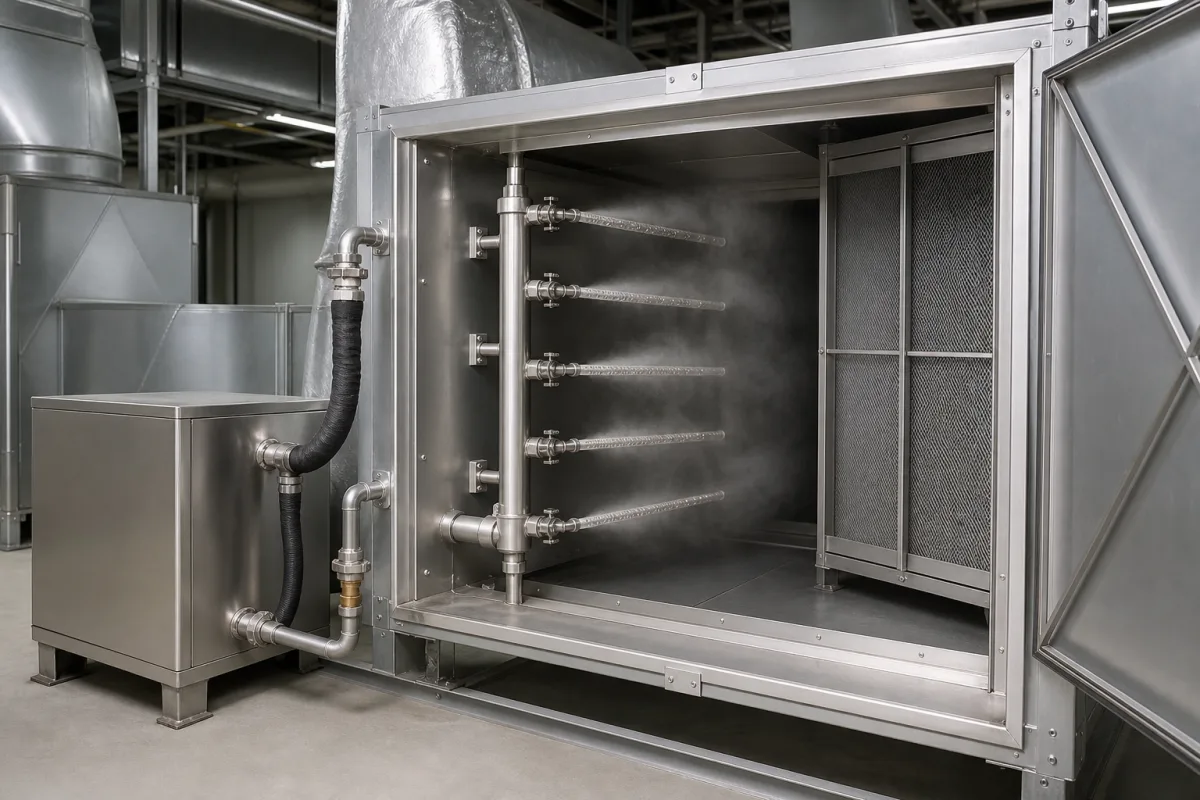
Humidifier in a manufacturing environment
Representative product image. Confirm appearance and specifications with the manufacturer.

Product Specifications

Technical details and manufacturing context for Humidifier

Definition
A humidifier is a component used in air conditioning and ventilation systems to regulate and maintain optimal humidity levels by introducing moisture into the air stream. It is commonly employed in industrial processes, commercial buildings, and residential settings to prevent dryness that can adversely affect materials, manufacturing processes, or human comfort. The device operates by evaporating water into the air using various methods, including ultrasonic vibration, steam generation, or wick/evaporative systems. Humidity sensors monitor the ambient relative humidity and control the humidifier's operation to maintain a setpoint level, ensuring consistent environmental conditions. Humidifiers are available in a range of configurations, with key parameters such as rated humidification capacity (200–2000 mL/h), tank capacity (1.5–10 L), noise level (25–50 dB(A) per ISO 3744), power consumption (20–200 W), operating voltage (220–240 V AC per IEC 60335-1), operating frequency (50–60 Hz), IP rating (IP21–IP24 per IEC 60529), operating temperature range (5–40 °C), operating humidity range (30–80 % RH), tank material (ABS/PP), net weight (1.5–8 kg), and dimensions (200×200×300 to 400×400×800 mm). Materials commonly used include stainless steel, plastic, and ceramic. Selection of a humidifier should be based on the specific application, room size, desired humidity rise, and environmental conditions. It is essential to verify model-specific values and standards with the legal manufacturer or supplier, as the figures provided are reference ranges for directory purposes and do not constitute certification or compliance guarantees.
Working Principle
The humidifier operates by adding moisture to the air through one of several mechanisms. Ultrasonic humidifiers use a vibrating element to create a fine mist that is dispersed into the air. Steam humidifiers generate steam by heating water and then release it into the air stream. Evaporative or wick systems use a absorbent material that is saturated with water, and a fan blows air through it to evaporate water. A humidity sensor measures the relative humidity and sends a signal to the control system, which activates or deactivates the humidification process to maintain the desired setpoint. The device is designed to operate within specified environmental ranges, and its performance is influenced by factors such as water quality, ambient temperature, and airflow.
Common Materials
Stainless Steel, Plastic, Ceramic
Technical Parameters
ParameterTypical rangeNotes & selection driver
Rated Humidification Capacity200–2000 mL/hSelect based on room size and desired humidity rise.
Tank Capacity1.5–10 LLarger tank reduces refill frequency.
Noise Level25–50 dB(A)Lower is better for bedroom use.ISO 3744
Power Consumption20–200 WUltrasonic types are lower; heating types higher.
Operating Voltage220–240 V ACFor China market; other voltages available.IEC 60335-1
Operating Frequency50–60 HzAuto-sensing or manual switch.
IP RatingIP21–IP24Protection against water splashes.IEC 60529
Operating Temperature Range5–40 °CBelow 5°C may cause freezing in tank.
Operating Humidity Range30–80 % RHAbove 80% may cause condensation.
Tank MaterialABS/PPFood-grade for safety.
Net Weight1.5–8 kgAffects portability and mounting.
Dimensions (W×D×H)200×200×300–400×400×800 mmCheck clearance for placement.

Ranges are indicative industry figures for RFQ preparation, not a supplier commitment. Confirm every value and standard with the legal manufacturer before ordering.

Components / BOM
  • Water Tank
    Stores water for humidification process
    Material: Stainless Steel
  • Ultrasonic Transducer
    Creates fine water mist through high-frequency vibration
    Material: Ceramic
  • Humidity Sensor
    Monitors ambient humidity levels for feedback control
    Material: Plastic/Electronic Components
  • Steam Heating Element Optional
    Boils the water on steam humidifiers; the vapour goes straight into the air stream.
  • Evaporative Wick Optional
    A wetted pad the fan blows through; water leaves as vapour without heat or mist.

Applied To / Applications

This component is essential for the following industrial systems and equipment:

Industrial Ecosystem & Supply Chain Structure

Complementary Systems
Downstream Applications
Specialized Tooling

Application Fit & Sizing Matrix

Operational Limits
pressure: Atmospheric to 0.5 bar gauge (typical)
flow rate: 50 to 1000 m³/h (air handling capacity)
temperature: 5°C to 40°C (operating ambient)
humidity range: 30% to 90% RH (output control range)
Media Compatibility
✓ Potable water ✓ Demineralized water ✓ Clean air systems
Unsuitable: Corrosive or conductive mist environments (e.g., chemical fume exhaust)
Sizing Data Required
  • Required humidification capacity (kg/h)
  • Room/duct air volume (m³)
  • Desired humidity setpoint (% RH)

Reliability & Engineering Risk Analysis

Failure Mode & Root Cause
Scale buildup and mineral deposition
Cause: Hard water usage without proper treatment leads to calcium and magnesium carbonate accumulation on heating elements, wicks, or ultrasonic plates, reducing efficiency and causing overheating or mechanical blockage.
Microbial contamination and biofilm formation
Cause: Stagnant water, inadequate cleaning, and high humidity environments promote bacterial, mold, or algae growth in reservoirs and on wet surfaces, leading to clogging, foul odors, and potential health hazards.
Maintenance Indicators
  • Visible white mineral deposits or slimy biofilm on internal components or output mist
  • Unusual noises (grinding, gurgling, or inconsistent fan operation) or reduced/uneven mist output
Engineering Tips
  • Use distilled or demineralized water exclusively to prevent scale formation, and implement regular descaling with citric acid or vinegar solutions per manufacturer guidelines.
  • Establish a strict cleaning and disinfection schedule (e.g., weekly), ensure complete drying of components during storage, and replace filters/wicks as recommended to control microbial growth.

Indicative industry ranges for design and RFQ preparation. Confirm the exact figures and applicable standard with the manufacturer before specifying.

Compliance & Manufacturing Standards

Applicable Standards
ISO 8573-1:2010 (Compressed air purity classes) ANSI/AHAM HU-1-2015 (Humidifier performance and safety) CE Marking (EU compliance for electrical safety and EMC)

Quoted from the published standard.

Manufacturing Precision
  • Water tank capacity: +/- 5% of rated volume
  • Humidity sensor accuracy: +/- 3% RH
Quality Inspection
  • Leak test (pressure decay method)
  • Electrical safety test (dielectric strength and insulation resistance)

Manufacturers of Humidifier

Manufacturer profiles associated with Humidifier.

Sourcing Humidifier from China?
Tell us your specification and target quantity — we will match it against manufacturer records and come back with the factories that fit.
Request manufacturers We manufacture this

Manufacturer listings support early research and capability understanding. They are not certification, ranking, or transaction guarantees.

Share this page
Technical documentation
Request current drawings, revision history, and a signed specification sheet.
Manufacturing capability
Verify equipment lists, process limits, capacity, and representative production evidence.
Inspection readiness
Confirm test methods, calibrated equipment, sampling plans, and traceable reports.
Supplier transparency
Check the legal entity, factory address, ownership, certifications, and direct contacts.

CNFX does not score or rank suppliers. Buyers must verify all claims and documents with the legal manufacturer before ordering.

Supply Chain Compatible Machinery & Devices

Heavy-Duty CNC Plasma Cutting Machine

The Heavy-Duty CNC Plasma Cutting Machine is a standalone industrial device designed for cutting conductive metals such as steel, stainless steel, aluminum, and copper alloys.

Explore Specs →
Automated Powder Coating System

Integrated industrial system for applying dry powder coatings to metal substrates.

Explore Specs →
Centrifugal Pump Impeller

The centrifugal pump impeller is a critical rotating component that converts mechanical energy from the motor into kinetic energy in fluid systems.

Explore Specs →
High-Precision CNC Laser Cutting Machine

Computer-controlled industrial machine using focused laser beams to cut sheet metal with micron-level accuracy.

Explore Specs →

Frequently Asked Questions

What is the typical humidification capacity range for a humidifier?

The rated humidification capacity typically ranges from 200 to 2000 mL/h, depending on the model. The appropriate capacity should be selected based on the room size and the desired humidity rise. Always verify the specific capacity with the manufacturer for your application.

What noise level can be expected from a humidifier?

Noise levels typically range from 25 to 50 dB(A), measured according to ISO 3744. Lower noise levels are preferable for bedroom use. Confirm the exact noise level for the specific model, as it may vary.

What are the operating voltage and frequency requirements?

The operating voltage is typically 220–240 V AC, and the operating frequency is 50–60 Hz. These values are for the China market; other voltages may be available. The standard IEC 60335-1 applies to safety. Verify the electrical specifications with the supplier.

What is the IP rating and why is it important?

The IP rating indicates the degree of protection against water splashes and solid particles. For humidifiers, the typical range is IP21 to IP24, as per IEC 60529. A higher IP rating means better protection, which is important in humid environments. Confirm the rating for your specific model.

Data Basis

Editorial classification, named public sources where available, and source-reviewed manufacturer records.

Preliminary Technical Classification
This page supports structured research, RFQ preparation, and supplier evaluation. It does not replace buyer-led supplier qualification, standards review, or technical approval.
Buyer enquiry

Request manufacturing insight for Humidifier

Ask for use case, specification boundaries, supplier type, and RFQ preparation information for this product.

Where it goes
Straight to the CNFX editorial desk, and to the manufacturer if this product is linked to a claimed profile. Nothing is broadcast to a supplier list.
Your details stay here
We do not sell or rent enquiry data, and we do not add you to a mailing list. Used only to answer this request.
No commission, no middleman
CNFX is a directory. We take no cut of any order and never negotiate on a supplier's behalf.
What we don't claim
A listing is not an endorsement. Qualify every supplier and verify every figure yourself before ordering.

Your business information is used only to process this request.

Thank you! Your message has been sent. We'll respond within 1–3 business days.
Sorry, we couldn't send your message. Please try again, or email us at [email protected].

Need to Manufacture Humidifier?

Compare manufacturer profiles with relevant product and process capability.

Previous Product
Z-axis Ram/Spindle
Last Product
Get QuotesChat