Sliding Carriage
View system integration details
This page explains how Linear Bearings is classified within Machinery and Equipment Manufacturing. Technical values and manufacturer relationships are research references; confirm the current specification and supplier evidence for each order.
Precision mechanical components that provide smooth, low-friction linear motion along a fixed axis.
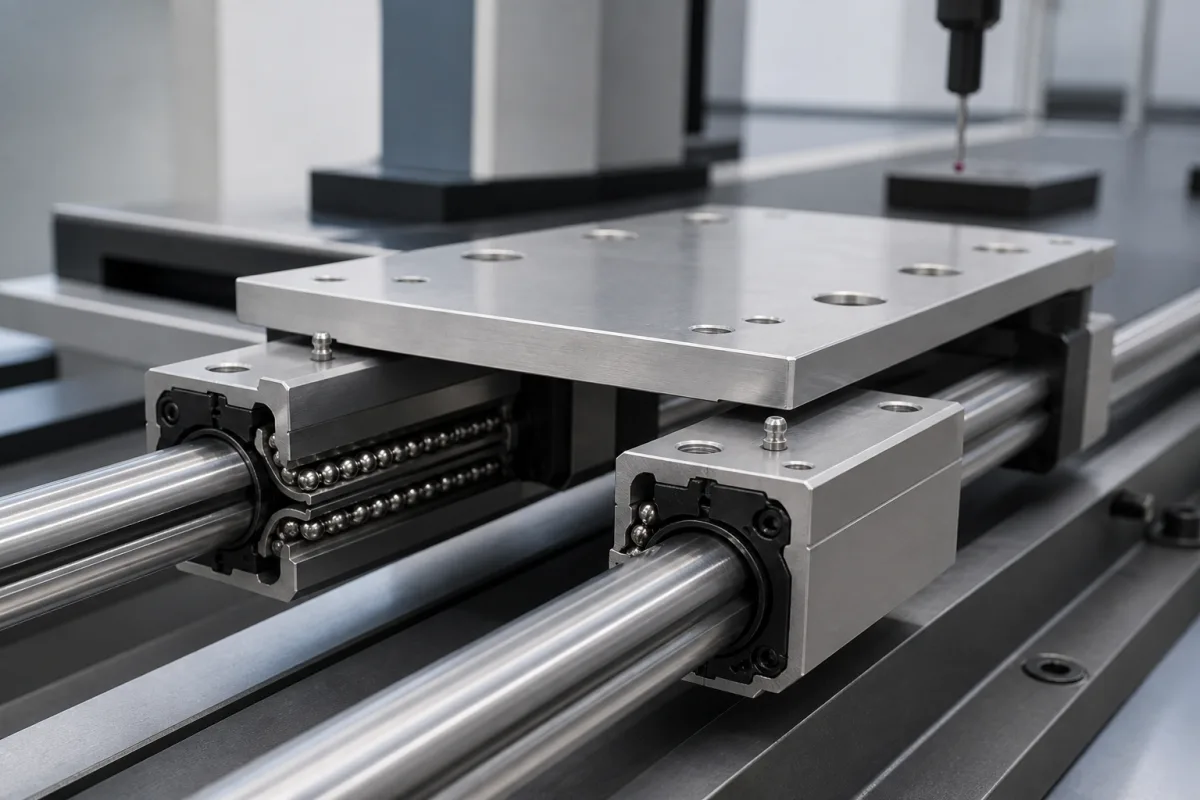
Technical details and manufacturing context for Linear Bearings
What to specify in your RFQ
These are the quantities to specify to the manufacturer when sizing or requesting a quote. The manufacturer's own documentation governs the exact figures and applicable standard.
| speed: | Max 2-5 m/s depending on lubrication and precision grade |
| pressure: | Max 10-15 MPa (100-150 bar) depending on size and material |
| temperature: | -20°C to +80°C (standard), up to +150°C with special materials |
| load capacity: | Dynamic: 1-50 kN, Static: 2-100 kN (varies by size and type) |
Indicative industry ranges for design and RFQ preparation. Confirm the exact figures and applicable standard with the manufacturer before specifying.
Quoted from the published standard.
A practical evidence checklist for RFQ preparation and supplier evaluation.
Compare the published product scope and source details, then include your specifications and quantity in an enquiry.
Manufacturer profiles associated with Linear Bearings.
Explore company information and manufacturing capabilities, then discuss the scope of your project with a relevant supplier.
Ask for use case, specification boundaries, supplier type, and RFQ preparation information for this product.
Linear bearings come in closed and open types. Closed bearings are fully enclosed and provide maximum load support, while open bearings have a slot to accommodate shafts with support rails or where space is limited. The choice depends on the application's load and mounting requirements.
The primary size parameter is the bore diameter (inner diameter), specified in millimeters. You must also consider load capacity, travel speed, and environmental factors. Always verify model-specific values and standards with the legal manufacturer or supplier to ensure suitability.
Common materials include chrome steel, stainless steel, and engineering plastics. Chrome steel offers high hardness and load capacity, stainless steel provides corrosion resistance, and engineering plastics are lightweight and low-noise. The material choice affects performance and durability.
Increased noise, vibration, or play in the carriage can indicate wear or contamination. If the bearing no longer moves smoothly or fails to support the required load, it may have reached its failure boundary. Regular inspection and proper lubrication are essential to extend service life.
This component is essential for the following industrial systems and equipment:
Editorial classification, named public sources where available, and source-reviewed manufacturer records.
Compare manufacturer profiles with relevant product and process capability.