Steam Generator Vessel
View system integration details
This page explains how Manway is classified within Machinery and Equipment Manufacturing. Technical values and manufacturer relationships are research references; confirm the current specification and supplier evidence for each order.
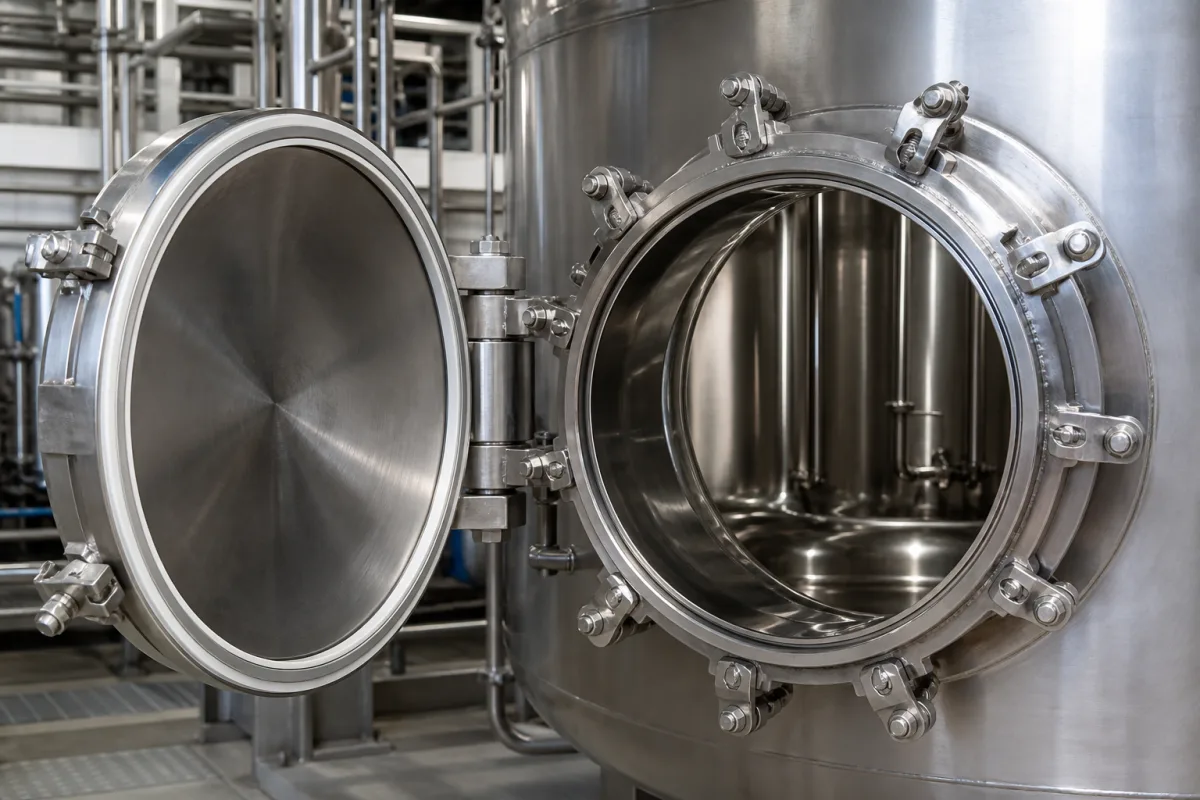
A sealed access opening in a pressure vessel for inspection, maintenance, and cleaning.
Technical details and manufacturing context for Manway
What to specify in your RFQ
These are the quantities to specify to the manufacturer when sizing or requesting a quote. The manufacturer's own documentation governs the exact figures and applicable standard.
| pressure: | Up to 1500 psi (dependent on size and design) |
| other spec: | Slurry concentration: Up to 60% solids by weight (dependent on abrasion resistance) |
| temperature: | -40°C to 400°C (dependent on gasket and material) |
Indicative industry ranges for design and RFQ preparation. Confirm the exact figures and applicable standard with the manufacturer before specifying.
Quoted from the published standard.
A practical evidence checklist for RFQ preparation and supplier evaluation.
Compare the published product scope and source details, then include your specifications and quantity in an enquiry.
Manufacturer profiles associated with Manway.
Explore company information and manufacturing capabilities, then discuss the scope of your project with a relevant supplier.
Ask for use case, specification boundaries, supplier type, and RFQ preparation information for this product.
A manway provides a sealed access opening in a pressure vessel, allowing personnel to enter for inspection, maintenance, cleaning, and component replacement while maintaining pressure integrity when closed.
Manways are commonly made from carbon steel, stainless steel, or alloy steel, depending on the application's pressure, temperature, and corrosion requirements. The specific material grade must be confirmed with the manufacturer.
A manway is sealed using a gasket compressed between the cover and the flanged opening, secured by bolts or a quick-opening mechanism. This maintains the vessel's pressure integrity when closed.
Common dimensions include circular openings of 450 mm diameter or oval openings of 600 mm x 400 mm. These are reference values; the exact size must be confirmed for the specific model and application.
This component is essential for the following industrial systems and equipment:
Editorial classification, named public sources where available, and source-reviewed manufacturer records.
Compare manufacturer profiles with relevant product and process capability.