Industry-Verified Manufacturing Data (2026)

Measurement Probe

Based on aggregated insights from multiple verified factory profiles within the CNFX directory, the standard Measurement Probe used in the Machinery and Equipment Manufacturing sector typically supports operational capacities ranging from standard industrial configurations to heavy-duty production requirements.

Technical Definition & Core Assembly

A canonical Measurement Probe is characterized by the integration of Sensing Tip/Head and Transducer Element. In industrial production environments, manufacturers listed on CNFX commonly emphasize Stainless Steel construction to support stable, high-cycle operation across diverse manufacturing scenarios.

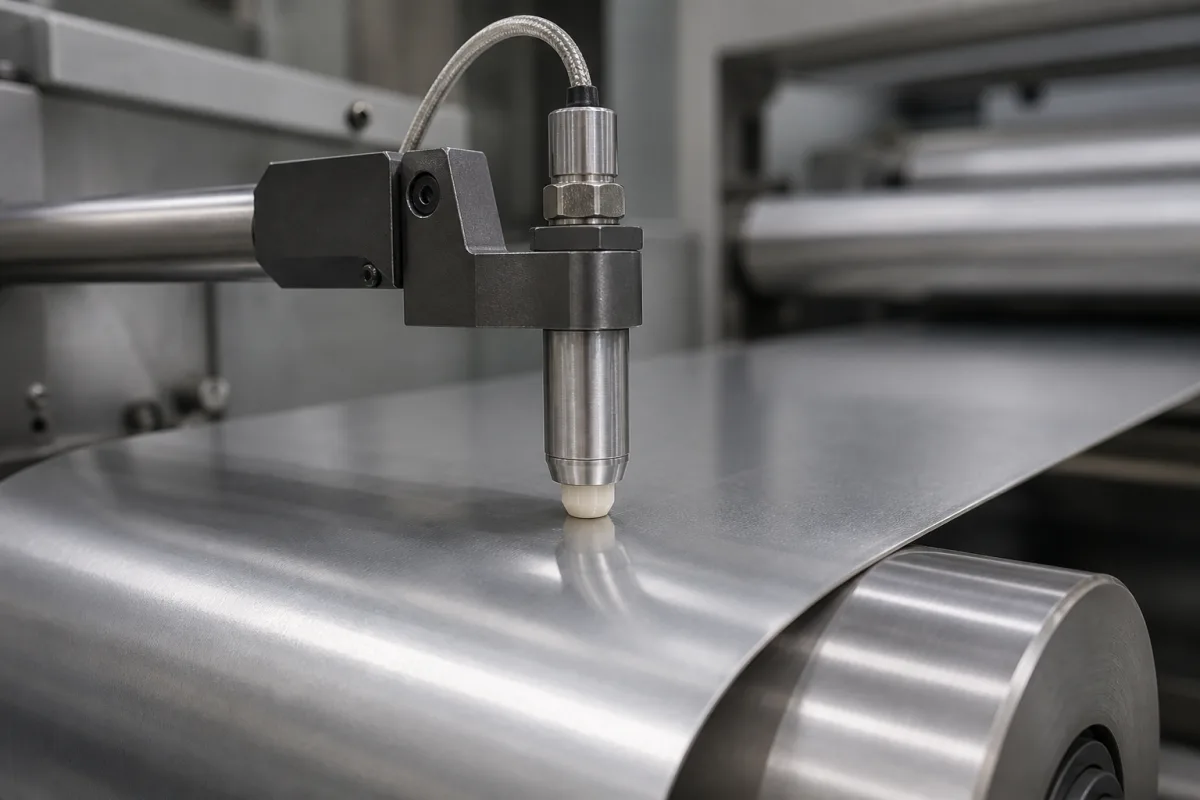
A sensing element that directly contacts or interacts with the material surface to detect thickness variations.
Product Specifications

Technical details and manufacturing context for Measurement Probe

Definition
The measurement probe is the critical sensing component within a thickness measurement sensor system. It physically interfaces with the material being measured, detecting surface position or distance through various principles (contact, non-contact, ultrasonic, etc.), and transmits this data to the sensor's processing unit for thickness calculation. Its design and precision directly determine the accuracy and reliability of the overall thickness measurement.
Working Principle
The probe operates by generating a signal (mechanical, electromagnetic, ultrasonic, or optical) towards the material surface. It then detects the response (contact force, reflected signal, eddy current change, time-of-flight). This interaction is converted into an electrical signal proportional to the distance or position of the surface, which is used to compute material thickness when combined with a reference measurement.
Common Materials
Stainless Steel, Ceramic (Tip), Piezoelectric Crystal (for ultrasonic probes), Copper Coil (for eddy current probes)
Technical Parameters
  • Probe tip diameter or contact area, critical for measurement resolution and minimum measurable feature size. (mm) Customizable
Components / BOM
  • Sensing Tip/Head
    The part that directly interacts with the material surface. Its geometry and material define contact area, wear resistance, and signal generation/detection.
    Material: Hardened Steel, Ceramic, Diamond, or specific transducer material
  • Transducer Element
    Converts the physical interaction (force, distance, reflection) into an electrical signal. Type varies by probe technology (strain gauge, piezoelectric crystal, coil, photodiode).
    Material: Piezoelectric Crystal, Copper Coil, Semiconductor
  • Probe Body/Housing
    Protects internal components, provides structural integrity, and often includes mounting features. Ensures environmental sealing and mechanical stability.
    Material: Stainless Steel, Aluminum Alloy
  • Signal Cable/Connector
    Transmits the electrical signal from the transducer to the sensor's signal conditioning or processing unit.
    Material: Shielded Copper Cable, Industrial Connector (e.g., M12)
Engineering Reasoning
0.1-25.0 mm thickness measurement range with ±0.5 μm resolution
Contact force exceeding 2.5 N causes permanent probe tip deformation
Design Rationale: Plastic deformation of tungsten carbide tip material beyond its yield strength of 4500 MPa
Risk Mitigation (FMEA)
Trigger Electrostatic discharge exceeding 15 kV during handling
Mode: Piezoelectric crystal depolarization in sensing element
Strategy: ESD-protected storage containers with surface resistivity <10^9 Ω/sq
Trigger Cyclic thermal loading from 20°C to 150°C at 5 Hz frequency
Mode: Thermal expansion mismatch fracture at ceramic-metal interface
Strategy: Coefficient of thermal expansion matching within 1.2×10^-6/K between alumina housing and Kovar seal

Industry Taxonomies & Aliases

Commonly used trade names and technical identifiers for Measurement Probe.

Applied To / Applications

This component is essential for the following industrial systems and equipment:

Industrial Ecosystem & Supply Chain DNA

Complementary Systems
Downstream Applications
Specialized Tooling

Application Fit & Sizing Matrix

Operational Limits
pressure: 0 to 10 bar
temperature: -20°C to 150°C
measurement range: 0.1 to 100 mm
surface roughness: Ra ≤ 6.3 μm
Media Compatibility
✓ Metals (steel, aluminum) ✓ Polymers (PVC, polyethylene) ✓ Ceramics
Unsuitable: Abrasive slurries with high particulate concentration (>20% solids)
Sizing Data Required
  • Material hardness (Rockwell/Shore scale)
  • Required measurement accuracy (± mm)
  • Surface accessibility/clearance constraints

Reliability & Engineering Risk Analysis

Failure Mode & Root Cause
Signal Drift/Calibration Loss
Cause: Thermal cycling, mechanical stress, or contamination altering the probe's sensing element or internal electronics, leading to inaccurate measurements.
Physical Damage or Wear
Cause: Abrasion from contact with measured surfaces, impact from misalignment or foreign objects, or corrosion from harsh environments degrading the probe tip or housing.
Maintenance Indicators
  • Inconsistent or erratic readings compared to known standards or redundant probes
  • Visible damage such as cracks, dents, or corrosion on the probe tip or body, or unusual noises during operation
Engineering Tips
  • Implement regular calibration checks and environmental controls (e.g., temperature stabilization) to maintain signal integrity
  • Use protective housings or non-contact designs where possible, and ensure proper alignment and handling procedures to minimize physical stress

Compliance & Manufacturing Standards

Reference Standards
ISO 10360-2:2009 - Acceptance and reverification tests for coordinate measuring machines (CMMs) ANSI/ASME B89.1.13M - Dimensional Measuring Equipment: Coordinate Measuring Machines (CMMs) DIN EN ISO 10360-2 - Geometrical product specifications (GPS) - Acceptance and reverification tests for coordinate measuring machines (CMMs)
Manufacturing Precision
  • Stylus tip sphericity: +/-0.0005 mm
  • Probe repeatability: +/-0.001 mm
Quality Inspection
  • Laser interferometry for geometric accuracy verification
  • Dynamic performance test for probing force and deflection consistency

Factories Producing Measurement Probe

Verified manufacturers with capability to produce this product in China

✓ 98% Supplier Capability Match Found

P Procurement Specialist from Singapore Jan 03, 2026
★★★★★
"As a professional in the Machinery and Equipment Manufacturing sector, I confirm this Measurement Probe meets all ISO standards."
Technical Specifications Verified
T Technical Director from Germany Dec 31, 2025
★★★★★
"Standard OEM quality for Machinery and Equipment Manufacturing applications. The Measurement Probe arrived with full certification."
Technical Specifications Verified
P Project Engineer from Brazil Dec 28, 2025
★★★★★
"Great transparency on the Measurement Probe components. Essential for our Machinery and Equipment Manufacturing supply chain."
Technical Specifications Verified
Verification Protocol

“Feedback is collected from verified sourcing managers during RFQ (Request for Quote) and factory evaluation processes on CNFX. These reports represent historical performance data and technical audit summaries from our B2B manufacturing network.”

7 sourcing managers are analyzing this specification now. Last inquiry for Measurement Probe from Turkey (1h ago).

Supply Chain Compatible Machinery & Devices

Hydraulic Press

Industrial machine using hydraulic pressure to compress, form, or assemble materials

Explore Specs →
Heavy-Duty CNC Plasma Cutting Machine

Industrial machine for precision metal cutting using plasma arc technology

Explore Specs →
Automated Assembly Line System

Integrated production system for sequential component assembly operations

Explore Specs →
Automated Powder Coating System

Integrated industrial system for applying dry powder coatings to metal substrates.

Explore Specs →

Frequently Asked Questions

What materials are used in measurement probe construction for durability?

Our measurement probes feature stainless steel bodies for corrosion resistance, ceramic tips for wear resistance in abrasive applications, and specialized elements like piezoelectric crystals or copper coils depending on the sensing technology (ultrasonic or eddy current).

How does a measurement probe detect thickness variations in manufacturing?

The probe's sensing tip directly contacts or interacts with the material surface. Transducer elements convert physical interactions into electrical signals that measure thickness differences, enabling precise quality control in machinery manufacturing processes.

What are the main components of a measurement probe assembly?

Key components include the sensing tip/head for surface interaction, transducer element for signal conversion, probe body/housing for protection and mounting, and signal cable/connector for data transmission to measurement systems.

Can I contact factories directly on CNFX?

CNFX is an open directory, not a transaction platform. Each factory profile provides direct contact information and production details to help you initiate direct inquiries with Chinese suppliers.

Get Quote for Measurement Probe

Request technical pricing, lead times, or customized specifications for Measurement Probe directly from verified manufacturing units.

Your business information is encrypted and only shared with verified Measurement Probe suppliers.

Thank you! Your message has been sent. We'll respond within 1–3 business days.

Need to Manufacture Measurement Probe?

Connect with verified factories specializing in this product category

Add Your Factory Contact Us
Previous Product
Measurement Head
Next Product
Measurement Probe (Stylus)