Quenching System
View system integration details
This page explains how Nozzle Array/Manifold is classified within Machinery and Equipment Manufacturing. Technical values and manufacturer relationships are research references; confirm the current specification and supplier evidence for each order.
A distribution component in quenching systems that organizes and directs multiple nozzles for controlled fluid application.
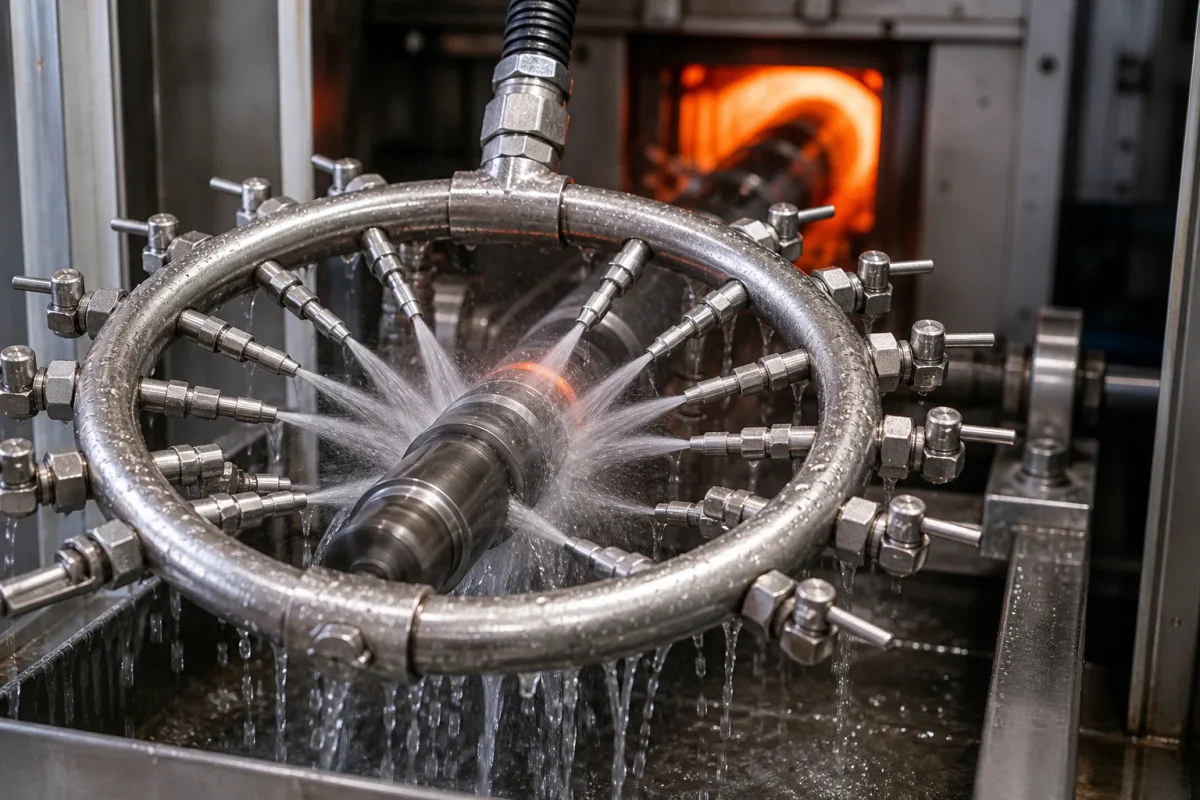
Technical details and manufacturing context for Nozzle Array/Manifold
| Parameter | Typical range | Notes & selection driver |
|---|---|---|
| Number of Nozzles | 4–24 pcs | Determines coverage area and flow distribution. |
| Nozzle Spacing | 20–100 mm | Affects uniformity of cooling. |
| Inlet Connection Size | 1/4–2 inch | Must match existing piping.ISO 7-1 |
| Operating Pressure | 1.0–1.6 MPa | |
| Flow Rate | 10–200 L/min | Total flow through manifold; depends on nozzle size. |
| Operating Temperature | -40–85 °C | Material and seals must withstand temperature range. |
| Material | 304/316 SS | 316 for corrosive environments.ASTM A240 |
| Weight | 2–15 kg | Affects mounting and handling. |
| Overall Dimensions | 200–1000 mm | Length of manifold; other dimensions vary. |
| Surface Finish | Ra 0.8–3.2 µm | Smoother finish reduces fouling.ISO 1302 |
Ranges are indicative industry figures for RFQ preparation, not a supplier commitment. Confirm every value and standard with the legal manufacturer before ordering.
This component is essential for the following industrial systems and equipment:
| pressure: | 0-10 bar (max operating) |
| flow rate: | 0.5-50 L/min per nozzle |
| temperature: | -20°C to 150°C |
| slurry concentration: | ≤15% solids by weight |
Indicative industry ranges for design and RFQ preparation. Confirm the exact figures and applicable standard with the manufacturer before specifying.
Quoted from the published standard.
Manufacturer profiles associated with Nozzle Array/Manifold.
Manufacturer listings support early research and capability understanding. They are not certification, ranking, or transaction guarantees.
A practical evidence checklist for RFQ preparation and supplier evaluation.
CNFX does not score or rank suppliers. Buyers must verify all claims and documents with the legal manufacturer before ordering.
It acts as a central distribution hub that organizes multiple nozzles and ensures uniform fluid delivery across the target surface, enabling consistent cooling rates and preventing thermal distortion.
Stainless steel (grades 304 or 316 per ASTM A240), carbon steel, and brass are typical. Stainless steel 316 is recommended for corrosive environments.
Operating pressure is usually 1.0 to 1.6 MPa. Operating temperature ranges from -40 to 85°C, requiring suitable material and seals.
Check the manufacturer's datasheet for the exact number of nozzles, spacing, inlet size, flow rate, pressure rating, and material. Confirm compliance with relevant standards such as ISO 7-1 for connections.
Editorial classification, named public sources where available, and source-reviewed manufacturer records.
Ask for use case, specification boundaries, supplier type, and RFQ preparation information for this product.
Compare manufacturer profiles with relevant product and process capability.