Vacuum Manifold
View system integration details
This page explains how Manifold Body is classified within Machinery and Equipment Manufacturing. Technical values and manufacturer relationships are research references; confirm the current specification and supplier evidence for each order.
The main structural housing of a vacuum manifold that provides the framework for connecting and distributing vacuum lines.
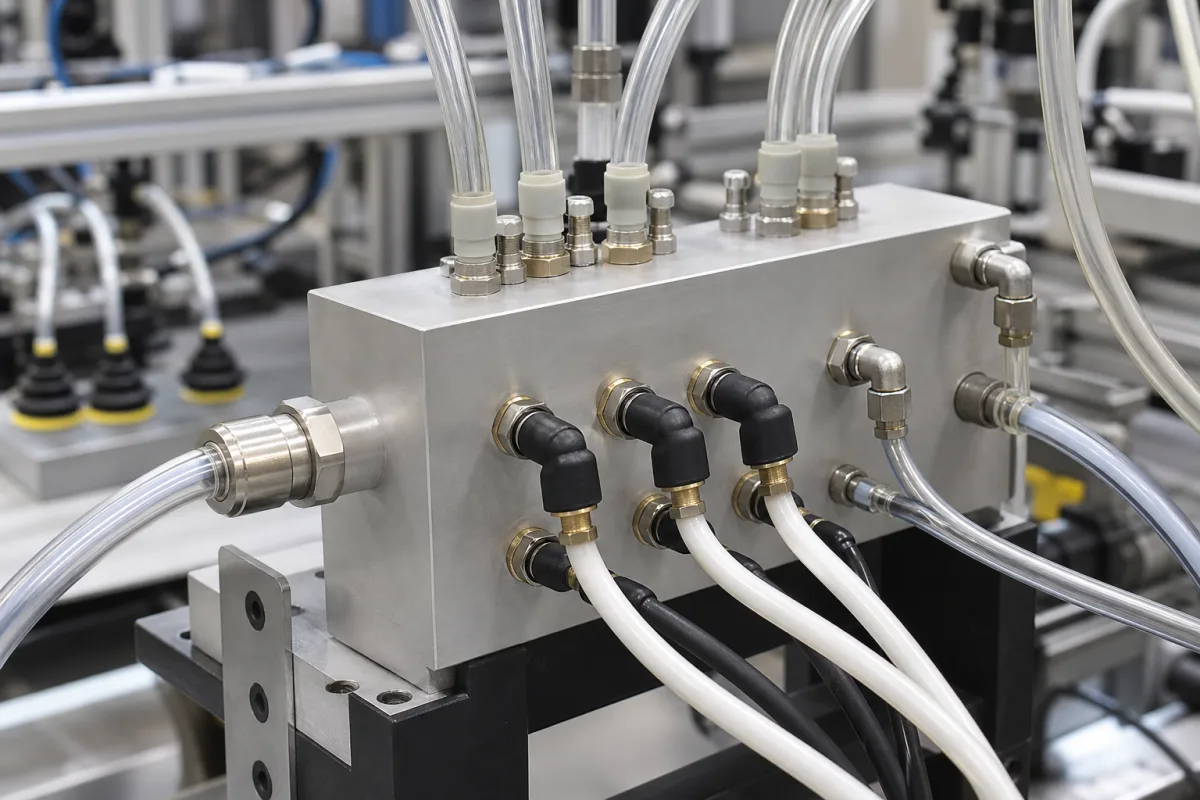
Technical details and manufacturing context for Manifold Body
What to specify in your RFQ
These are the quantities to specify to the manufacturer when sizing or requesting a quote. The manufacturer's own documentation governs the exact figures and applicable standard.
| pressure: | Full vacuum to 10 bar |
| other spec: | Flow rate: Up to 500 L/min, Slurry concentration: ≤5% solids by weight |
| temperature: | -40°C to 150°C |
Indicative industry ranges for design and RFQ preparation. Confirm the exact figures and applicable standard with the manufacturer before specifying.
Quoted from the published standard.
A practical evidence checklist for RFQ preparation and supplier evaluation.
Compare the published product scope and source details, then include your specifications and quantity in an enquiry.
Manufacturer profiles associated with Manifold Body.
Explore company information and manufacturing capabilities, then discuss the scope of your project with a relevant supplier.
Ask for use case, specification boundaries, supplier type, and RFQ preparation information for this product.
The manifold body is the main structural housing of a vacuum manifold. It provides the framework for connecting and distributing vacuum lines, supports other components, and maintains a sealed environment for vacuum operations.
According to the source data, stainless steel and aluminum alloy are the materials on file. These materials are selected for their strength, corrosion resistance, and machinability, but specific grades should be confirmed with the manufacturer.
It maintains vacuum integrity through its rigid, sealed construction and precisely machined internal passages. Proper sealing surfaces prevent leaks, and the body is designed to withstand pressure differentials without deformation.
You should verify overall dimensions (length, width, height, and port-to-port distances) in millimeters, as well as material compatibility, port sizes, and configuration. Always confirm model-specific values with the manufacturer or supplier.
This component is essential for the following industrial systems and equipment:
Editorial classification, named public sources where available, and source-reviewed manufacturer records.
Compare manufacturer profiles with relevant product and process capability.