Editorial Technical Reference

Pressure Equalization Chamber

This page explains how Pressure Equalization Chamber is classified within Machinery and Equipment Manufacturing. Technical values and manufacturer relationships are research references; confirm the current specification and supplier evidence for each order.

Technical Definition & Core Assembly

A chamber within a steam distribution manifold designed to equalize pressure between different steam lines or zones.
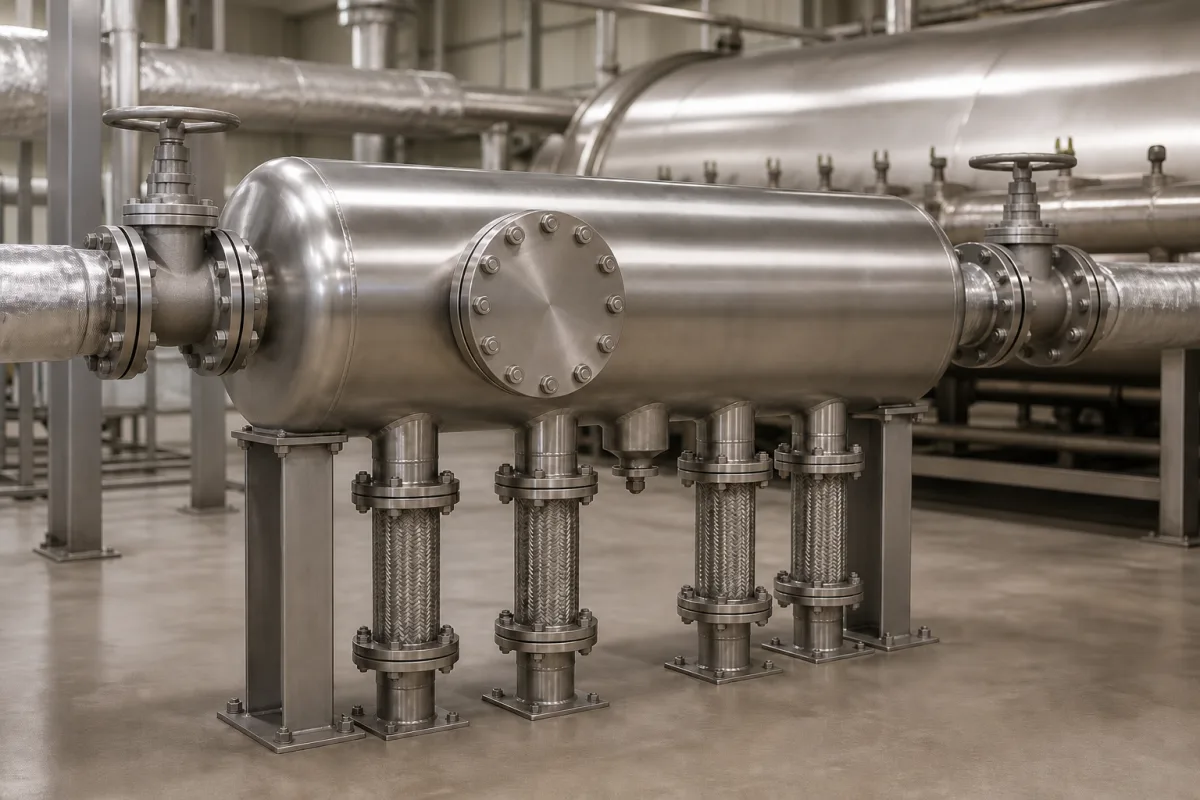
Pressure Equalization Chamber in a manufacturing environment
Representative product image. Confirm appearance and specifications with the manufacturer.

Product Specifications

Technical details and manufacturing context for Pressure Equalization Chamber

Definition
The Pressure Equalization Chamber is a critical component of a Steam Distribution Manifold. Its primary function is to balance and stabilize steam pressure across multiple distribution branches or heating zones connected to the manifold. This ensures consistent steam delivery, prevents pressure surges or drops in individual lines, and protects downstream equipment from pressure-related stress or damage. The chamber is typically constructed from carbon steel or stainless steel, with design parameters such as a maximum allowable working pressure of 1.6 MPa (per GB/T 150) and a maximum continuous operating temperature of 200°C. The internal volume acts as a buffer, allowing steam to flow into or out of the chamber as demand varies, thereby maintaining a uniform pressure at the manifold outlets. Key specifications include a volume range of 0.5–2.0 m³, shell thickness of 8–16 mm (per GB/T 150), inlet/outlet diameters from DN50 to DN300 (per GB/T 9115), and a pressure equalization accuracy of ±0.05 MPa. Material grade for carbon steel is Q345R (per GB/T 713), with a corrosion allowance of 1.5 mm (per GB/T 150). The leakage rate is ≤0.1% at rated pressure, and weight ranges from 500–2000 kg. Surface treatment includes blast cleaning to Sa2.5 (per ISO 8501-1) and a painting system of epoxy primer and topcoat with a total dry film thickness of 2×80 μm (per ISO 12944). These values are reference ranges and must be verified for the specific model and application with the legal manufacturer or supplier. The chamber is designed for steam service and should be selected based on steam demand and pressure stability requirements. Proper installation, maintenance, and adherence to applicable standards are essential for safe and reliable operation.
Working Principle
Steam from the main supply enters the chamber. The internal volume of the chamber acts as a buffer, allowing pressure to equalize naturally. As demand varies in different downstream lines, steam flows into or out of the chamber to maintain a uniform pressure at the manifold outlet(s), preventing imbalances that could affect process consistency or equipment safety. The chamber's design, including its volume and inlet/outlet sizes, is selected to match the expected steam flow and pressure variations. The pressure equalization accuracy of ±0.05 MPa indicates the chamber's ability to maintain pressure differences between zones within a tight tolerance. This principle ensures stable steam delivery and protects downstream equipment from pressure surges or drops.
Common Materials
Carbon Steel, Stainless Steel
Technical Parameters
ParameterTypical rangeNotes & selection driver
Design Pressure1.6 MPaMaximum allowable working pressureGB/T 150
Design Temperature200 °CMaximum continuous operating temperature
Volume0.5–2.0 Select based on steam demand and pressure stability
Shell Thickness8–16 mmDepends on design pressure and diameterGB/T 150
Inlet/Outlet DiameterDN50–DN300 mmMatch piping size for required flowGB/T 9115
Pressure Equalization Accuracy±0.05 MPaMaintains pressure difference between zones
Material GradeQ345RCarbon steel for steam serviceGB/T 713
Corrosion Allowance1.5 mmFor steam condensate environmentGB/T 150
Leakage Rate≤0.1 %At rated pressure, for safety
Weight500–2000 kgDepends on volume and material
Surface TreatmentSa2.5Blast cleaning before paintingISO 8501-1
Painting System2×80 μmEpoxy primer and topcoatISO 12944

Ranges are indicative industry figures for RFQ preparation, not a supplier commitment. Confirm every value and standard with the legal manufacturer before ordering.

Components / BOM
  • Chamber Body Part
    Primary pressure-containing vessel providing the buffer volume.
    Material: Carbon Steel or Stainless Steel
  • Inlet Nozzle Part
    Connection point for steam entry from the manifold supply.
    Material: Carbon Steel or Stainless Steel
  • Outlet Nozzle(s) Part
    Connection point(s) for steam distribution to downstream lines.
    Material: Carbon Steel or Stainless Steel
  • Pressure Gauge Port Part
    Threaded connection for mounting a pressure gauge to monitor chamber pressure.
    Material: Carbon Steel or Stainless Steel
  • Drain Port Part
    Connection for a drain valve to remove condensate from the chamber.
    Material: Carbon Steel or Stainless Steel

Applied To / Applications

This component is essential for the following industrial systems and equipment:

Industrial Ecosystem & Supply Chain Structure

Complementary Systems
Downstream Applications
Specialized Tooling

Application Fit & Sizing Matrix

Operational Limits
pressure: Up to 25 bar (363 psi) standard, up to 100 bar (1450 psi) with reinforced design
flow rate: Dependent on chamber volume and connection size, typically 0.5-50 m³/h steam flow
temperature: Up to 250°C (482°F) for standard carbon steel, higher with alloy materials
slurry concentration: Not applicable - designed for clean steam applications only
Media Compatibility
✓ Saturated steam distribution systems ✓ Superheated steam networks ✓ Process steam with minimal condensate
Unsuitable: Corrosive chemical vapors or acidic condensate environments
Sizing Data Required
  • Maximum differential pressure between zones (bar)
  • Required equalization response time (seconds)
  • Total connected steam volume (m³)

Reliability & Engineering Risk Analysis

Failure Mode & Root Cause
Corrosion-induced wall thinning
Cause: Exposure to corrosive process fluids or atmospheric conditions, accelerated by temperature fluctuations and moisture ingress, leading to material degradation and reduced structural integrity.
Gasket/seal failure leading to pressure loss
Cause: Thermal cycling, chemical attack on sealing materials, improper bolt torque during assembly, or fatigue from pressure fluctuations compromising the pressure boundary.
Maintenance Indicators
  • Audible hissing or whistling indicating pressure leakage around seals or connections
  • Visible external corrosion, weeping, or discoloration on chamber walls or welds
Engineering Tips
  • Implement routine non-destructive testing (ultrasonic thickness gauging) to monitor wall thickness and schedule proactive replacement before failure occurs.
  • Establish a torque audit program for all bolted connections with calibrated tools and documented procedures to maintain proper gasket compression and prevent seal degradation.

Indicative industry ranges for design and RFQ preparation. Confirm the exact figures and applicable standard with the manufacturer before specifying.

Compliance & Manufacturing Standards

Applicable Standards
ISO 1217:2009 (Displacement compressors - Acceptance tests) ASME B31.3:2022 (Process Piping) DIN EN 13445-3:2021 (Unfired pressure vessels - Part 3: Design)

Quoted from the published standard.

Manufacturing Precision
  • Bore diameter: +/-0.025mm
  • Surface flatness: 0.05mm per 100mm
Quality Inspection
  • Hydrostatic pressure test
  • Dye penetrant inspection for surface defects

Manufacturers of Pressure Equalization Chamber

Manufacturer profiles associated with Pressure Equalization Chamber.

Sourcing Pressure Equalization Chamber from China?
Tell us your specification and target quantity — we will match it against manufacturer records and come back with the factories that fit.
Request manufacturers We manufacture this

Manufacturer listings support early research and capability understanding. They are not certification, ranking, or transaction guarantees.

Share this page
Technical documentation
Request current drawings, revision history, and a signed specification sheet.
Manufacturing capability
Verify equipment lists, process limits, capacity, and representative production evidence.
Inspection readiness
Confirm test methods, calibrated equipment, sampling plans, and traceable reports.
Supplier transparency
Check the legal entity, factory address, ownership, certifications, and direct contacts.

CNFX does not score or rank suppliers. Buyers must verify all claims and documents with the legal manufacturer before ordering.

Supply Chain Compatible Machinery & Devices

Hydraulic Press

Industrial machine using hydraulic pressure to compress, form, or assemble materials

Explore Specs →
Heavy-Duty CNC Plasma Cutting Machine

The Heavy-Duty CNC Plasma Cutting Machine is a standalone industrial device designed for cutting conductive metals such as steel, stainless steel, aluminum, and copper alloys.

Explore Specs →
Automated Powder Coating System

Integrated industrial system for applying dry powder coatings to metal substrates.

Explore Specs →
Centrifugal Pump Impeller

The centrifugal pump impeller is a critical rotating component that converts mechanical energy from the motor into kinetic energy in fluid systems.

Explore Specs →

Frequently Asked Questions

What is the primary function of a Pressure Equalization Chamber?

The primary function is to balance and stabilize steam pressure across multiple distribution branches or heating zones connected to a steam distribution manifold. It ensures consistent steam delivery and prevents pressure surges or drops in individual lines.

What materials are commonly used for this chamber?

The chamber is typically made from carbon steel or stainless steel. For carbon steel, a common material grade is Q345R, as listed in the reference data. The choice depends on the application and environmental conditions.

What are the key design parameters to consider?

Key parameters include design pressure (up to 1.6 MPa), design temperature (up to 200°C), volume (0.5–2.0 m³), shell thickness (8–16 mm), inlet/outlet diameter (DN50–DN300), and pressure equalization accuracy (±0.05 MPa). These values are reference ranges and must be confirmed for the specific model.

How should I verify the suitability of this chamber for my application?

You should consult the legal manufacturer or supplier to verify that the chamber's specifications, such as pressure rating, temperature rating, and materials, meet your system requirements. Also, ensure compliance with applicable standards like GB/T 150.

Data Basis

Editorial classification, named public sources where available, and source-reviewed manufacturer records.

Preliminary Technical Classification
This page supports structured research, RFQ preparation, and supplier evaluation. It does not replace buyer-led supplier qualification, standards review, or technical approval.
Buyer enquiry

Request manufacturing insight for Pressure Equalization Chamber

Ask for use case, specification boundaries, supplier type, and RFQ preparation information for this product.

Where it goes
Straight to the CNFX editorial desk, and to the manufacturer if this product is linked to a claimed profile. Nothing is broadcast to a supplier list.
Your details stay here
We do not sell or rent enquiry data, and we do not add you to a mailing list. Used only to answer this request.
No commission, no middleman
CNFX is a directory. We take no cut of any order and never negotiate on a supplier's behalf.
What we don't claim
A listing is not an endorsement. Qualify every supplier and verify every figure yourself before ordering.

Your business information is used only to process this request.

Thank you! Your message has been sent. We'll respond within 1–3 business days.
Sorry, we couldn't send your message. Please try again, or email us at [email protected].

Need to Manufacture Pressure Equalization Chamber?

Compare manufacturer profiles with relevant product and process capability.

Previous Product
Z-axis Ram/Spindle
Last Product
Get QuotesChat