Position Transducer
View system integration details
This page explains how Position Magnet / Target is classified within Machinery and Equipment Manufacturing. Technical values and manufacturer relationships are research references; confirm the current specification and supplier evidence for each order.
Magnetic component used in position transducers to provide a detectable reference point for position measurement.
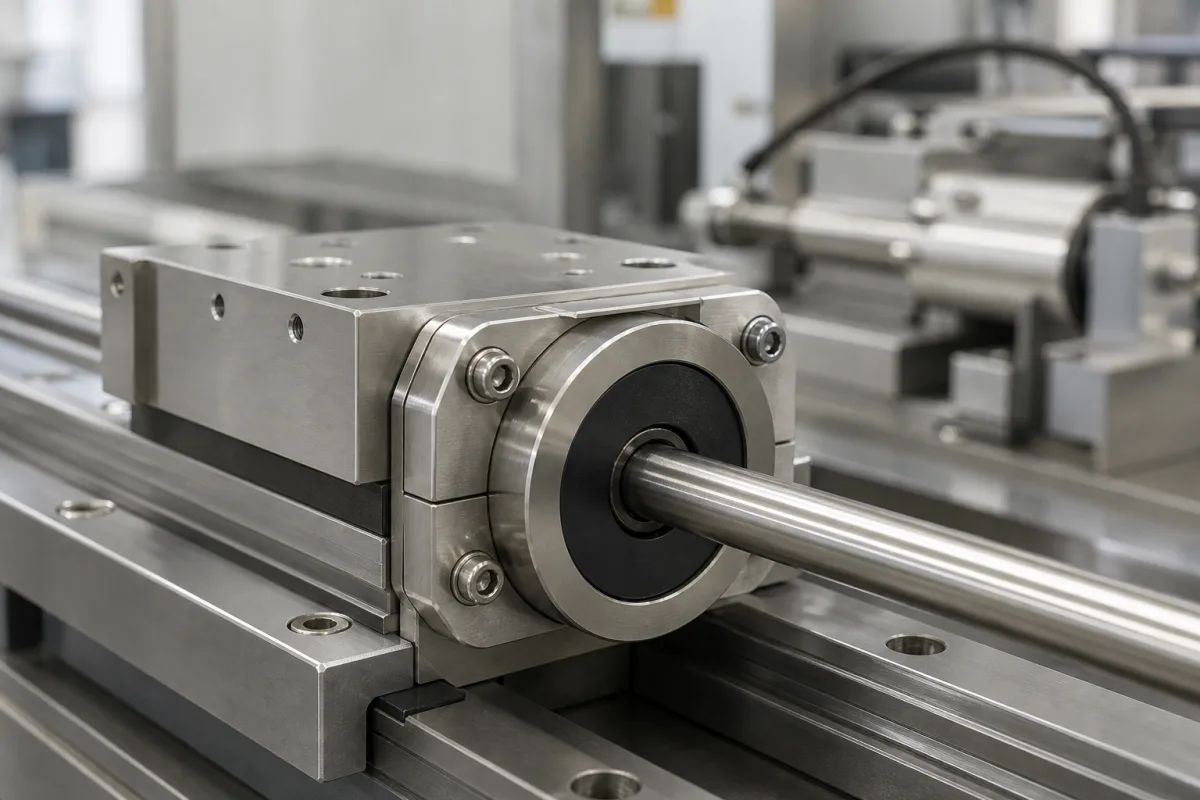
Technical details and manufacturing context for Position Magnet / Target
| Parameter | Typical range | Notes & selection driver |
|---|---|---|
| Magnet Material | NdFeB, SmCo, AlNiCo, Ferrite | NdFeB for highest strength; SmCo for high temperature |
| Magnet Grade | N35–N52, SmCo 16–32, AlNiCo 5–9, Ferrite C5–C8 | Higher grade = higher remanence |
| Magnet Diameter | 5–50 mm | Custom sizes available |
| Magnet Thickness | 2–20 mm | Affects magnetic field strength |
| Magnetic Flux Density | 0.2–1.4 T | At surface; depends on material and geometry |
| Operating Temperature | -40–150 °C | SmCo up to 350°C; NdFeB limited to 150°C |
| Coercivity | 600–2400 kA/m | Resistance to demagnetization |
| Remanence | 0.8–1.4 T | Residual induction after magnetization |
| Maximum Energy Product | 200–400 kJ/m³ | Higher for NdFeB |
| Tolerance on Dimensions | ±0.05–±0.1 mm | Tighter tolerance for precise positioningISO 2768 |
| Surface Coating | Ni, Zn, Epoxy, Au | Protects against corrosion |
| Weight | 1–100 g | Depends on size and material |
Ranges are indicative industry figures for RFQ preparation, not a supplier commitment. Confirm every value and standard with the legal manufacturer before ordering.
| pressure: | Atmospheric to 10 bar |
| other spec: | Max magnetic field strength: 0.5 T, Operating frequency: DC to 1 kHz |
| temperature: | -40°C to +150°C |
Indicative industry ranges for design and RFQ preparation. Confirm the exact figures and applicable standard with the manufacturer before specifying.
Quoted from the published standard.
A practical evidence checklist for RFQ preparation and supplier evaluation.
Compare the published product scope and source details, then include your specifications and quantity in an enquiry.
Manufacturer profiles associated with Position Magnet / Target.
Explore company information and manufacturing capabilities, then discuss the scope of your project with a relevant supplier.
Ask for use case, specification boundaries, supplier type, and RFQ preparation information for this product.
Common materials include Neodymium Iron Boron (NdFeB), Samarium Cobalt (SmCo), Alnico, and Ferrite. NdFeB offers the highest magnetic strength but has a lower maximum operating temperature (typically up to 150°C). SmCo can operate up to 350°C. Alnico and Ferrite are used in less demanding applications. The choice depends on required magnetic field strength, temperature range, and cost.
Magnet grade indicates the material's magnetic performance, such as remanence and coercivity. For NdFeB, grades range from N35 to N52, with higher numbers indicating stronger magnetic properties. SmCo grades range from 16 to 32, Alnico from 5 to 9, and Ferrite from C5 to C8. The grade must be chosen based on the required magnetic flux density and resistance to demagnetization in the application.
Typical magnet diameters range from 5 to 50 mm, and thicknesses from 2 to 20 mm. Tolerances on dimensions are typically ±0.05 to ±0.1 mm, per ISO 2768. Tighter tolerances are available for precise positioning applications. Always verify the exact dimensions and tolerances with the supplier for your specific model.
Operating temperature affects magnetic properties. NdFeB magnets have a maximum operating temperature of about 150°C, while SmCo can withstand up to 350°C. At high temperatures, magnetic flux density and coercivity may decrease, to reduced performance or demagnetization. The specified operating temperature range for the magnet is -40 to 150°C, but this depends on material and grade. Confirm the temperature limits with the manufacturer.
This component is essential for the following industrial systems and equipment:
Editorial classification, named public sources where available, and source-reviewed manufacturer records.
Compare manufacturer profiles with relevant product and process capability.