Editorial Technical Reference

Pressure Sensors

This page explains how Pressure Sensors is classified within Machinery and Equipment Manufacturing. Technical values and manufacturer relationships are research references; confirm the current specification and supplier evidence for each order.

Technical Definition & Core Assembly

Devices that measure and monitor pressure levels within gas flushing units and vacuum pumps
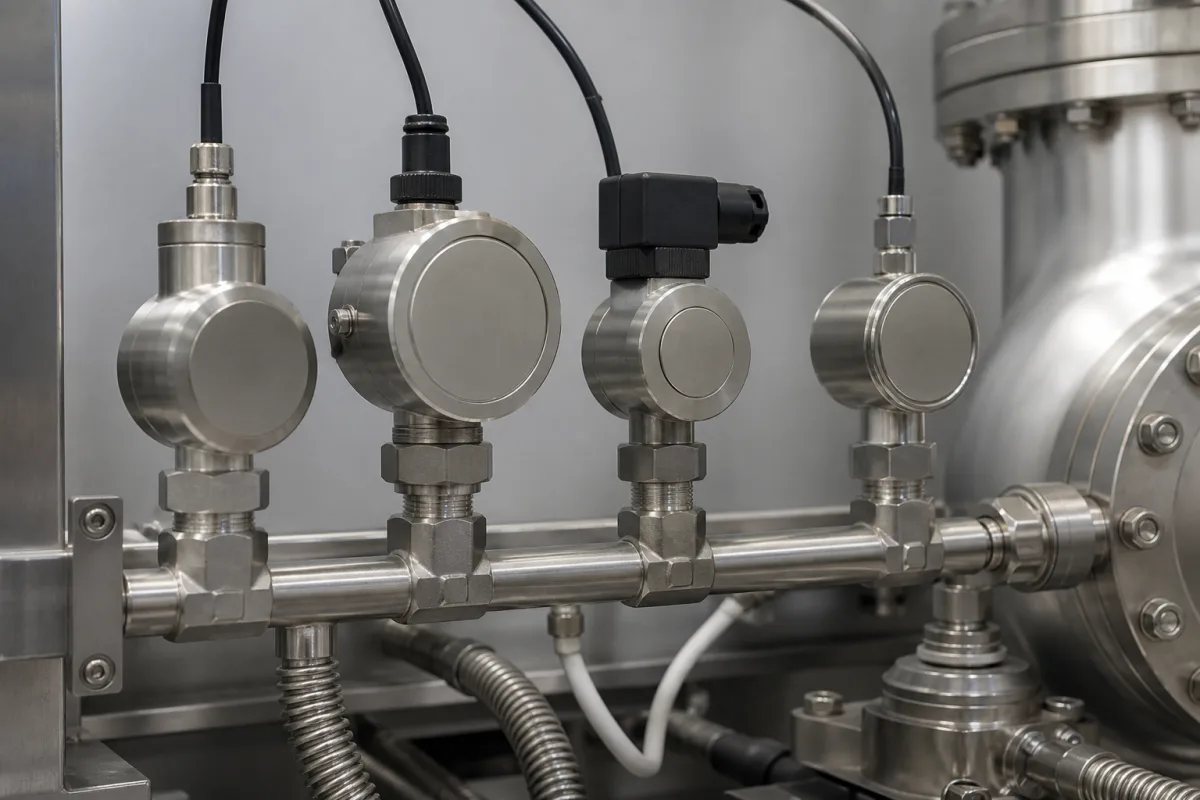
Representative product image. Confirm appearance and specifications with the manufacturer.

Product Specifications

Technical details and manufacturing context for Pressure Sensors

Definition
Pressure sensors are critical components in gas flushing units and vacuum pumps that detect, measure, and provide feedback on pressure conditions within the system. They ensure proper vacuum levels are maintained during gas flushing operations and monitor pressure differentials to optimize performance and safety. These sensors convert mechanical pressure into electrical signals, enabling control systems to respond to changing conditions. Common technologies include piezoresistive, capacitive, or piezoelectric elements that deform under pressure, creating measurable electrical changes calibrated to specific pressure ranges. The sensors are typically housed in stainless steel with a silicon sensing element on a ceramic substrate, providing durability and accuracy. The pressure measurement range typically spans from vacuum (0 bar absolute) to 10 bar gauge pressure, but exact specifications must be confirmed for the specific model and application. When selecting a pressure sensor, consider the required pressure range, media compatibility, electrical output, and environmental conditions. Verify that the sensor's materials are suitable for the process media and that the electrical interface matches the control system. For procurement, confirm the sensor's pressure range, accuracy, and any applicable standards with the manufacturer or supplier. Maintenance signals include erratic readings, drift, or failure to respond to pressure changes, which may indicate contamination, mechanical damage, or electrical issues. Failure boundaries include exceeding the maximum pressure rating, which can cause permanent damage, or exposure to incompatible media that may corrode the sensing element. Always consult the manufacturer's documentation for installation, calibration, and safety guidelines.
Working Principle
Pressure sensors operate by converting mechanical pressure into an electrical signal. In piezoresistive sensors, a silicon diaphragm with embedded resistors changes resistance when deformed by pressure. Capacitive sensors use a diaphragm and a fixed plate; pressure changes the gap, altering capacitance. Piezoelectric sensors generate a charge when stress is applied. The resulting electrical change is calibrated to a specific pressure range, typically from vacuum to 10 bar gauge. The signal is then processed and transmitted to a control system for monitoring and feedback.
Common Materials
Stainless steel housing, Silicon sensing element, Ceramic substrate
Technical Parameters

What to specify in your RFQ

  • Pressure measurement range typically from vacuum (0 bar absolute) to 10 bar gauge pressure in bar

These are the quantities to specify to the manufacturer when sizing or requesting a quote. The manufacturer's own documentation governs the exact figures and applicable standard.

Components / BOM
  • Sensing Element Part
    Converts pressure into electrical signal through deformation or capacitance change
    Material: Silicon or ceramic
  • Diaphragm Part
    Flexible membrane that transfers pressure to sensing element
    Material: Stainless steel or silicon
  • Signal Conditioning Circuit
    Amplifies and processes raw electrical signals from sensing element
    Material: Printed circuit board with electronic components
  • Housing Part
    Protects internal components from environmental factors and provides mounting interface
    Material: Stainless steel or aluminum

Applied To / Applications

This component is essential for the following industrial systems and equipment:

Industrial Ecosystem & Supply Chain Structure

Complementary Systems
Downstream Applications
Specialized Tooling

Application Fit & Sizing Matrix

Operational Limits
pressure: 0 to 100 bar (absolute/gauge/differential depending on type)
flow rate: Not applicable (static pressure measurement)
temperature: -40°C to 125°C
slurry concentration: Not recommended for high-solids slurries (>5% solids)
Media Compatibility
✓ Inert gases (N2, Ar) ✓ Clean process air ✓ Vacuum-grade oils
Unsuitable: Corrosive media (HF, strong acids) without specialized isolation
Sizing Data Required
  • Required pressure range (bar/psi)
  • Process media compatibility
  • Output signal type (4-20mA, 0-10V, digital)

Reliability & Engineering Risk Analysis

Failure Mode & Root Cause
Drift/Calibration Loss
Cause: Thermal cycling, mechanical stress, or contamination causing diaphragm deformation or strain gauge degradation, leading to inaccurate pressure readings over time.
Electrical Failure
Cause: Moisture ingress, corrosion, or vibration-induced damage to wiring, connectors, or internal electronics, resulting in signal loss, noise, or complete sensor failure.
Maintenance Indicators
  • Erratic or fluctuating pressure readings inconsistent with process conditions
  • Zero or full-scale output when pressure is applied or removed
Engineering Tips
  • Implement regular calibration checks using traceable standards, especially after temperature extremes or mechanical shocks, to detect and correct drift early.
  • Ensure proper sealing of electrical connections and use vibration-resistant mounting to protect internal components from environmental stressors.

Indicative industry ranges for design and RFQ preparation. Confirm the exact figures and applicable standard with the manufacturer before specifying.

Compliance & Manufacturing Standards

Applicable Standards
CE Marking (EU Directive 2014/35/EU) - Electrical equipment safety ASTM E74-18 - Calibration of force-measuring instruments for verifying the force indication of testing machines

Quoted from the published standard.

Manufacturing Precision
  • Pressure accuracy: +/-0.25% full scale
  • Temperature compensation: +/-1.0°C over operating range
Quality Inspection
  • Pressure calibration test against traceable standards
  • Environmental stress screening (temperature, humidity, vibration)

Manufacturers of Pressure Sensors

Manufacturer profiles associated with Pressure Sensors.

Sourcing Pressure Sensors from China?
Tell us your specification and target quantity — we will match it against manufacturer records and come back with the factories that fit.
Request manufacturers We manufacture this

Manufacturer listings support early research and capability understanding. They are not certification, ranking, or transaction guarantees.

Technical documentation
Request current drawings, revision history, and a signed specification sheet.
Manufacturing capability
Verify equipment lists, process limits, capacity, and representative production evidence.
Inspection readiness
Confirm test methods, calibrated equipment, sampling plans, and traceable reports.
Supplier transparency
Check the legal entity, factory address, ownership, certifications, and direct contacts.

CNFX does not score or rank suppliers. Buyers must verify all claims and documents with the legal manufacturer before ordering.

Supply Chain Compatible Machinery & Devices

Automated Powder Coating System

Integrated industrial system for applying dry powder coatings to metal substrates.

Explore Specs →
Centrifugal Pump Impeller

The centrifugal pump impeller is a critical rotating component that converts mechanical energy from the motor into kinetic energy in fluid systems.

Explore Specs →
High-Precision CNC Laser Cutting Machine

Computer-controlled industrial machine using focused laser beams to cut sheet metal with micron-level accuracy.

Explore Specs →
Industrial-Grade Hydraulic Cylinder Piston Rod

This industrial-grade piston rod is a precision-ground cylindrical component designed for use in hydraulic cylinders.

Explore Specs →

Frequently Asked Questions

What pressure range do these sensors typically cover?

The typical range is from vacuum (0 bar absolute) to 10 bar gauge pressure, but the exact range depends on the specific model. Always verify the rated range with the manufacturer or supplier for your application.

What materials are commonly used in these sensors?

Common materials include a stainless steel housing, a silicon sensing element, and a ceramic substrate. Confirm material compatibility with your process media to avoid corrosion or damage.

How do I know if a pressure sensor is failing?

Signs of failure include erratic readings, drift from calibrated values, or no response to pressure changes. These may indicate contamination, mechanical damage, or electrical issues. Regular calibration and inspection are recommended.

What standards apply to these pressure sensors?

No specific standards are listed for this product. For procurement, verify any applicable industry standards or certifications with the manufacturer or supplier, as they are not implied by this directory listing.

Data Basis

Editorial classification, named public sources where available, and source-reviewed manufacturer records.

Preliminary Technical Classification
This page supports structured research, RFQ preparation, and supplier evaluation. It does not replace buyer-led supplier qualification, standards review, or technical approval.
Buyer enquiry

Request manufacturing insight for Pressure Sensors

Ask for use case, specification boundaries, supplier type, and RFQ preparation information for this product.

Where it goes
Straight to the CNFX editorial desk, and to the manufacturer if this product is linked to a claimed profile. Nothing is broadcast to a supplier list.
Your details stay here
We do not sell or rent enquiry data, and we do not add you to a mailing list. Used only to answer this request.
No commission, no middleman
CNFX is a directory. We take no cut of any order and never negotiate on a supplier's behalf.
What we don't claim
A listing is not an endorsement. Qualify every supplier and verify every figure yourself before ordering.

Your business information is used only to process this request.

Thank you! Your message has been sent. We'll respond within 1–3 business days.
Sorry, we couldn't send your message. Please try again, or email us at contact@cnfx.com.

Need to Manufacture Pressure Sensors?

Compare manufacturer profiles with relevant product and process capability.

Previous Product
Z-axis Ram/Spindle
Last Product
Get QuotesChat