Industry-Verified Manufacturing Data (2026)

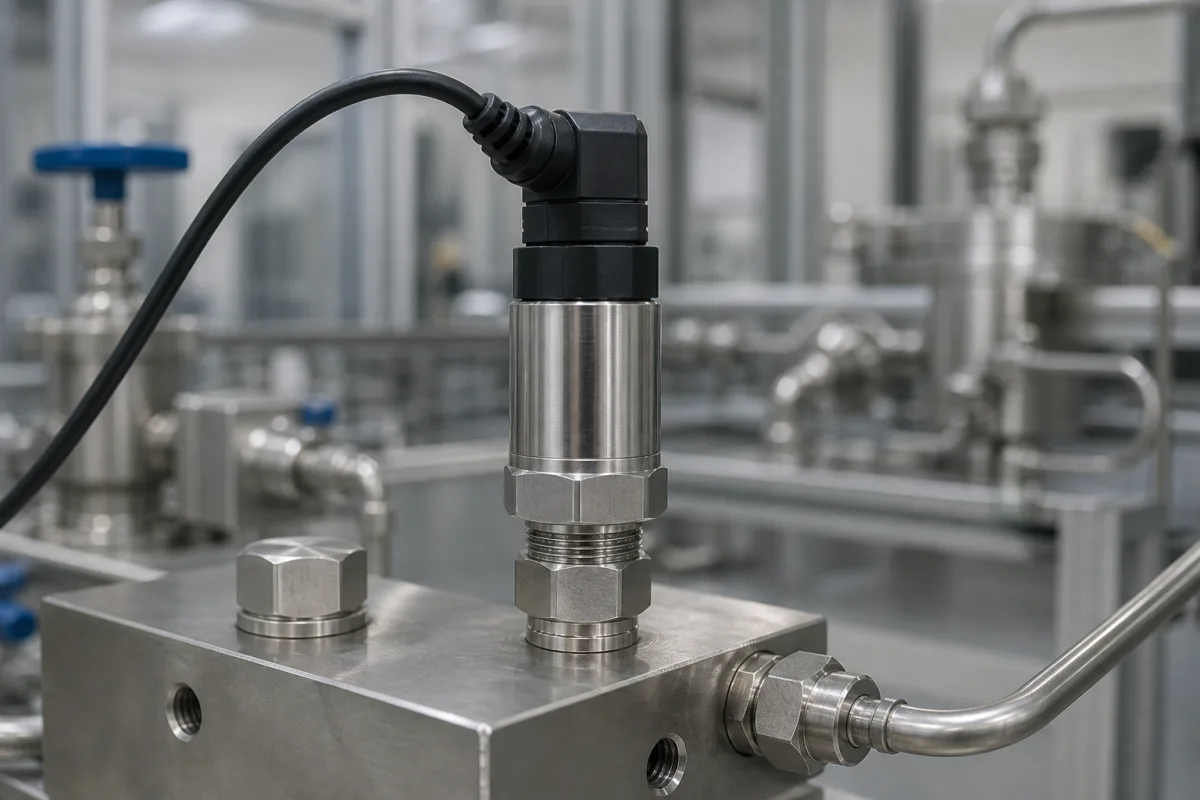
Pressure Sensor/Transducer

Based on aggregated insights from multiple verified factory profiles within the CNFX directory, the standard Pressure Sensor/Transducer used in the Machinery and Equipment Manufacturing sector typically supports operational capacities ranging from standard industrial configurations to heavy-duty production requirements.

Technical Definition & Core Assembly

A canonical Pressure Sensor/Transducer is characterized by the integration of Pressure Sensing Diaphragm and Strain Gauge / Piezoresistor. In industrial production environments, manufacturers listed on CNFX commonly emphasize Stainless Steel (housing/diaphragm) construction to support stable, high-cycle operation across diverse manufacturing scenarios.

A device that converts pressure into an electrical signal for measurement and control.
Product Specifications

Technical details and manufacturing context for Pressure Sensor/Transducer

Definition
A critical component within a Pressure Testing Unit that detects and measures fluid or gas pressure, converting it into a standardized electrical output signal (e.g., 4-20mA, 0-10V) for monitoring, data acquisition, and control systems to ensure testing accuracy and safety.
Working Principle
Typically operates on principles such as piezoresistive, capacitive, or strain gauge. Applied pressure causes a physical deformation in a sensing element (diaphragm), which changes its electrical properties (resistance, capacitance). This change is measured by an internal circuit and converted into a proportional electrical output signal.
Common Materials
Stainless Steel (housing/diaphragm), Silicon (piezoresistive sensing element), Ceramic (capacitive sensing element)
Technical Parameters
  • Pressure range (e.g., 0-100 bar) (bar, psi, kPa, MPa) Per Request
Components / BOM
  • Pressure Sensing Diaphragm
    The primary element that deflects under applied pressure, initiating the measurement process.
    Material: Stainless Steel, Silicon, or Ceramic
  • Strain Gauge / Piezoresistor
    Attached to the diaphragm; changes electrical resistance in response to diaphragm strain.
    Material: Silicon, Metal Foil
  • Signal Conditioning Circuit (ASIC)
    Amplifies, linearizes, and temperature-compensates the raw signal from the sensing element, converting it to the standard output.
    Material: Semiconductor (Silicon)
  • Housing / Body
    Protects internal components from the environment and provides mechanical mounting and process connection.
    Material: Stainless Steel, Aluminum, Plastic
  • Electrical Connector / Cable
    Provides the interface for power supply and output signal transmission to the control system.
    Material: Brass, Plastic, Copper
Engineering Reasoning
0-100 bar absolute pressure
150 bar burst pressure for diaphragm rupture
Design Rationale: Diaphragm plastic deformation exceeding yield strength of 316L stainless steel (205 MPa) at 150 bar differential pressure
Risk Mitigation (FMEA)
Trigger Condensation ingress into sensor cavity
Mode: Bridge circuit short circuit
Strategy: Hermetic sealing with laser-welded 316L stainless steel housing rated to IP68
Trigger Thermal cycling between -40°C and 125°C
Mode: Wheatstone bridge resistor drift exceeding 0.1% FS
Strategy: Temperature-compensated piezoresistive silicon chip with 0.02%/°C TCR matching

Industry Taxonomies & Aliases

Commonly used trade names and technical identifiers for Pressure Sensor/Transducer.

Applied To / Applications

This component is essential for the following industrial systems and equipment:

Industrial Ecosystem & Supply Chain DNA

Complementary Systems
Downstream Applications
Specialized Tooling

Application Fit & Sizing Matrix

Operational Limits
pressure: 0 to 1000 psi (max operating pressure)
other spec: Flow Rate: 0-100 L/min, Slurry Concentration: <5% solids by weight
temperature: -40°C to 125°C
Media Compatibility
✓ Water/Glycol Mixtures ✓ Hydraulic Oil (ISO VG 32/46) ✓ Compressed Air (dry, oil-free)
Unsuitable: Concentrated Hydrochloric Acid (HCl) due to corrosion of wetted parts
Sizing Data Required
  • Process Pressure Range (min/max)
  • Required Output Signal (e.g., 4-20mA, 0-10V)
  • Process Connection Size/Type (e.g., 1/4" NPT, G1/2)

Reliability & Engineering Risk Analysis

Failure Mode & Root Cause
Diaphragm fatigue or rupture
Cause: Excessive pressure cycling, overpressure events, or corrosive media attacking the sensing element material
Zero drift or calibration loss
Cause: Temperature extremes beyond specification, moisture ingress, or electronic component degradation over time
Maintenance Indicators
  • Erratic or unstable readings on the control system display
  • Physical damage such as cracks, corrosion, or fluid leaks around the sensor housing
Engineering Tips
  • Install pressure snubbers or pulsation dampeners to protect against water hammer and pressure spikes
  • Implement regular calibration checks using traceable standards and maintain environmental protection (conduit seals, weatherproof enclosures)

Compliance & Manufacturing Standards

Reference Standards
ISO 9001:2015 - Quality Management Systems ANSI/ISA-51.1-1979 (R2017) - Process Instrumentation Terminology DIN EN 60770-1:2011 - Transmitters for use in industrial-process control systems
Manufacturing Precision
  • Pressure Accuracy: +/-0.25% of full scale
  • Temperature Effect: +/-0.02% per °C
Quality Inspection
  • Pressure Calibration Test against NIST-traceable standards
  • Environmental Stress Screening (ESS) including thermal cycling and vibration

Factories Producing Pressure Sensor/Transducer

Verified manufacturers with capability to produce this product in China

✓ 96% Supplier Capability Match Found

T Technical Director from Australia Feb 27, 2026
★★★★★
"Found 22+ suppliers for Pressure Sensor/Transducer on CNFX, but this spec remains the most cost-effective."
Technical Specifications Verified
P Project Engineer from Singapore Feb 24, 2026
★★★★☆
"The technical documentation for this Pressure Sensor/Transducer is very thorough, especially regarding technical reliability. (Delivery took slightly longer than expected, but technical support was excellent.)"
Technical Specifications Verified
S Sourcing Manager from Germany Feb 21, 2026
★★★★★
"Reliable performance in harsh Machinery and Equipment Manufacturing environments. No issues with the Pressure Sensor/Transducer so far."
Technical Specifications Verified
Verification Protocol

“Feedback is collected from verified sourcing managers during RFQ (Request for Quote) and factory evaluation processes on CNFX. These reports represent historical performance data and technical audit summaries from our B2B manufacturing network.”

10 sourcing managers are analyzing this specification now. Last inquiry for Pressure Sensor/Transducer from Germany (48m ago).

Supply Chain Compatible Machinery & Devices

Automated Assembly Line System

Integrated production system for sequential component assembly operations

Explore Specs →
Automated Powder Coating System

Integrated industrial system for applying dry powder coatings to metal substrates.

Explore Specs →
Centrifugal Pump Impeller

Rotating component that transfers energy to fluid in centrifugal pumps.

Explore Specs →
High-Precision CNC Laser Cutting Machine

Computer-controlled industrial machine using focused laser beams to cut sheet metal with micron-level accuracy.

Explore Specs →

Frequently Asked Questions

What are the main applications of this pressure sensor in machinery manufacturing?

This pressure sensor is used for hydraulic system monitoring, pneumatic control, pump performance measurement, compressor regulation, and process control in industrial machinery to ensure optimal operation and safety.

How does the stainless steel housing benefit industrial environments?

The stainless steel housing provides corrosion resistance, durability against physical impacts, protection from harsh chemicals, and maintains performance in extreme temperatures common in manufacturing facilities.

What's the difference between piezoresistive and capacitive sensing elements in this product?

Piezoresistive elements (silicon-based) offer high sensitivity and linear response for dynamic pressure measurements, while capacitive elements (ceramic-based) provide excellent stability and accuracy for static pressure applications in machinery.

Can I contact factories directly on CNFX?

CNFX is an open directory, not a transaction platform. Each factory profile provides direct contact information and production details to help you initiate direct inquiries with Chinese suppliers.

Get Quote for Pressure Sensor/Transducer

Request technical pricing, lead times, or customized specifications for Pressure Sensor/Transducer directly from verified manufacturing units.

Your business information is encrypted and only shared with verified Pressure Sensor/Transducer suppliers.

Thank you! Your message has been sent. We'll respond within 1–3 business days.

Need to Manufacture Pressure Sensor/Transducer?

Connect with verified factories specializing in this product category

Add Your Factory Contact Us
Previous Product
Pressure Sensor
Next Product
Pressure Sensor/Transmitter