Industry-Verified Manufacturing Data (2026)

Pressure/Temperature Sensors

Based on aggregated insights from multiple verified factory profiles within the CNFX directory, the standard Pressure/Temperature Sensors used in the Machinery and Equipment Manufacturing sector typically supports operational capacities ranging from standard industrial configurations to heavy-duty production requirements.

Technical Definition & Core Assembly

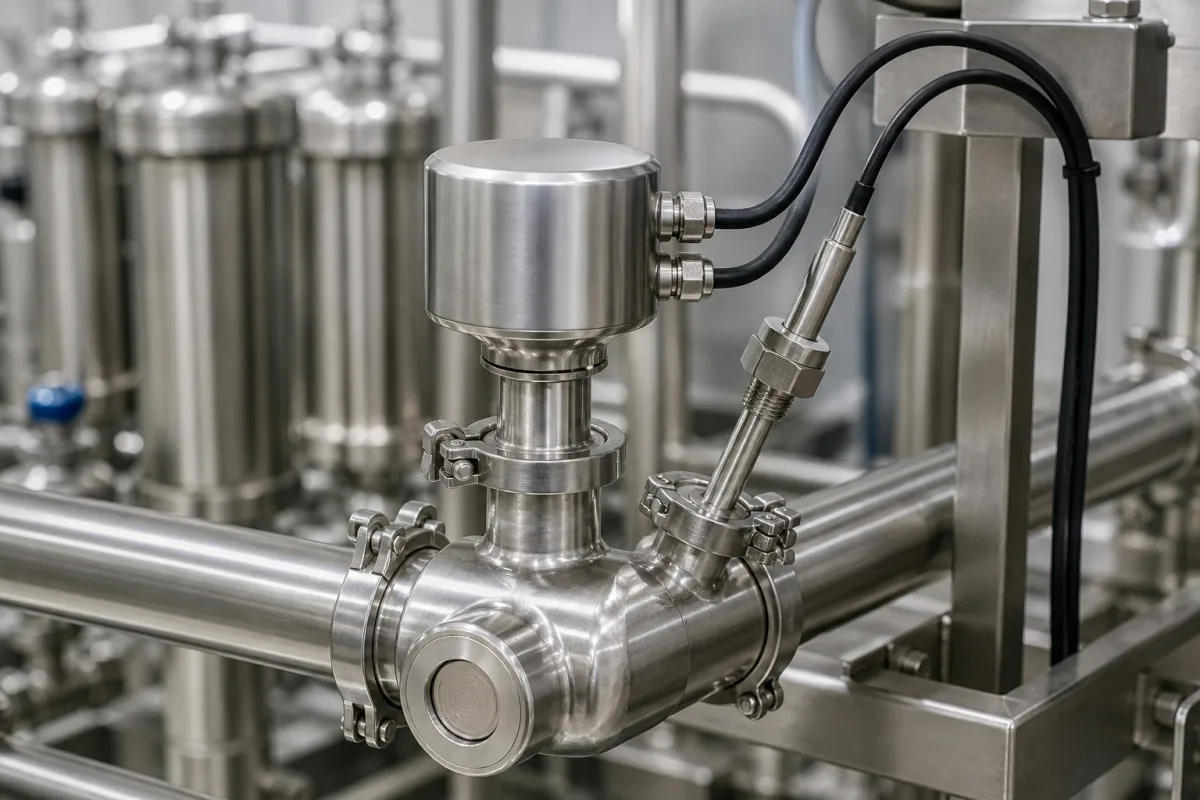
A canonical Pressure/Temperature Sensors is characterized by the integration of Pressure Sensing Element and Temperature Sensing Element. In industrial production environments, manufacturers listed on CNFX commonly emphasize Stainless steel housing construction to support stable, high-cycle operation across diverse manufacturing scenarios.

Integrated sensors that simultaneously monitor pressure and temperature conditions within the separation unit's fluid stream.
Product Specifications

Technical details and manufacturing context for Pressure/Temperature Sensors

Definition
Dual-function sensors installed in the In-line Separation Unit to provide real-time monitoring of both pressure and temperature parameters. These sensors are critical for maintaining optimal separation efficiency, ensuring process stability, and preventing equipment damage by detecting abnormal conditions in the fluid flow.
Working Principle
Pressure sensing typically uses piezoelectric or strain gauge technology to convert mechanical pressure into electrical signals, while temperature sensing employs thermocouples, RTDs, or thermistors to measure thermal changes. Both measurements are integrated into a single housing with separate sensing elements that transmit data to the unit's control system.
Common Materials
Stainless steel housing, Ceramic sensing elements, Copper wiring
Technical Parameters
  • Sensor diameter and length for proper fitting in separation unit ports (mm) Standard Spec
Components / BOM
  • Pressure Sensing Element
    Converts mechanical pressure into electrical signal
    Material: Stainless steel diaphragm with piezoelectric crystal
  • Temperature Sensing Element
    Measures thermal changes in the fluid
    Material: Platinum RTD or thermocouple
  • Signal Transmitter
    Converts sensor signals to standardized output
    Material: Electronic circuit board with copper components
  • Protective Housing
    Shields sensing elements from process media and environmental factors
    Material: 316L stainless steel
Engineering Reasoning
0-100 bar, -40°C to 150°C
125 bar burst pressure, 180°C thermal degradation threshold
Design Rationale: Diaphragm yield stress at 125 MPa (316L stainless steel), polymer seal decomposition at 180°C
Risk Mitigation (FMEA)
Trigger Fluid hammer pressure spike exceeding 150 bar
Mode: Diaphragm permanent deformation causing 5% full-scale accuracy loss
Strategy: Install 0.5L surge accumulator with 100 bar pre-charge pressure
Trigger Condensation in sensing cavity during 85% RH operation
Mode: Capacitance drift of 0.3 pF causing temperature reading error of ±8°C
Strategy: Integrate 3Å molecular sieve desiccant in pressure port

Industry Taxonomies & Aliases

Commonly used trade names and technical identifiers for Pressure/Temperature Sensors.

Applied To / Applications

This component is essential for the following industrial systems and equipment:

Industrial Ecosystem & Supply Chain DNA

Complementary Systems
Downstream Applications
Specialized Tooling

Application Fit & Sizing Matrix

Operational Limits
pressure: 0 to 100 bar
flow rate: Up to 10 m/s
temperature: -40°C to 150°C
slurry concentration: Up to 30% solids by weight
Media Compatibility
✓ Water-based fluids ✓ Hydraulic oils ✓ Process chemicals (pH 4-10)
Unsuitable: Hydrofluoric acid or highly caustic solutions
Sizing Data Required
  • Process fluid type and properties
  • Required pressure and temperature measurement ranges
  • Installation location and connection requirements

Reliability & Engineering Risk Analysis

Failure Mode & Root Cause
Drift or Inaccuracy
Cause: Thermal cycling, mechanical stress, or contamination causing sensor element degradation or calibration shift over time.
Signal Loss or Intermittent Output
Cause: Wiring/connection failure due to vibration, corrosion, or moisture ingress, or internal electronic component failure.
Maintenance Indicators
  • Erratic or unstable readings on the control system display or HMI that deviate from expected process values.
  • Physical damage such as cracked housing, loose fittings, or visible corrosion/leaks at the sensor installation point.
Engineering Tips
  • Implement regular calibration checks and condition monitoring (e.g., trend analysis) to detect drift early and schedule proactive maintenance.
  • Ensure proper installation with vibration isolation, environmental protection (e.g., seals, enclosures), and correct wiring practices to minimize stress and contamination.

Compliance & Manufacturing Standards

Reference Standards
ISO 9001:2015 - Quality Management Systems ANSI/ISA-67.04.01-2006 - Setpoints for Nuclear Safety-Related Instrumentation DIN EN 60751:2008 - Industrial Platinum Resistance Thermometers and Platinum Temperature Sensors
Manufacturing Precision
  • Pressure Range Accuracy: +/-0.5% of full scale
  • Temperature Measurement Accuracy: +/-0.1°C over operating range
Quality Inspection
  • Hydrostatic Pressure Test - Verifies sensor integrity under maximum rated pressure
  • Thermal Cycling Test - Validates sensor performance across specified temperature extremes

Factories Producing Pressure/Temperature Sensors

Verified manufacturers with capability to produce this product in China

✓ 97% Supplier Capability Match Found

S Sourcing Manager from Canada Jan 20, 2026
★★★★★
"The technical documentation for this Pressure/Temperature Sensors is very thorough, especially regarding technical reliability."
Technical Specifications Verified
P Procurement Specialist from United States Jan 17, 2026
★★★★☆
"Reliable performance in harsh Machinery and Equipment Manufacturing environments. No issues with the Pressure/Temperature Sensors so far. (Delivery took slightly longer than expected, but technical support was excellent.)"
Technical Specifications Verified
T Technical Director from United Arab Emirates Jan 14, 2026
★★★★★
"Testing the Pressure/Temperature Sensors now; the technical reliability results are within 1% of the laboratory datasheet."
Technical Specifications Verified
Verification Protocol

“Feedback is collected from verified sourcing managers during RFQ (Request for Quote) and factory evaluation processes on CNFX. These reports represent historical performance data and technical audit summaries from our B2B manufacturing network.”

5 sourcing managers are analyzing this specification now. Last inquiry for Pressure/Temperature Sensors from Poland (30m ago).

Supply Chain Compatible Machinery & Devices

Heavy-Duty CNC Plasma Cutting Machine

Industrial machine for precision metal cutting using plasma arc technology

Explore Specs →
Automated Assembly Line System

Integrated production system for sequential component assembly operations

Explore Specs →
Automated Powder Coating System

Integrated industrial system for applying dry powder coatings to metal substrates.

Explore Specs →
Centrifugal Pump Impeller

Rotating component that transfers energy to fluid in centrifugal pumps.

Explore Specs →

Frequently Asked Questions

What are the main benefits of using integrated pressure/temperature sensors in separation units?

Integrated sensors provide simultaneous monitoring of both pressure and temperature conditions in a single unit, reducing installation complexity, minimizing potential leak points, and ensuring synchronized data collection for more accurate process control in fluid stream applications.

How does the stainless steel housing and ceramic sensing elements improve sensor durability?

The stainless steel housing provides corrosion resistance and mechanical protection in harsh industrial environments, while ceramic sensing elements offer excellent thermal stability, chemical resistance, and long-term measurement accuracy under varying temperature and pressure conditions.

What types of machinery and equipment applications are these sensors suitable for?

These sensors are ideal for separation units, filtration systems, hydraulic machinery, process control equipment, and any industrial application requiring simultaneous monitoring of pressure and temperature in fluid streams within manufacturing environments.

Can I contact factories directly on CNFX?

CNFX is an open directory, not a transaction platform. Each factory profile provides direct contact information and production details to help you initiate direct inquiries with Chinese suppliers.

Get Quote for Pressure/Temperature Sensors

Request technical pricing, lead times, or customized specifications for Pressure/Temperature Sensors directly from verified manufacturing units.

Your business information is encrypted and only shared with verified Pressure/Temperature Sensors suppliers.

Thank you! Your message has been sent. We'll respond within 1–3 business days.

Need to Manufacture Pressure/Temperature Sensors?

Connect with verified factories specializing in this product category

Add Your Factory Contact Us
Previous Product
Pressure Vessels
Next Product
Pressure/Vacuum System