Editorial Technical Reference

Processing Drum

This page explains how Processing Drum is classified within Machinery and Equipment Manufacturing. Technical values and manufacturer relationships are research references; confirm the current specification and supplier evidence for each order.

Technical Definition & Core Assembly

The rotating cylindrical chamber within an Industrial Vacuum Tumbler where materials are processed under vacuum conditions.
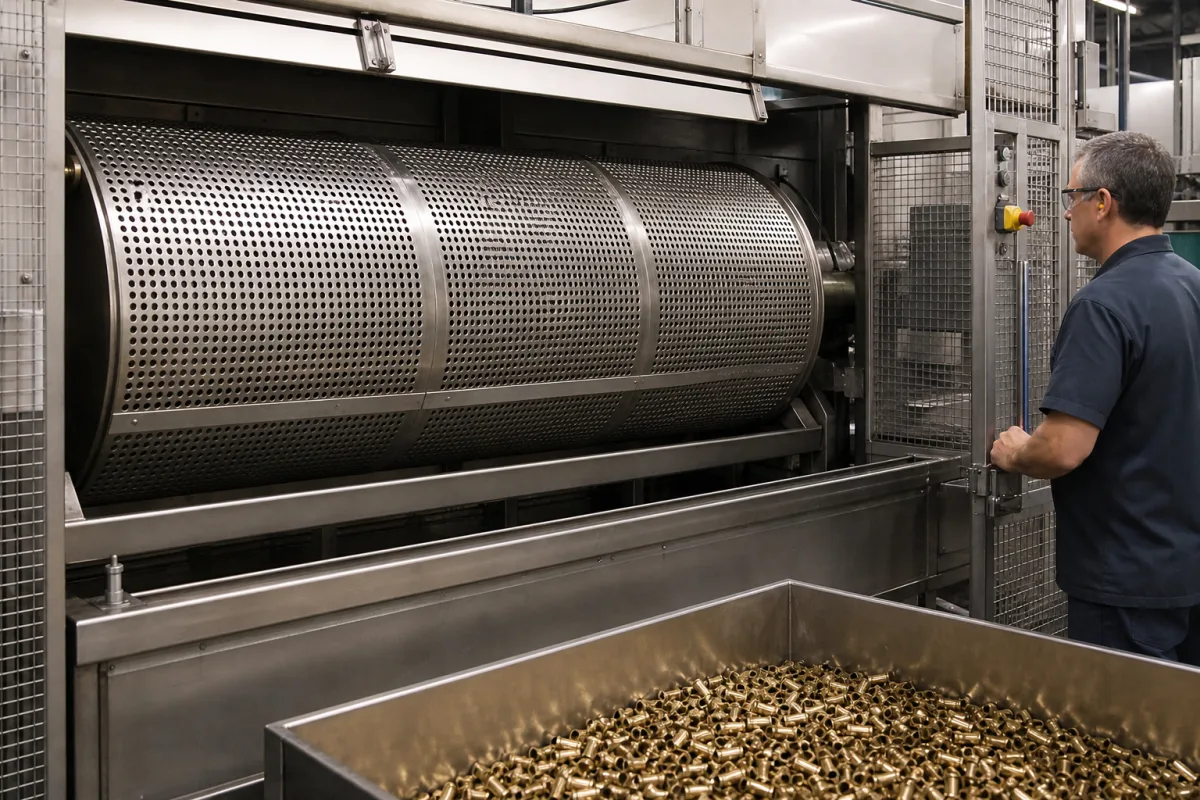
Representative product image. Confirm appearance and specifications with the manufacturer.

Product Specifications

Technical details and manufacturing context for Processing Drum

Definition
The Processing Drum is the core rotating component of an Industrial Vacuum Tumbler, designed as a sealed cylindrical chamber that holds materials during processing. It rotates to tumble and mix contents while maintaining a controlled vacuum environment, facilitating processes such as marination, curing, drying, or coating of food products, pharmaceuticals, or other materials. Constructed from stainless steel grades AISI 304 or 316L, the drum is engineered for hygiene and corrosion resistance, with 316L offering enhanced protection against acidic products. The drum's volume ranges from 100 to 5000 liters, accommodating various batch sizes and production throughputs. Its diameter spans 800 to 2000 mm, and length from 1500 to 4000 mm, influencing footprint and clearance requirements. The maximum rotation speed is 2 to 20 rpm, with higher speeds reducing cycle time but potentially damaging the product. The vacuum level operates between 0.08 and 0.1 MPa, where lower pressure improves impregnation but demands stronger seals. Operating temperature ranges from -10 to 60°C, beyond which seals and lubricants may degrade. The drum is driven by an electric motor with power ratings from 2.2 to 15 kW, selected based on drum size and load inertia. Electrical supply requires three-phase power at 380–480 V AC, per IEC 60038, and ingress protection is rated IP54 to IP65 for washdown environments. Maximum load capacity is 50 to 2000 kg, and the drum's weight ranges from 500 to 3000 kg, affecting floor loading and installation. Material grade conforms to ASTM A240. All values are reference ranges; verify model-specific specifications with the manufacturer or supplier.
Working Principle
The drum rotates on its axis, typically driven by an electric motor through a gear system. As it rotates, materials inside are lifted and dropped (tumbled) to ensure uniform exposure and mixing. The drum is sealed to maintain vacuum pressure, which lowers the boiling point of liquids, accelerates moisture removal, and enhances penetration of marinades or coatings into the material. The vacuum level is controlled within 0.08–0.1 MPa, and rotation speed is adjustable from 2 to 20 rpm. The tumbling action combined with vacuum facilitates efficient mass transfer and uniform processing. The drum's design ensures that the vacuum is maintained throughout the cycle, and the seals are critical to prevent leakage. The motor power and gear ratio are selected to handle the load inertia and provide the required torque. The operating temperature range of -10 to 60°C must be respected to avoid seal and lubricant degradation. The process is batch-oriented, with cycle times depending on product type and desired outcome.
Common Materials
Stainless Steel (AISI 304/316)
Technical Parameters
ParameterTypical rangeNotes & selection driver
Drum Volume100–5000 LSelect based on batch size and production throughput.
Max Rotation Speed2–20 rpmHigher speeds reduce cycle time but may damage product.
Vacuum Level0.08–0.1 MPaLower pressure improves impregnation but requires stronger seals.
Operating Temperature-10–60 °CExceeding range may degrade seals and lubricants.
Drum Diameter800–2000 mmAffects footprint and clearance requirements.
Drum Length1500–4000 mmLonger drums increase capacity but require more floor space.
Material Grade304/316L316L offers better corrosion resistance for acidic products.ASTM A240
Motor Power2.2–15 kWSelect based on drum size and load inertia.
Electrical Supply380–480 V ACThree-phase required; check local grid compatibility.IEC 60038
Ingress ProtectionIP54–IP65Higher IP for washdown environments.IEC 60529
Max Load Capacity50–2000 kgDo not exceed to avoid motor overload and uneven processing.
Weight500–3000 kgConsider floor loading and installation requirements.

Ranges are indicative industry figures for RFQ preparation, not a supplier commitment. Confirm every value and standard with the legal manufacturer before ordering.

Components / BOM
  • Drum Shell Part
    Forms the main cylindrical body of the drum, containing the materials during processing
    Material: Stainless Steel
  • End Plates Part
    Seal the ends of the drum shell and provide mounting points for the rotation shaft
    Material: Stainless Steel
  • Rotation Shaft Part
    Transmits rotational force from the drive system to the drum
    Material: Carbon Steel or Stainless Steel
  • Sealing System
    Maintains vacuum integrity at the shaft penetration points
    Material: Food-grade elastomers (e.g., silicone, EPDM), Stainless Steel
  • Internal Baffles/Fins Part
    Lift and tumble materials more effectively during rotation
    Material: Stainless Steel

Industrial Ecosystem & Supply Chain Structure

Complementary Systems
Downstream Applications
Specialized Tooling

Application Fit & Sizing Matrix

Operational Limits
pressure: Full vacuum to 2 bar absolute (typical), up to 5 bar with reinforced design
flow rate: Batch process - not applicable
temperature: -20°C to 150°C (typical), up to 200°C with special seals
slurry concentration: Up to 70% solids by weight (depending on viscosity and particle size)
Media Compatibility
✓ Pharmaceutical powders and granules ✓ Food ingredients (spices, flavorings) ✓ Chemical catalysts and compounds
Unsuitable: Highly abrasive slurries with large, sharp particles (causes excessive wear on drum interior)
Sizing Data Required
  • Batch volume requirement (liters or kg per cycle)
  • Material bulk density (kg/m³)
  • Required processing time per batch (including vacuum/purge cycles)

Reliability & Engineering Risk Analysis

Failure Mode & Root Cause
Corrosion-induced pitting
Cause: Chemical attack from process fluids, especially chlorides or acids, leading to localized material loss and potential perforation.
Fatigue cracking at weld seams
Cause: Cyclic thermal or mechanical stresses from batch processing, vibration, or pressure fluctuations, initiating cracks at stress concentrators.
Maintenance Indicators
  • Unusual metallic grinding or scraping noises during rotation
  • Visible localized bulging or distortion on the drum surface
Engineering Tips
  • Implement routine non-destructive testing (e.g., ultrasonic thickness mapping) to monitor wall thickness and detect early corrosion or wear
  • Optimize process parameters to minimize thermal cycling and mechanical shock loads, and ensure proper alignment of drive components to reduce vibration

Indicative industry ranges for design and RFQ preparation. Confirm the exact figures and applicable standard with the manufacturer before specifying.

Compliance & Manufacturing Standards

Applicable Standards
ASME B31.3 - Process piping DIN EN 13445 - Unfired pressure vessels

Quoted from the published standard.

Manufacturing Precision
  • Bore diameter: +/-0.05mm
  • Surface finish: Ra 0.8μm max
Quality Inspection
  • Ultrasonic thickness testing
  • Hydrostatic pressure test

Manufacturers of Processing Drum

Manufacturer profiles associated with Processing Drum.

Sourcing Processing Drum from China?
Tell us your specification and target quantity — we will match it against manufacturer records and come back with the factories that fit.
Request manufacturers We manufacture this

Manufacturer listings support early research and capability understanding. They are not certification, ranking, or transaction guarantees.

Technical documentation
Request current drawings, revision history, and a signed specification sheet.
Manufacturing capability
Verify equipment lists, process limits, capacity, and representative production evidence.
Inspection readiness
Confirm test methods, calibrated equipment, sampling plans, and traceable reports.
Supplier transparency
Check the legal entity, factory address, ownership, certifications, and direct contacts.

CNFX does not score or rank suppliers. Buyers must verify all claims and documents with the legal manufacturer before ordering.

Supply Chain Compatible Machinery & Devices

Hydraulic Press

Industrial machine using hydraulic pressure to compress, form, or assemble materials

Explore Specs →
Heavy-Duty CNC Plasma Cutting Machine

The Heavy-Duty CNC Plasma Cutting Machine is a standalone industrial device designed for cutting conductive metals such as steel, stainless steel, aluminum, and copper alloys.

Explore Specs →
Automated Powder Coating System

Integrated industrial system for applying dry powder coatings to metal substrates.

Explore Specs →
Centrifugal Pump Impeller

The centrifugal pump impeller is a critical rotating component that converts mechanical energy from the motor into kinetic energy in fluid systems.

Explore Specs →

Frequently Asked Questions

What materials are used for the Processing Drum?

The drum is typically made of stainless steel grades AISI 304 or 316L, with 316L offering better corrosion resistance for acidic products. The material grade should conform to ASTM A240. Always confirm the exact grade with the manufacturer for your specific application.

How do I select the right drum volume?

Drum volume ranges from 100 to 5000 liters. Selection depends on batch size and production throughput. Consider the required capacity per cycle and the available floor space, as larger drums increase footprint and clearance requirements.

What is the maximum rotation speed and why does it matter?

The maximum rotation speed is 2 to 20 rpm. Higher speeds reduce cycle time but may damage the product due to excessive impact. Choose a speed that balances efficiency and product integrity, and verify the optimal speed for your material.

What are the electrical and protection requirements?

The drum requires a three-phase electrical supply of 380–480 V AC, per IEC 60038. Ingress protection is rated IP54 to IP65, with higher ratings recommended for washdown environments. Ensure your facility's electrical system is compatible and that the drum's IP rating suits your cleaning procedures.

Data Basis

Editorial classification, named public sources where available, and source-reviewed manufacturer records.

Preliminary Technical Classification
This page supports structured research, RFQ preparation, and supplier evaluation. It does not replace buyer-led supplier qualification, standards review, or technical approval.
Buyer enquiry

Request manufacturing insight for Processing Drum

Ask for use case, specification boundaries, supplier type, and RFQ preparation information for this product.

Where it goes
Straight to the CNFX editorial desk, and to the manufacturer if this product is linked to a claimed profile. Nothing is broadcast to a supplier list.
Your details stay here
We do not sell or rent enquiry data, and we do not add you to a mailing list. Used only to answer this request.
No commission, no middleman
CNFX is a directory. We take no cut of any order and never negotiate on a supplier's behalf.
What we don't claim
A listing is not an endorsement. Qualify every supplier and verify every figure yourself before ordering.

Your business information is used only to process this request.

Thank you! Your message has been sent. We'll respond within 1–3 business days.
Sorry, we couldn't send your message. Please try again, or email us at contact@cnfx.com.

Need to Manufacture Processing Drum?

Compare manufacturer profiles with relevant product and process capability.

Previous Product
Z-axis Ram/Spindle
Last Product
Get QuotesChat