Editorial Technical Reference

Processing Controller

This page explains how Processing Controller is classified within Machinery and Equipment Manufacturing. Technical values and manufacturer relationships are research references; confirm the current specification and supplier evidence for each order.

Technical Definition & Core Assembly

Electronic control unit that manages and coordinates processing operations within a Pattern Processing Unit.
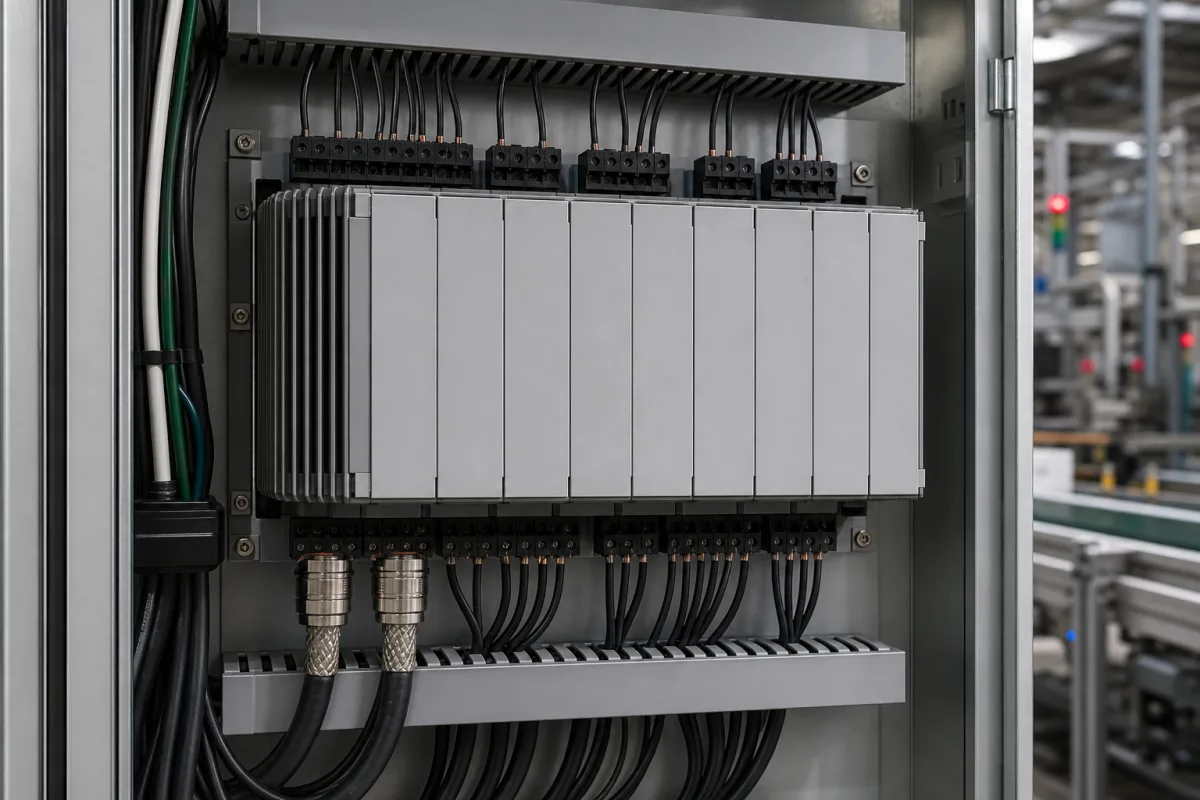
Processing Controller in a manufacturing environment
Representative product image. Confirm appearance and specifications with the manufacturer.

Product Specifications

Technical details and manufacturing context for Processing Controller

Definition
The Processing Controller is a specialized electronic control component within the Pattern Processing Unit that oversees and regulates various processing functions. It receives input signals from sensors and user interfaces, executes programmed algorithms, and sends output commands to actuators and other subsystems to ensure precise control over pattern processing operations such as cutting, shaping, forming, or assembly sequences. The controller is designed for integration into machinery and equipment manufacturing applications, where it acts as a central processing unit for coordinating multiple process steps. It typically operates with a supply voltage of 24 V DC (±10%) per IEC 61131-2 for PLC I/O, and its rated power ranges from 0.5 to 2.0 kW depending on the motor size. Control accuracy is ±0.05% of full scale, and the operating temperature range is -40 to 85 °C (extended range optional) per IEC 60068-2-1/2. The unit offers ingress protection ratings from IP54 to IP65 per IEC 60529 for indoor use. Communication interfaces include RS-485 and Ethernet, supporting Modbus TCP/RTU per IEC 61158. Memory capacity for program storage is 1 to 8 MB, with cycle times from 0.1 to 10 ms per instruction. The number of configurable I/O points ranges from 16 to 64, and the weight without packaging is 0.5 to 2.5 kg. The controller is built on a printed circuit board (PCB) with a microcontroller or processor and standard electronic components such as resistors, capacitors, and integrated circuits. It is important to verify model-specific values and standards with the legal manufacturer or supplier before procurement, as the listed parameters are reference ranges for directory purposes.
Working Principle
The controller operates by receiving digital or analog input signals from sensors monitoring process parameters such as position, speed, temperature, and pressure. It processes these inputs through embedded firmware algorithms, compares them to setpoint values, and generates output signals to control actuators, motors, valves, or other devices. It typically includes feedback loops for closed-loop control and may implement PID algorithms for precise regulation. The controller continuously scans inputs, executes control logic, and updates outputs within its cycle time, ensuring real-time coordination of processing operations.
Common Materials
Printed Circuit Board (PCB), Microcontroller/Processor, Electronic components (resistors, capacitors, ICs)
Technical Parameters
ParameterTypical rangeNotes & selection driver
Rated Power0.5–2.0 kWDepends on motor size
Supply Voltage24 ±10% V DCFor PLC I/OIEC 61131-2
Control Accuracy±0.05 %Of full scale
Operating Temperature-40–85 °CExtended range optionalIEC 60068-2-1/2
Ingress ProtectionIP54–IP65For indoor useIEC 60529
Communication InterfaceRS-485, EthernetModbus TCP/RTUIEC 61158
Memory Capacity1–8 MBFlash for program
Cycle Time0.1–10 msPer instruction
Number of I/O Points16–64Configurable
Weight0.5–2.5 kgWithout packaging

Ranges are indicative industry figures for RFQ preparation, not a supplier commitment. Confirm every value and standard with the legal manufacturer before ordering.

Components / BOM
  • Central Processing Unit (CPU)
    Executes control algorithms and processes input/output signals
    Material: semiconductor
  • Input/Output Interface
    Connects to sensors, actuators, and external communication networks
    Material: copper, plastic
  • Memory Module
    Stores control programs, parameters, and operational data
    Material: semiconductor
  • Power Supply Unit
    Converts and regulates input power for internal components
    Material: electronic components, metal housing

Application & selection

Application Fit & Sizing Matrix

Operational Limits
pressure: 0 to 10 bar maximum pressure
flow rate: Up to 500 L/min maximum flow rate
temperature: -40°C to +85°C
slurry concentration: 0-40% solids by weight
Media Compatibility
✓ Water-based slurries ✓ Polymer solutions ✓ Mineral processing fluids
Unsuitable: Highly corrosive acidic environments (pH < 2)
Sizing Data Required
  • Required processing throughput (units/hour)
  • Number of concurrent processing operations
  • Communication protocol requirements (e.g., Modbus, Profibus, Ethernet/IP)

Risk, maintenance & compliance

Reliability & Engineering Risk Analysis

Failure Mode & Root Cause
Electronic component degradation
Cause: Thermal cycling and overheating due to poor ventilation, leading to solder joint fatigue, capacitor drying, and semiconductor breakdown over time.
Signal drift or loss
Cause: Corrosion or contamination of connectors and terminals from moisture, dust, or chemical exposure, resulting in intermittent or failed communication with sensors and actuators.
Maintenance Indicators
  • Erratic or fluctuating process readings despite stable inputs, indicating potential sensor feedback or signal processing issues.
  • Unusual audible buzzing, clicking, or high-pitched whining from the controller enclosure, suggesting electrical arcing, relay problems, or cooling fan failure.
Engineering Tips
  • Implement regular thermal imaging inspections to identify and address hot spots, ensuring adequate cooling and preventing premature electronic failure.
  • Establish a proactive cleaning and inspection schedule for all electrical connections and enclosures, using appropriate seals and desiccants to protect against environmental contaminants.

Indicative industry ranges for design and RFQ preparation. Confirm the exact figures and applicable standard with the manufacturer before specifying.

Compliance & Manufacturing Standards

Applicable Standards
ANSI/ISA-88.00.01 - Batch Control CE Marking - Machinery Directive 2006/42/EC

Quoted from the published standard.

Manufacturing Precision
  • Housing Dimensional Tolerance: +/-0.05mm
  • Mounting Surface Flatness: 0.1mm per 100mm
Quality Inspection
  • Functional Safety Test (IEC 61508)
  • Environmental Stress Screening (ESS)
Technical documentation
Request current drawings, revision history, and a signed specification sheet.
Manufacturing capability
Verify equipment lists, process limits, capacity, and representative production evidence.
Inspection readiness
Confirm test methods, calibrated equipment, sampling plans, and traceable reports.
Supplier transparency
Check the legal entity, factory address, ownership, certifications, and direct contacts.

Compare the published product scope and source details, then include your specifications and quantity in an enquiry.

Manufacturers of Processing Controller

Manufacturer profiles associated with Processing Controller.

Sourcing Processing Controller from China?
Tell us your specification and target quantity — we will match it against manufacturer records and come back with the factories that fit.
Request manufacturers We manufacture this

Explore company information and manufacturing capabilities, then discuss the scope of your project with a relevant supplier.

Buyer enquiry

Request manufacturing insight for Processing Controller

Ask for use case, specification boundaries, supplier type, and RFQ preparation information for this product.

Where it goes
Straight to the CNFX editorial desk, and to the manufacturer if this product is linked to a claimed profile. Nothing is broadcast to a supplier list.
Your details stay here
We do not sell or rent enquiry data, and we do not add you to a mailing list. Used only to answer this request.
No commission, no middleman
CNFX is a directory. We take no cut of any order and never negotiate on a supplier's behalf.
What to include
Share your product specifications, quantity, destination and target delivery date.

Your business information is used only to process this request.

Thank you! Your message has been sent. We'll respond within 1–3 business days.
Sorry, we couldn't send your message. Please try again, or email us at [email protected].

Frequently Asked Questions

What is the typical supply voltage for this controller?

The supply voltage is 24 V DC with a tolerance of ±10%, as per IEC 61131-2 for PLC I/O. Always confirm the exact requirement with the manufacturer for your specific model.

What communication interfaces are supported?

The controller supports RS-485 and Ethernet interfaces, with Modbus TCP/RTU protocol per IEC 61158. Verify compatibility with your system.

What is the operating temperature range?

The standard operating temperature range is -40 to 85 °C, with an extended range optional, per IEC 60068-2-1/2. Check the datasheet for your model.

How many I/O points can be configured?

The number of configurable I/O points ranges from 16 to 64. This is configurable, but the exact count depends on the model and configuration.

Related equipment

Applied To / Applications

This component is essential for the following industrial systems and equipment:

Industrial Ecosystem & Supply Chain Structure

Data Basis

Editorial classification, named public sources where available, and source-reviewed manufacturer records.

Preliminary Technical Classification
This page supports structured research, RFQ preparation, and supplier evaluation. It does not replace buyer-led supplier qualification, standards review, or technical approval.

Need to Manufacture Processing Controller?

Compare manufacturer profiles with relevant product and process capability.

Previous Product
Z-axis Ram/Spindle
Last Product
Get QuotesChat