Industry-Verified Manufacturing Data (2026)

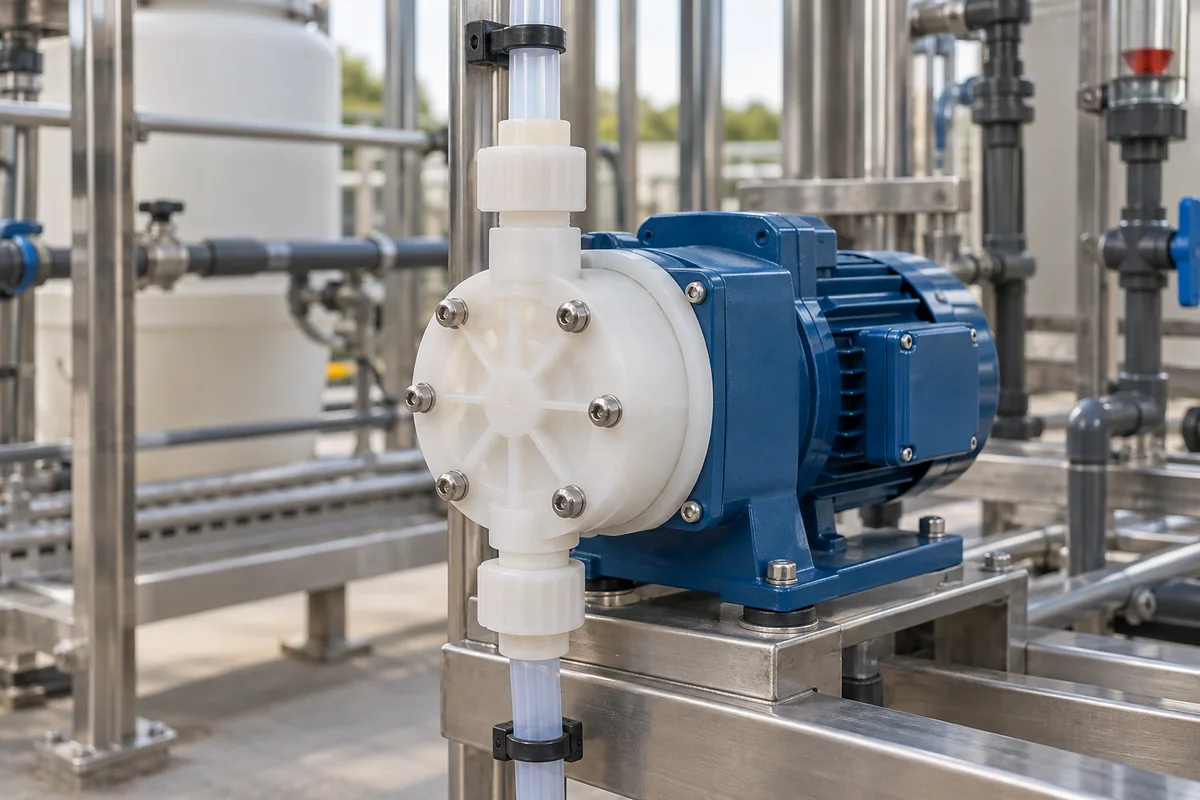
Pump Head / Fluid End

Based on aggregated insights from multiple verified factory profiles within the CNFX directory, the standard Pump Head / Fluid End used in the Machinery and Equipment Manufacturing sector typically supports operational capacities ranging from standard industrial configurations to heavy-duty production requirements.

Technical Definition & Core Assembly

A canonical Pump Head / Fluid End is characterized by the integration of Diaphragm/Piston and Valve Assembly. In industrial production environments, manufacturers listed on CNFX commonly emphasize 316L Stainless Steel construction to support stable, high-cycle operation across diverse manufacturing scenarios.

The fluid handling section of a dosing pump where liquid is pressurized and discharged
Product Specifications

Technical details and manufacturing context for Pump Head / Fluid End

Definition
The pump head or fluid end is the critical component of a dosing pump responsible for creating pressure and controlling the flow of chemicals, additives, or other fluids. It houses the pumping mechanism (such as diaphragm, piston, or plunger) and fluid pathway components that enable precise metering and delivery of liquids in industrial processes.
Working Principle
The pump head operates by creating a pressure differential through mechanical action (diaphragm flexing, piston reciprocation, or plunger movement). During the suction stroke, fluid enters the chamber through inlet valves; during the discharge stroke, the fluid is pressurized and expelled through outlet valves. This cyclic action enables precise volumetric displacement and controlled dosing.
Common Materials
316L Stainless Steel, PTFE (Polytetrafluoroethylene), Ceramic, PVDF (Polyvinylidene fluoride)
Technical Parameters
  • Connection port size for fluid inlet/outlet (mm) Customizable
Components / BOM
  • Diaphragm/Piston
    Creates pressure differential by flexing or reciprocating to displace fluid
    Material: PTFE or Stainless Steel
  • Valve Assembly
    Controls directional flow with check valves for inlet and outlet
    Material: 316L Stainless Steel or Ceramic
  • Fluid Chamber
    Holds and pressurizes the fluid during pumping cycles
    Material: 316L Stainless Steel or PVDF
  • Seals/Gaskets
    Prevents fluid leakage between components
    Material: Viton, EPDM, or PTFE
Engineering Reasoning
0.1-400 bar
450 bar (material yield strength) / 0.5 bar absolute pressure (cavitation threshold)
Design Rationale: Cavitation occurs when local pressure drops below fluid vapor pressure (0.5 bar for water at 20°C), causing vapor bubble formation and implosion damage. Material fatigue occurs at 450 bar due to cyclic stress exceeding AISI 316 stainless steel yield strength (205 MPa).
Risk Mitigation (FMEA)
Trigger Suction pressure below 0.5 bar absolute
Mode: Cavitation erosion on plunger surfaces
Strategy: Install NPSHr-optimized check valves with 0.3 bar safety margin
Trigger Fluid temperature exceeding 120°C
Mode: Thermal expansion causing plunger seizure
Strategy: Integrate PTFE thermal compensation sleeves with 150°C rating

Industry Taxonomies & Aliases

Commonly used trade names and technical identifiers for Pump Head / Fluid End.

Applied To / Applications

This component is essential for the following industrial systems and equipment:

Industrial Ecosystem & Supply Chain DNA

Complementary Systems
Downstream Applications
Specialized Tooling

Application Fit & Sizing Matrix

Operational Limits
pressure: Up to 200 bar
flow rate: 0.1 to 1000 L/h
temperature: -20°C to 120°C
slurry concentration: Up to 20% solids by weight
Media Compatibility
✓ Water-based chemicals ✓ Corrosive acids (e.g., sulfuric acid) ✓ High-viscosity fluids (e.g., polymers)
Unsuitable: Abrasive slurries with high solids content
Sizing Data Required
  • Required flow rate (L/h)
  • System pressure (bar)
  • Fluid viscosity (cP)

Reliability & Engineering Risk Analysis

Failure Mode & Root Cause
Cavitation damage
Cause: Insufficient NPSH (Net Positive Suction Head) causing vapor bubble formation and implosion on impeller surfaces
Abrasive wear
Cause: Particulate contamination in fluid stream eroding impeller vanes, volute casing, and wear rings
Maintenance Indicators
  • Excessive vibration or audible knocking during operation
  • Visible fluid leakage at mechanical seal or casing joints
Engineering Tips
  • Maintain proper NPSH margins and ensure suction piping is free of restrictions to prevent cavitation
  • Implement proper filtration systems and monitor particle counts in the fluid stream to minimize abrasive wear

Compliance & Manufacturing Standards

Reference Standards
ISO 13709:2009 (API 610) - Centrifugal pumps for petroleum, petrochemical and natural gas industries ANSI/HI 1.1-1.5 - Rotodynamic (Centrifugal) Pumps for Nomenclature, Definitions, Application, and Operation DIN EN ISO 9906:2012 - Rotodynamic pumps - Hydraulic performance acceptance tests - Grades 1, 2 and 3
Manufacturing Precision
  • Bore diameter: +/-0.025 mm
  • Surface flatness of mating flanges: 0.05 mm per 100 mm diameter
Quality Inspection
  • Liquid Penetrant Testing (PT) for surface defects
  • Hardness Testing (e.g., Brinell or Rockwell) for material conformity

Factories Producing Pump Head / Fluid End

Verified manufacturers with capability to produce this product in China

✓ 95% Supplier Capability Match Found

P Project Engineer from Brazil Feb 26, 2026
★★★★★
"The Pump Head / Fluid End we sourced perfectly fits our Machinery and Equipment Manufacturing production line requirements."
Technical Specifications Verified
S Sourcing Manager from Canada Feb 23, 2026
★★★★★
"Found 23+ suppliers for Pump Head / Fluid End on CNFX, but this spec remains the most cost-effective."
Technical Specifications Verified
P Procurement Specialist from United States Feb 20, 2026
★★★★★
"The technical documentation for this Pump Head / Fluid End is very thorough, especially regarding technical reliability."
Technical Specifications Verified
Verification Protocol

“Feedback is collected from verified sourcing managers during RFQ (Request for Quote) and factory evaluation processes on CNFX. These reports represent historical performance data and technical audit summaries from our B2B manufacturing network.”

12 sourcing managers are analyzing this specification now. Last inquiry for Pump Head / Fluid End from UAE (32m ago).

Supply Chain Compatible Machinery & Devices

Hydraulic Press

Industrial machine using hydraulic pressure to compress, form, or assemble materials

Explore Specs →
Heavy-Duty CNC Plasma Cutting Machine

Industrial machine for precision metal cutting using plasma arc technology

Explore Specs →
Automated Assembly Line System

Integrated production system for sequential component assembly operations

Explore Specs →
Automated Powder Coating System

Integrated industrial system for applying dry powder coatings to metal substrates.

Explore Specs →

Frequently Asked Questions

What materials are best for corrosive fluid applications in pump heads?

For corrosive fluids, 316L stainless steel offers excellent chemical resistance, while PTFE, ceramic, and PVDF provide superior compatibility with aggressive chemicals, acids, and solvents in dosing pump fluid ends.

How often should seals and gaskets be replaced in a pump head?

Seals and gaskets in pump heads should be inspected regularly and replaced during routine maintenance, typically every 6-12 months, depending on operating conditions, fluid abrasiveness, and pressure cycles to prevent leaks and ensure optimal performance.

What are the key components in a pump head BOM for maintenance?

Key BOM components for pump head maintenance include the diaphragm or piston, valve assembly (check valves), fluid chamber, and seals/gaskets. Regular replacement of these parts ensures reliable pressurization and discharge in dosing pump systems.

Can I contact factories directly on CNFX?

CNFX is an open directory, not a transaction platform. Each factory profile provides direct contact information and production details to help you initiate direct inquiries with Chinese suppliers.

Get Quote for Pump Head / Fluid End

Request technical pricing, lead times, or customized specifications for Pump Head / Fluid End directly from verified manufacturing units.

Your business information is encrypted and only shared with verified Pump Head / Fluid End suppliers.

Thank you! Your message has been sent. We'll respond within 1–3 business days.

Need to Manufacture Pump Head / Fluid End?

Connect with verified factories specializing in this product category

Add Your Factory Contact Us
Previous Product
Pump Head / Fluid Chamber
Next Product
Pump Power End