Pinch Roll Assembly
View system integration details
This page explains how Roll Bearing Housing is classified within Machinery and Equipment Manufacturing. Technical values and manufacturer relationships are research references; confirm the current specification and supplier evidence for each order.
A structural component that houses and supports bearings for pinch rolls in rolling equipment.
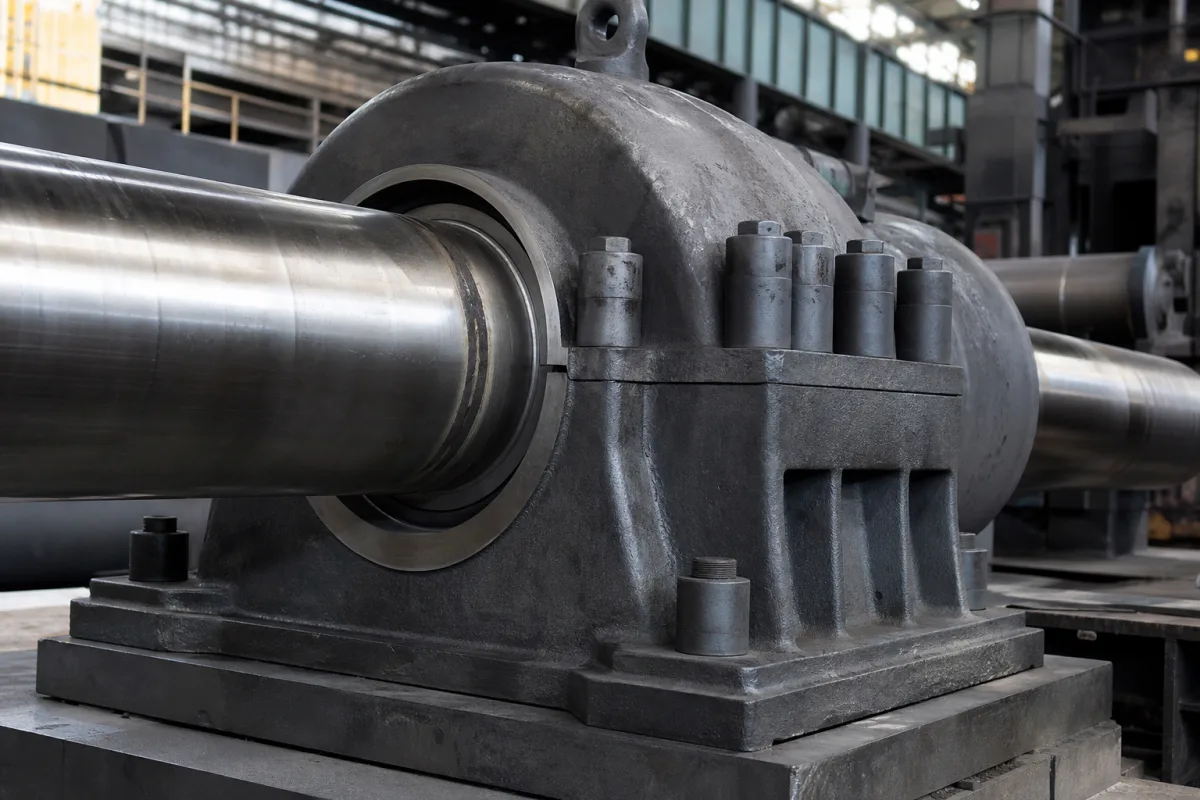
Technical details and manufacturing context for Roll Bearing Housing
| Parameter | Typical range | Notes & selection driver |
|---|---|---|
| Bore Diameter | 100–500 mm | Matches bearing outer diameterISO 286 |
| Overall Width | 50–200 mm | Depends on bearing width and housing design |
| Center Height | 80–300 mm | Critical for shaft alignment |
| Bolt Hole Spacing | 120–400 mm | Must match mounting patternISO 273 |
| Bolt Hole Diameter | 12–30 mm | For M10–M24 boltsISO 273 |
| Material Grade | HT200–HT300 | Cast iron for strength and dampingGB/T 9439 |
| Tensile Strength | 200–300 MPa | Minimum for structural integrityGB/T 9439 |
| Hardness | 170–240 HB | Ensures wear resistanceGB/T 231.1 |
| Surface Roughness | Ra 1.6–3.2 μm | For sealing surfacesISO 1302 |
| Bore Tolerance | H7 | Ensures proper bearing fitISO 286 |
| Operating Temperature | -20–80 °C | Beyond this, seals may fail |
| Weight | 20–150 kg | Affects handling and installation |
Ranges are indicative industry figures for RFQ preparation, not a supplier commitment. Confirm every value and standard with the legal manufacturer before ordering.
| pressure: | Max 10 MPa (100 bar) static, 5 MPa (50 bar) dynamic |
| other spec: | Max shaft speed: 3000 RPM, Load capacity: 50-500 kN depending on size, Sealing: IP65/IP67 standard |
| temperature: | -20°C to 150°C (standard), up to 200°C with high-temp seals/lubricants |
Indicative industry ranges for design and RFQ preparation. Confirm the exact figures and applicable standard with the manufacturer before specifying.
Quoted from the published standard.
A practical evidence checklist for RFQ preparation and supplier evaluation.
Compare the published product scope and source details, then include your specifications and quantity in an enquiry.
Manufacturer profiles associated with Roll Bearing Housing.
Explore company information and manufacturing capabilities, then discuss the scope of your project with a relevant supplier.
Ask for use case, specification boundaries, supplier type, and RFQ preparation information for this product.
According to the directory, roll bearing housings are typically made from cast iron, ductile iron, or cast steel. Material grades such as HT200–HT300 (per GB/T 9439) are listed, with tensile strengths of 200–300 MPa and hardness of 170–240 HB. Always confirm the specific material grade with the manufacturer for your application.
Key parameters include bore diameter (100–500 mm, matching bearing outer diameter, per ISO 286), overall width (50–200 mm), center height (80–300 mm), bolt hole spacing (120–400 mm, per ISO 273), and bolt hole diameter (12–30 mm). These are reference ranges; verify exact values for your model.
The housing is precisely machined to provide a rigid enclosure that positions bearings correctly relative to the pinch rolls. The bore tolerance is H7 (per ISO 286) to ensure a proper fit. It transfers loads to the machine frame and maintains alignment under operational stresses, preventing misalignment that could cause premature wear.
The operating temperature range is -20 to 80°C. Beyond this range, seals may fail. The housing is designed for loads within its structural capacity, with tensile strength of 200–300 MPa. Always consult the manufacturer for specific load ratings and environmental limits.
This component is essential for the following industrial systems and equipment:
Editorial classification, named public sources where available, and source-reviewed manufacturer records.
Compare manufacturer profiles with relevant product and process capability.