Discharge System
View system integration details
This page explains how Rotating Grate/Discharge Table is classified within Machinery and Equipment Manufacturing. Technical values and manufacturer relationships are research references; confirm the current specification and supplier evidence for each order.
A rotating mechanical component within discharge systems that facilitates controlled material transfer and distribution.
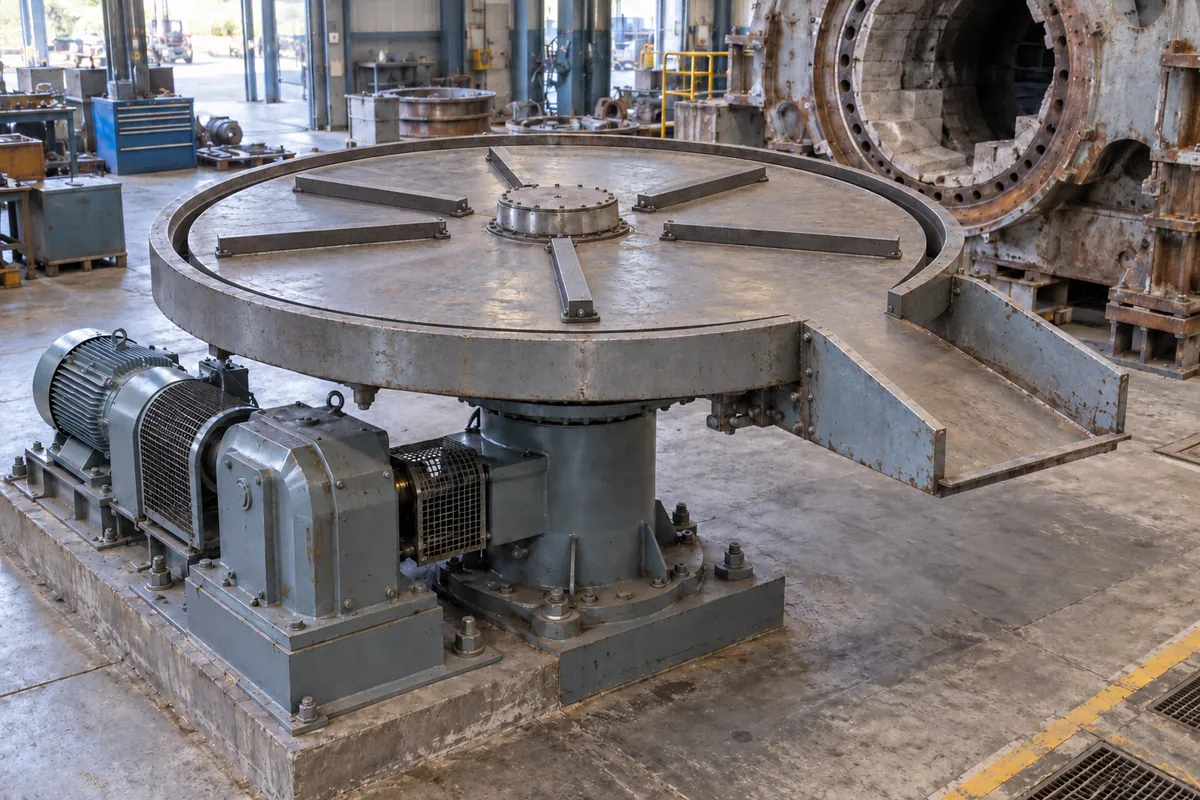
Technical details and manufacturing context for Rotating Grate/Discharge Table
| Parameter | Typical range | Notes & selection driver |
|---|---|---|
| Table Diameter | 1000–3000 mm | Determines capacity and footprint. |
| Rotation Speed | 0.5–5 rpm | Adjustable for material flow control. |
| Drive Power | 2.2–15 kW | Depends on load and speed. |
| Load Capacity | 5–20 t | Maximum material weight on table. |
| Operating Temperature | -20–200 °C | Beyond range may affect seals and bearings. |
| Speed Accuracy | ±2 % | Ensures consistent discharge. |
| Surface Hardness | 45–55 HRC | Wear resistance for abrasive materials. |
| Material Grade | Q235B/304 | Carbon steel or stainless steel options.GB/T 700, GB/T 3280 |
| IP Rating | IP54–IP65 | Protection against dust and water.IEC 60529 |
| Weight | 1500–8000 kg | Affects installation and foundation. |
Ranges are indicative industry figures for RFQ preparation, not a supplier commitment. Confirm every value and standard with the legal manufacturer before ordering.
| pressure: | Up to 10 bar |
| flow rate: | 5-500 m³/h |
| temperature: | -20°C to 200°C |
| slurry concentration: | Up to 60% solids by weight |
Indicative industry ranges for design and RFQ preparation. Confirm the exact figures and applicable standard with the manufacturer before specifying.
Quoted from the published standard.
A practical evidence checklist for RFQ preparation and supplier evaluation.
Compare the published product scope and source details, then include your specifications and quantity in an enquiry.
Manufacturer profiles associated with Rotating Grate/Discharge Table.
Explore company information and manufacturing capabilities, then discuss the scope of your project with a relevant supplier.
Ask for use case, specification boundaries, supplier type, and RFQ preparation information for this product.
It receives processed materials from equipment like kilns or reactors and, through controlled rotation, evenly distributes and discharges them onto conveyors or collection points, ensuring uniform flow and preventing clogging.
Heat-resistant cast steel and alloy steel are common, but material grades like Q235B or 304 may be specified. Confirm with the manufacturer for your application.
The rotation speed is adjustable, typically within 0.5–5 rpm, allowing operators to control the discharge rate and distribution pattern.
Regularly inspect scrapers, seals, and bearings for wear. Monitor for unusual noise or vibration, and ensure speed accuracy remains within ±2%. Follow manufacturer guidelines.
This component is essential for the following industrial systems and equipment:
Commonly used trade names and technical identifiers for Rotating Grate/Discharge Table.
Editorial classification, named public sources where available, and source-reviewed manufacturer records.
Compare manufacturer profiles with relevant product and process capability.