Spray Device
View system integration details
This page explains how Spray Nozzle/Head is classified within Machinery and Equipment Manufacturing. Technical values and manufacturer relationships are research references; confirm the current specification and supplier evidence for each order.
The spray nozzle or head is the terminal component of a spray device responsible for breaking up liquid into droplets and controlling the spray pattern, flow rate, and distribution.
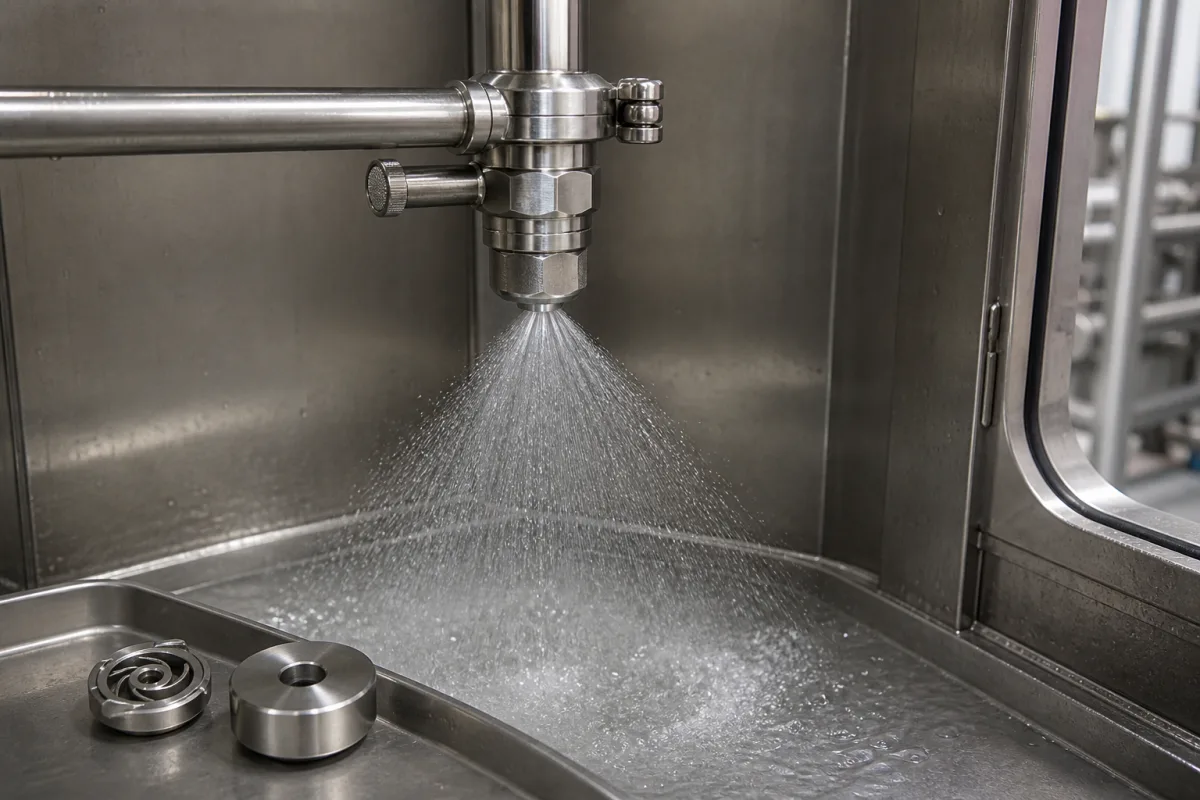
Technical details and manufacturing context for Spray Nozzle/Head
| Parameter | Typical range | Notes & selection driver |
|---|---|---|
| Flow Rate | 0.5–5.0 L/min | At 0.4 MPa pressureISO 5167 |
| Spray Angle | 60–120 ° | Full cone angle |
| Droplet Size (Sauter Mean) | 50–500 µm | At 1.0 MPaISO 9276-2 |
| Connection Size | 1/8–1 inch | BSP threadISO 228-1 |
| Operating Pressure | 1.0–1.6 MPa | |
| Maximum Temperature | 80–200 °C | Depends on material |
| Material | 303, 316, 316L, 304 | Stainless steel gradesASTM A276 |
| Weight | 0.05–0.5 kg | Per unit |
| Surface Finish | Ra 0.8–1.6 µm | Critical for clogging resistanceISO 1302 |
| Tolerance on Flow Rate | ±5 % | At reference pressureISO 5167 |
Ranges are indicative industry figures for RFQ preparation, not a supplier commitment. Confirm every value and standard with the legal manufacturer before ordering.
| pressure: | 0.5 to 100 bar |
| flow rate: | 0.1 to 100 L/min |
| temperature: | -20°C to 150°C |
| slurry concentration: | Up to 20% solids by weight |
Indicative industry ranges for design and RFQ preparation. Confirm the exact figures and applicable standard with the manufacturer before specifying.
Quoted from the published standard.
A practical evidence checklist for RFQ preparation and supplier evaluation.
Compare the published product scope and source details, then include your specifications and quantity in an enquiry.
Manufacturer profiles associated with Spray Nozzle/Head.
Explore company information and manufacturing capabilities, then discuss the scope of your project with a relevant supplier.
Ask for use case, specification boundaries, supplier type, and RFQ preparation information for this product.
Common materials include stainless steel (grades 303, 316, 316L, 304), brass, ceramic, and engineering plastics such as PTFE or PEEK. The choice depends on chemical compatibility, temperature, and wear resistance. Always confirm material suitability with the manufacturer.
The spray angle (full cone) typically ranges from 60° to 120°. The required angle depends on the coverage area and distance to the target. Consult the manufacturer's data for the exact angle for your model.
Standards such as ISO 5167 (flow measurement), ISO 9276-2 (particle size analysis), ISO 228-1 (pipe threads), ASTM A276 (stainless steel bars), and ISO 1302 (surface texture) are referenced. These are for verification purposes and do not imply certification. Always confirm compliance with the supplier.
This component is essential for the following industrial systems and equipment:
Editorial classification, named public sources where available, and source-reviewed manufacturer records.
Compare manufacturer profiles with relevant product and process capability.