Industry-Verified Manufacturing Data (2026)

Spray Device

Based on aggregated insights from multiple verified factory profiles within the CNFX directory, the standard Spray Device used in the Beverage Manufacturing sector typically supports operational capacities ranging from standard industrial configurations to heavy-duty production requirements.

Technical Definition & Core Assembly

A canonical Spray Device is characterized by the integration of Spray Nozzle/Head and Housing/Body. In industrial production environments, manufacturers listed on CNFX commonly emphasize Stainless Steel (AISI 316L) construction to support stable, high-cycle operation across diverse manufacturing scenarios.

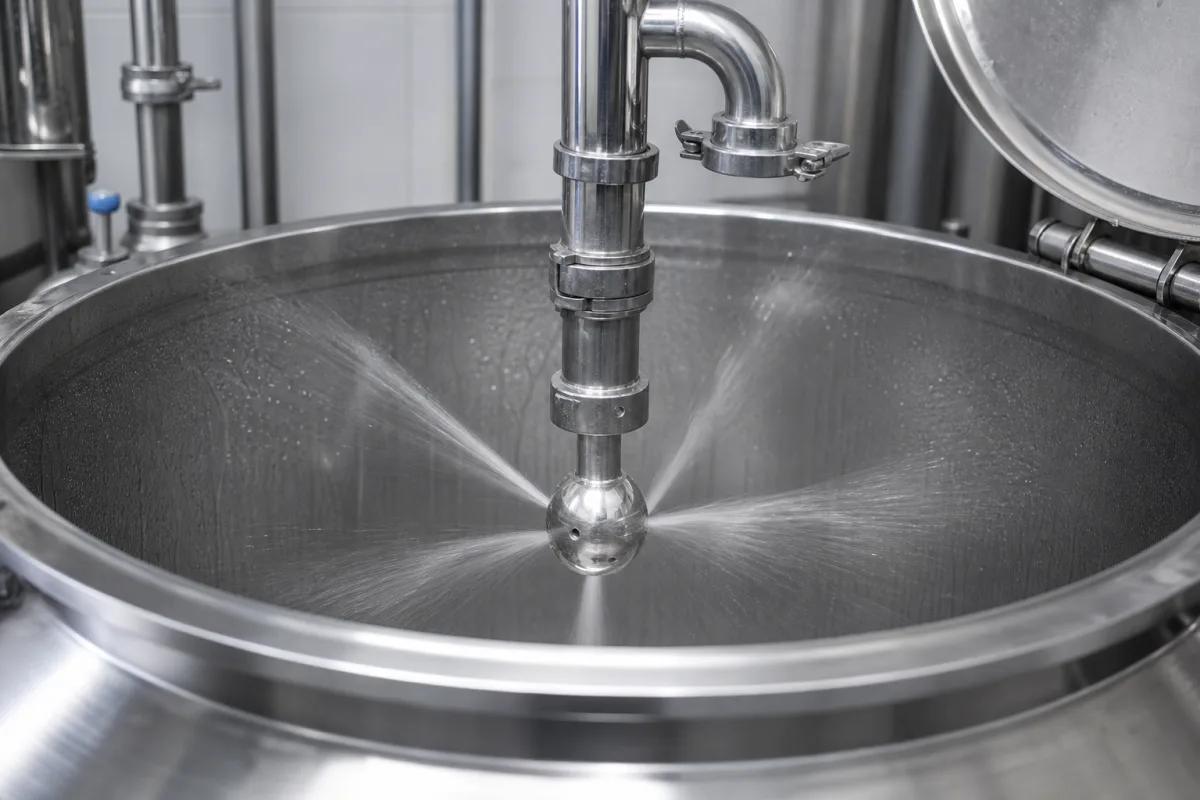
A component of an Automated CIP/SIP System that delivers cleaning and sanitizing solutions to interior surfaces of beverage production equipment.
Product Specifications

Technical details and manufacturing context for Spray Device

Definition
The Spray Device is a critical component within an Automated Clean-in-Place/Sterilize-in-Place (CIP/SIP) System designed for beverage production. Its primary function is to distribute cleaning agents, sanitizers, and rinse water under controlled pressure and flow to ensure thorough coverage and effective removal of soil, biofilms, and microorganisms from tanks, vessels, pipelines, and other processing equipment, enabling automated hygiene without disassembly.
Working Principle
The device operates by receiving pressurized cleaning fluids from the CIP system's supply unit. It utilizes strategically positioned nozzles or a rotating spray ball/head to create a high-impact, fan-shaped spray pattern. This pattern ensures complete surface coverage of the equipment's interior, providing the necessary mechanical action (impingement) combined with chemical and thermal action to achieve cleaning and sterilization validation standards.
Common Materials
Stainless Steel (AISI 316L)
Technical Parameters
  • Nozzle orifice diameter or spray head size, critical for determining flow rate and spray pattern coverage. (mm) Per Request
Components / BOM
  • Spray Nozzle/Head
    Forms and directs the spray pattern of the cleaning fluid.
    Material: Stainless Steel
  • Housing/Body
    Main structural component that connects to the supply line and houses internal parts.
    Material: Stainless Steel
  • Mounting Flange
    Provides a sealed connection point for installing the device into the tank or vessel wall.
    Material: Stainless Steel
Engineering Reasoning
3.5-6.0 bar (50-87 psi)
7.2 bar (104.4 psi) burst pressure for 316L stainless steel nozzle body with 2.0 mm wall thickness
Design Rationale: Yield strength exceedance of 316L stainless steel (205 MPa at 20°C) leading to plastic deformation and ductile fracture
Risk Mitigation (FMEA)
Trigger Calcium carbonate scaling accumulation exceeding 0.5 mm thickness in nozzle orifice
Mode: Flow rate reduction below 85% of design specification (from 15 L/min to <12.75 L/min)
Strategy: Integrate inline conductivity sensors with automated acid flush when solution conductivity drops below 2.5 mS/cm
Trigger Piezoelectric actuator voltage drift exceeding ±5% from nominal 120V DC
Mode: Droplet size deviation beyond ±15 μm from design specification of 80 μm Sauter mean diameter
Strategy: Implement closed-loop PID control with Hall effect sensors maintaining voltage within ±1% tolerance

Industry Taxonomies & Aliases

Commonly used trade names and technical identifiers for Spray Device.

Industrial Ecosystem & Supply Chain DNA

Complementary Systems
Downstream Applications
Specialized Tooling

Application Fit & Sizing Matrix

Operational Limits
pressure: 0 to 10 bar (0 to 145 psi)
flow rate: 10 to 100 L/min (2.6 to 26.4 gpm)
temperature: 0°C to 100°C (32°F to 212°F)
slurry concentration: Up to 5% solids by weight
Media Compatibility
✓ Caustic soda solutions (NaOH) ✓ Nitric acid-based sanitizers ✓ Peracetic acid (PAA) solutions
Unsuitable: Hydrofluoric acid (HF) or highly abrasive slurries with >5% solids
Sizing Data Required
  • Required flow rate (L/min or gpm)
  • System operating pressure (bar or psi)
  • Cleaning solution viscosity and solids content

Reliability & Engineering Risk Analysis

Failure Mode & Root Cause
Nozzle clogging
Cause: Accumulation of particulate matter or mineral deposits from the fluid, leading to restricted flow and altered spray pattern.
Seal/gasket degradation
Cause: Chemical incompatibility with the sprayed fluid, thermal cycling, or mechanical wear, resulting in leaks and pressure loss.
Maintenance Indicators
  • Irregular or asymmetric spray pattern (visual)
  • Unusual hissing or dripping sounds from the device (audible)
Engineering Tips
  • Implement a routine filtration system upstream to remove particulates and prevent nozzle clogging.
  • Use compatible seals/gaskets rated for the specific fluid chemistry and operating temperature, and establish a preventive replacement schedule.

Compliance & Manufacturing Standards

Reference Standards
ISO 9001:2015 (Quality Management Systems) ANSI/ASME B40.100 (Pressure Gauges and Gauge Attachments) DIN EN 12205 (Transportable refillable welded steel cylinders for liquefied petroleum gas (LPG))
Manufacturing Precision
  • Nozzle orifice diameter: +/-0.01mm
  • Pressure regulator calibration: +/-2% of full scale
Quality Inspection
  • Hydrostatic pressure test
  • Flow rate and spray pattern verification

Factories Producing Spray Device

Verified manufacturers with capability to produce this product in China

✓ 94% Supplier Capability Match Found

T Technical Director from United Arab Emirates Jan 22, 2026
★★★★★
"Standard OEM quality for Beverage Manufacturing applications. The Spray Device arrived with full certification."
Technical Specifications Verified
P Project Engineer from Australia Jan 19, 2026
★★★★☆
"Great transparency on the Spray Device components. Essential for our Beverage Manufacturing supply chain. (Delivery took slightly longer than expected, but technical support was excellent.)"
Technical Specifications Verified
S Sourcing Manager from Singapore Jan 16, 2026
★★★★★
"The Spray Device we sourced perfectly fits our Beverage Manufacturing production line requirements."
Technical Specifications Verified
Verification Protocol

“Feedback is collected from verified sourcing managers during RFQ (Request for Quote) and factory evaluation processes on CNFX. These reports represent historical performance data and technical audit summaries from our B2B manufacturing network.”

16 sourcing managers are analyzing this specification now. Last inquiry for Spray Device from Mexico (12m ago).

Supply Chain Compatible Machinery & Devices

Automated Beverage Container Sterilization System

Automated system for sterilizing beverage containers before filling.

Explore Specs →
Automated Beverage Labeling and Coding System

Integrated system for applying labels and printing codes on beverage containers.

Explore Specs →
Automated Beverage Ingredient Dispensing System

Automated system for precise dispensing of beverage ingredients into production lines.

Explore Specs →
Automated Beverage Container Deoxygenation System

Automated system for removing oxygen from beverage containers before filling.

Explore Specs →

Frequently Asked Questions

What materials are used in this spray device for beverage manufacturing?

This spray device is constructed from AISI 316L stainless steel, which offers excellent corrosion resistance and meets food-grade sanitation standards for beverage production environments.

How does this spray device integrate with automated CIP/SIP systems?

The device features a mounting flange for secure installation and connects directly to CIP/SIP system piping. It delivers precise spray patterns to thoroughly clean and sanitize interior surfaces of tanks, vessels, and processing equipment.

What maintenance is required for this beverage industry spray device?

Regular inspection of the spray nozzle/head for clogging, checking mounting flange seals, and verifying spray pattern effectiveness are recommended. The 316L stainless steel construction minimizes corrosion but should be inspected during routine CIP/SIP system maintenance.

Can I contact factories directly on CNFX?

CNFX is an open directory, not a transaction platform. Each factory profile provides direct contact information and production details to help you initiate direct inquiries with Chinese suppliers.

Get Quote for Spray Device

Request technical pricing, lead times, or customized specifications for Spray Device directly from verified manufacturing units.

Your business information is encrypted and only shared with verified Spray Device suppliers.

Thank you! Your message has been sent. We'll respond within 1–3 business days.

Need to Manufacture Spray Device?

Connect with verified factories specializing in this product category

Add Your Factory Contact Us
Previous Product
Sparging System
Next Product
Spray Nozzle Array