Industry-Verified Manufacturing Data (2026)

Tension Sensors

Based on aggregated insights from multiple verified factory profiles within the CNFX directory, the standard Tension Sensors used in the Machinery and Equipment Manufacturing sector typically supports operational capacities ranging from standard industrial configurations to heavy-duty production requirements.

Technical Definition & Core Assembly

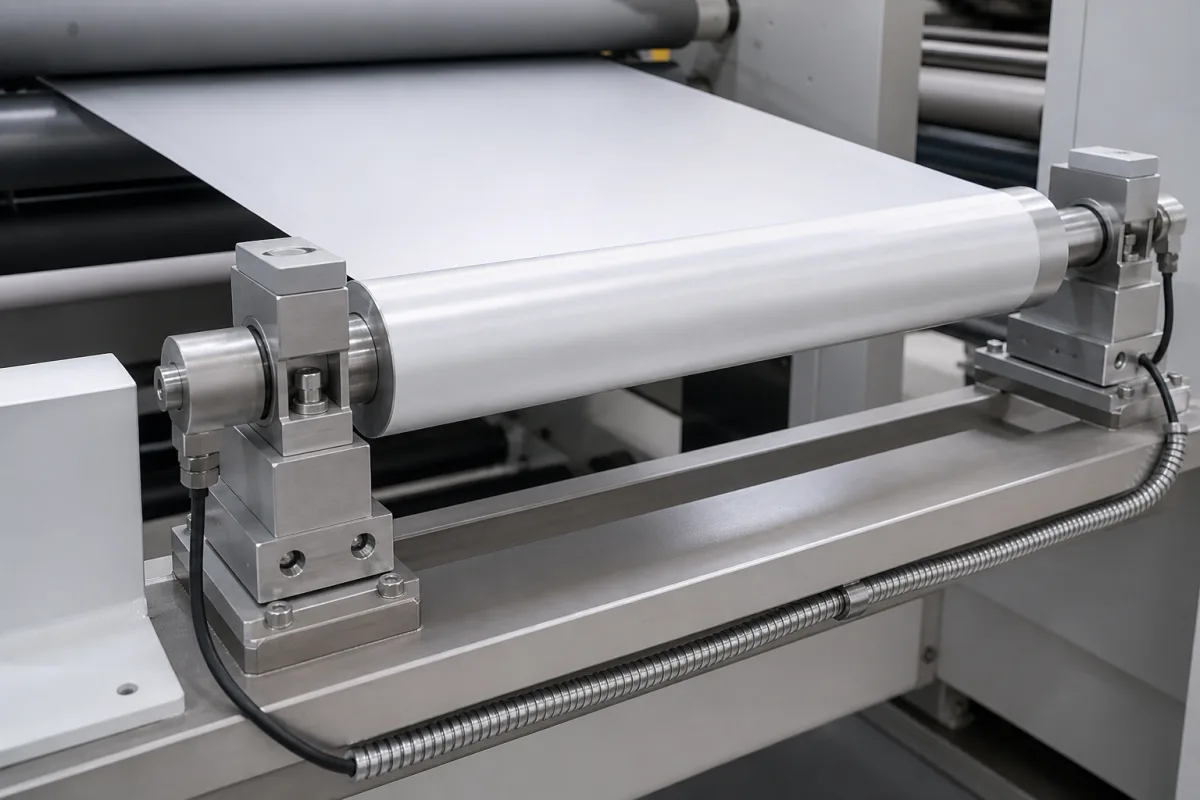
A canonical Tension Sensors is characterized by the integration of Sensing Element and Signal Conditioning Circuit. In industrial production environments, manufacturers listed on CNFX commonly emphasize Stainless steel housing construction to support stable, high-cycle operation across diverse manufacturing scenarios.

Devices that measure and monitor the tensile force applied to materials during stretching operations.
Product Specifications

Technical details and manufacturing context for Tension Sensors

Definition
Tension sensors are critical components within stretching mechanisms that precisely measure the force exerted on materials as they are stretched. They provide real-time feedback to control systems to maintain optimal tension levels, prevent material damage, and ensure consistent product quality in manufacturing processes.
Working Principle
Tension sensors typically operate by converting mechanical force into electrical signals. Common methods include strain gauge technology (where resistance changes with applied force), piezoelectric effects (generating voltage under stress), or capacitive sensing (measuring changes in capacitance due to deformation). The sensor output is calibrated to provide accurate tension readings.
Common Materials
Stainless steel housing, Strain gauge elements, Protective coating
Technical Parameters
  • Measurement range of tensile force (N) Standard Spec
Components / BOM
  • Sensing Element
    Converts mechanical tension into measurable electrical signals
    Material: Strain gauge foil or piezoelectric crystal
  • Signal Conditioning Circuit
    Amplifies and processes raw sensor signals for accurate measurement
    Material: Printed circuit board with electronic components
  • Protective Housing
    Shields internal components from environmental factors and mechanical damage
    Material: Stainless steel or aluminum alloy
  • Mounting Interface
    Provides secure attachment points to the stretching mechanism
    Material: Hardened steel
Engineering Reasoning
0.1-500 kN
550 kN tensile load
Design Rationale: Yield strength exceedance of strain gauge substrate material (typically 350 MPa for aluminum oxide ceramics)
Risk Mitigation (FMEA)
Trigger Strain gauge fatigue from cyclic loading at 85% of operational maximum
Mode: Signal drift exceeding 0.5% full-scale output
Strategy: Install redundant Wheatstone bridge circuits with automatic switching at 0.3% deviation
Trigger Moisture ingress through IP67-rated seal at 95% relative humidity
Mode: Bridge circuit short causing 100% signal loss
Strategy: Hermetic sealing with laser-welded stainless steel housing and desiccant chambers

Industry Taxonomies & Aliases

Commonly used trade names and technical identifiers for Tension Sensors.

Applied To / Applications

This component is essential for the following industrial systems and equipment:

Industrial Ecosystem & Supply Chain DNA

Complementary Systems
Downstream Applications
Specialized Tooling

Application Fit & Sizing Matrix

Operational Limits
pressure: 0 to 1000 bar
other spec: Tension range: 0.1 N to 100 kN
temperature: -40°C to 85°C
Media Compatibility
✓ Steel wire/cable ✓ Polymer films ✓ Textile fibers
Unsuitable: High-vibration environments with >50g acceleration
Sizing Data Required
  • Maximum expected tension force (N)
  • Material diameter/width (mm)
  • Required accuracy (% of full scale)

Reliability & Engineering Risk Analysis

Failure Mode & Root Cause
Signal drift or inaccuracy
Cause: Environmental factors such as temperature fluctuations, humidity, or contamination affecting sensor calibration and internal components
Mechanical fatigue or breakage
Cause: Overloading beyond rated capacity, cyclic stress from vibration, or improper installation leading to structural failure
Maintenance Indicators
  • Erratic or inconsistent readings on monitoring displays
  • Unusual audible noises (e.g., clicking, grinding) from the sensor housing during operation
Engineering Tips
  • Implement regular calibration schedules and environmental shielding to protect against temperature, moisture, and particulate contamination
  • Ensure proper installation with correct alignment and mounting, and use vibration dampeners where applicable to reduce mechanical stress

Compliance & Manufacturing Standards

Reference Standards
ISO 376:2011 (Calibration of force-proving instruments used for the verification of uniaxial testing machines) ASTM E74-18 (Standard Practice of Calibration of Force-Measuring Instruments for Verifying the Force Indication of Testing Machines) CE marking under the EU Pressure Equipment Directive (PED) 2014/68/EU for sensors in pressurized systems
Manufacturing Precision
  • Force measurement accuracy: +/-0.5% of full scale
  • Temperature compensation error: +/-0.02% per °C over operating range
Quality Inspection
  • Calibration verification against traceable standards (deadweight or master load cell)
  • Environmental testing (temperature cycling, humidity, vibration per IEC 60068-2 series)

Factories Producing Tension Sensors

Verified manufacturers with capability to produce this product in China

✓ 98% Supplier Capability Match Found

P Procurement Specialist from Singapore Jan 23, 2026
★★★★★
"Impressive build quality. Especially the technical reliability is very stable during long-term operation."
Technical Specifications Verified
T Technical Director from Germany Jan 20, 2026
★★★★★
"As a professional in the Machinery and Equipment Manufacturing sector, I confirm this Tension Sensors meets all ISO standards."
Technical Specifications Verified
P Project Engineer from Brazil Jan 17, 2026
★★★★★
"Standard OEM quality for Machinery and Equipment Manufacturing applications. The Tension Sensors arrived with full certification."
Technical Specifications Verified
Verification Protocol

“Feedback is collected from verified sourcing managers during RFQ (Request for Quote) and factory evaluation processes on CNFX. These reports represent historical performance data and technical audit summaries from our B2B manufacturing network.”

15 sourcing managers are analyzing this specification now. Last inquiry for Tension Sensors from Turkey (12m ago).

Supply Chain Compatible Machinery & Devices

Heavy-Duty CNC Plasma Cutting Machine

Industrial machine for precision metal cutting using plasma arc technology

Explore Specs →
Automated Assembly Line System

Integrated production system for sequential component assembly operations

Explore Specs →
Automated Powder Coating System

Integrated industrial system for applying dry powder coatings to metal substrates.

Explore Specs →
Centrifugal Pump Impeller

Rotating component that transfers energy to fluid in centrifugal pumps.

Explore Specs →

Frequently Asked Questions

What materials are used in your tension sensors for durability?

Our tension sensors feature stainless steel housing for corrosion resistance, precision strain gauge elements for accurate measurement, and protective coating to withstand harsh industrial environments.

How do tension sensors measure tensile force in stretching operations?

Tension sensors use strain gauge elements that deform under tensile force, converting mechanical stress into electrical signals. These signals are processed through conditioning circuits to provide precise force measurements during material stretching.

What components are included in your tension sensor BOM?

Our bill of materials includes: Sensing Element (strain gauge), Signal Conditioning Circuit (for accurate signal processing), Protective Housing (stainless steel), and Mounting Interface (for secure installation in machinery).

Can I contact factories directly on CNFX?

CNFX is an open directory, not a transaction platform. Each factory profile provides direct contact information and production details to help you initiate direct inquiries with Chinese suppliers.

Get Quote for Tension Sensors

Request technical pricing, lead times, or customized specifications for Tension Sensors directly from verified manufacturing units.

Your business information is encrypted and only shared with verified Tension Sensors suppliers.

Thank you! Your message has been sent. We'll respond within 1–3 business days.

Need to Manufacture Tension Sensors?

Connect with verified factories specializing in this product category

Add Your Factory Contact Us
Previous Product
Tension Sensor (Load Cell/Dancer)
Next Product
Tension Spring Assembly