Industry-Verified Manufacturing Data (2026)

Stretching Mechanism

Based on aggregated insights from multiple verified factory profiles within the CNFX directory, the standard Stretching Mechanism used in the Machinery and Equipment Manufacturing sector typically supports operational capacities ranging from standard industrial configurations to heavy-duty production requirements.

Technical Definition & Core Assembly

A canonical Stretching Mechanism is characterized by the integration of Tensioning Grippers and Actuation System. In industrial production environments, manufacturers listed on CNFX commonly emphasize Carbon steel construction to support stable, high-cycle operation across diverse manufacturing scenarios.

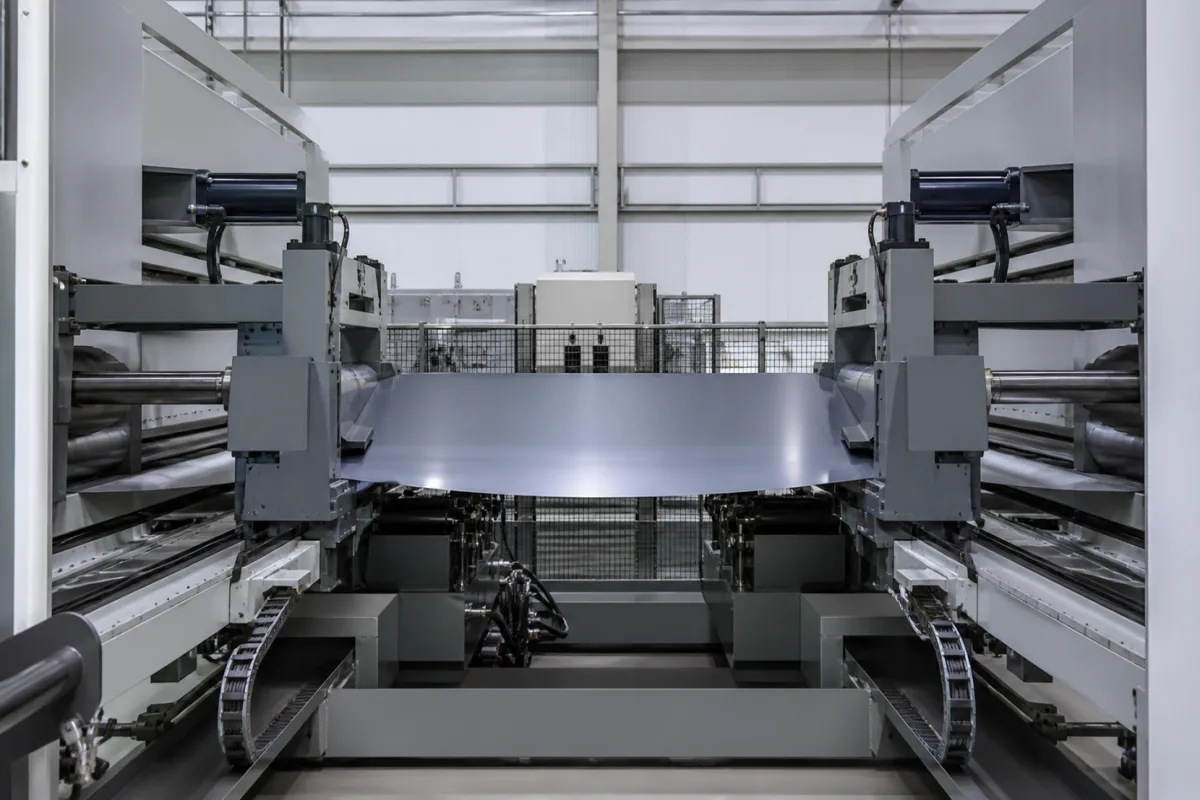
A mechanical assembly within an industrial footwear upper stretching machine that applies controlled tension to shoe upper materials.

Product Specifications

Technical details and manufacturing context for Stretching Mechanism

Definition
The stretching mechanism is a critical component of industrial footwear upper stretching machines, responsible for applying precise, adjustable tension to shoe upper materials (such as leather, synthetic fabrics, or textiles) during the manufacturing process. This mechanism ensures proper material shaping, eliminates wrinkles, and prepares the upper for lasting operations by stretching it to the required dimensions and contours of the shoe last.
Working Principle
The mechanism typically consists of motor-driven rollers, clamps, or grippers that engage the edges of the shoe upper material. Through controlled mechanical or pneumatic actuation, these elements apply outward radial or linear force, stretching the material uniformly across multiple axes. Tension is monitored and adjusted via sensors and control systems to prevent over-stretching or material damage.
Common Materials
Carbon steel, Stainless steel, Aluminum alloy
Technical Parameters
  • Maximum stretching range/distance the mechanism can achieve (mm) Standard Spec
Components / BOM
  • Tensioning Grippers
    Securely hold and apply tension to the shoe upper material edges
    Material: Hardened steel
  • Actuation System
    Provides mechanical force for stretching movement (pneumatic cylinders, servo motors, or linear actuators)
    Material: Steel, aluminum
  • Guide Rails
    Ensure smooth, linear movement of stretching elements
    Material: Hardened steel
  • Tension Sensors
    Monitor and provide feedback on applied stretching force
    Material: Stainless steel, electronic components
Engineering Reasoning
0.5-3.0 kN tension force, 50-300 mm stroke length, 0.1-5.0 mm/s stretching speed
Material yield strength exceedance at 350 MPa stress concentration, 4.5 kN ultimate tensile load, 0.15 mm permanent deformation threshold
Design Rationale: Stress concentration at clamping interface exceeding material yield strength (σ_y = 350 MPa for AISI 4140 steel), leading to plastic deformation and loss of dimensional accuracy
Risk Mitigation (FMEA)
Trigger Cyclic loading at 2.8 kN exceeding fatigue endurance limit (σ_e = 280 MPa for 10^6 cycles)
Mode: Fatigue crack initiation at stress concentration points, propagating to complete fracture
Strategy: Shot peening surface treatment to induce compressive residual stresses of -400 MPa, increasing fatigue strength by 30%
Trigger Misalignment exceeding 0.05 mm/mm causing eccentric loading
Mode: Premature bearing wear with vibration amplitude exceeding 0.8 mm/s RMS, leading to positional accuracy loss beyond ±0.1 mm tolerance
Strategy: Laser alignment system with 0.01 mm resolution and automatic correction via piezoelectric actuators

Industry Taxonomies & Aliases

Commonly used trade names and technical identifiers for Stretching Mechanism.

Industrial Ecosystem & Supply Chain DNA

Complementary Systems
Downstream Applications
Specialized Tooling

Application Fit & Sizing Matrix

Operational Limits
pressure: 0.5 to 3.0 bar (pneumatic/hydraulic actuation pressure)
other spec: Material thickness: 0.5 to 5.0 mm, Stretch force: 50 to 500 N, Cycle rate: ≤ 30 cycles/min
temperature: 10°C to 40°C (ambient operating range)
Media Compatibility
✓ Leather (full-grain and corrected grain) ✓ Synthetic textiles (polyester, nylon mesh) ✓ Thermoplastic polyurethane (TPU) films
Unsuitable: Abrasive slurry environments (e.g., wet grinding/polishing operations with particulate contamination)
Sizing Data Required
  • Material tensile strength (MPa or N/mm)
  • Maximum required stretch displacement (mm)
  • Production cycle time (seconds per stretch cycle)

Reliability & Engineering Risk Analysis

Failure Mode & Root Cause
Fatigue fracture of tensioning components
Cause: Cyclic loading beyond design limits due to improper tension settings, material defects, or stress concentrations at fastener points
Wear and elongation of tensioning elements
Cause: Inadequate lubrication, misalignment, excessive operational loads, or material degradation from environmental exposure
Maintenance Indicators
  • Audible creaking, grinding, or irregular clicking noises during operation
  • Visible misalignment, slack, or inconsistent tension in the stretched material
Engineering Tips
  • Implement regular tension calibration and alignment checks using precision instruments to ensure operation within specified parameters
  • Establish a preventive lubrication and inspection schedule focusing on pivot points, bearings, and tensioning components

Compliance & Manufacturing Standards

Reference Standards
ISO 9001:2015 - Quality Management Systems ANSI B11.19 - Performance Requirements for Safeguarding CE Marking - Machinery Directive 2006/42/EC
Manufacturing Precision
  • Bore Diameter: +/-0.01mm
  • Parallelism of Mounting Surfaces: 0.05mm
Quality Inspection
  • Load Testing to 150% of Rated Capacity
  • Dimensional Verification with CMM (Coordinate Measuring Machine)

Factories Producing Stretching Mechanism

Verified manufacturers with capability to produce this product in China

✓ 96% Supplier Capability Match Found

S Sourcing Manager from Australia Feb 13, 2026
★★★★★
"Impressive build quality. Especially the technical reliability is very stable during long-term operation."
Technical Specifications Verified
P Procurement Specialist from Singapore Feb 10, 2026
★★★★☆
"As a professional in the Machinery and Equipment Manufacturing sector, I confirm this Stretching Mechanism meets all ISO standards. (Delivery took slightly longer than expected, but technical support was excellent.)"
Technical Specifications Verified
T Technical Director from Germany Feb 07, 2026
★★★★★
"Standard OEM quality for Machinery and Equipment Manufacturing applications. The Stretching Mechanism arrived with full certification."
Technical Specifications Verified
Verification Protocol

“Feedback is collected from verified sourcing managers during RFQ (Request for Quote) and factory evaluation processes on CNFX. These reports represent historical performance data and technical audit summaries from our B2B manufacturing network.”

12 sourcing managers are analyzing this specification now. Last inquiry for Stretching Mechanism from Vietnam (1h ago).

Supply Chain Compatible Machinery & Devices

Heavy-Duty CNC Plasma Cutting Machine

Industrial machine for precision metal cutting using plasma arc technology

Explore Specs →
Automated Assembly Line System

Integrated production system for sequential component assembly operations

Explore Specs →
Automated Powder Coating System

Integrated industrial system for applying dry powder coatings to metal substrates.

Explore Specs →
Centrifugal Pump Impeller

Rotating component that transfers energy to fluid in centrifugal pumps.

Explore Specs →

Frequently Asked Questions

What materials are used in this stretching mechanism for durability?

This mechanism is constructed from carbon steel for structural strength, stainless steel for corrosion resistance in humid environments, and aluminum alloy for lightweight precision components.

How does the stretching mechanism ensure consistent tension on shoe upper materials?

The system uses precision tension sensors and actuation systems to apply controlled, repeatable tension, while guide rails maintain alignment and tensioning grippers securely hold materials without damage.

What maintenance is required for industrial stretching mechanisms?

Regular lubrication of guide rails and actuation systems, inspection of tension sensors for calibration, and periodic replacement of tensioning grippers based on usage cycles ensure optimal performance.

Can I contact factories directly on CNFX?

CNFX is an open directory, not a transaction platform. Each factory profile provides direct contact information and production details to help you initiate direct inquiries with Chinese suppliers.

Get Quote for Stretching Mechanism

Request technical pricing, lead times, or customized specifications for Stretching Mechanism directly from verified manufacturing units.

Your business information is encrypted and only shared with verified Stretching Mechanism suppliers.

Thank you! Your message has been sent. We'll respond within 1–3 business days.

Need to Manufacture Stretching Mechanism?

Connect with verified factories specializing in this product category

Add Your Factory Contact Us
Previous Product
Strainer Basket
Next Product
Stroke Length Adjuster / Speed Controller