Pinch Roll Assembly
View system integration details
This page explains how Upper Pinch Roll is classified within Machinery and Equipment Manufacturing. Technical values and manufacturer relationships are research references; confirm the current specification and supplier evidence for each order.
The upper roller in a pinch roll assembly that applies downward pressure to grip and feed material through processing equipment.
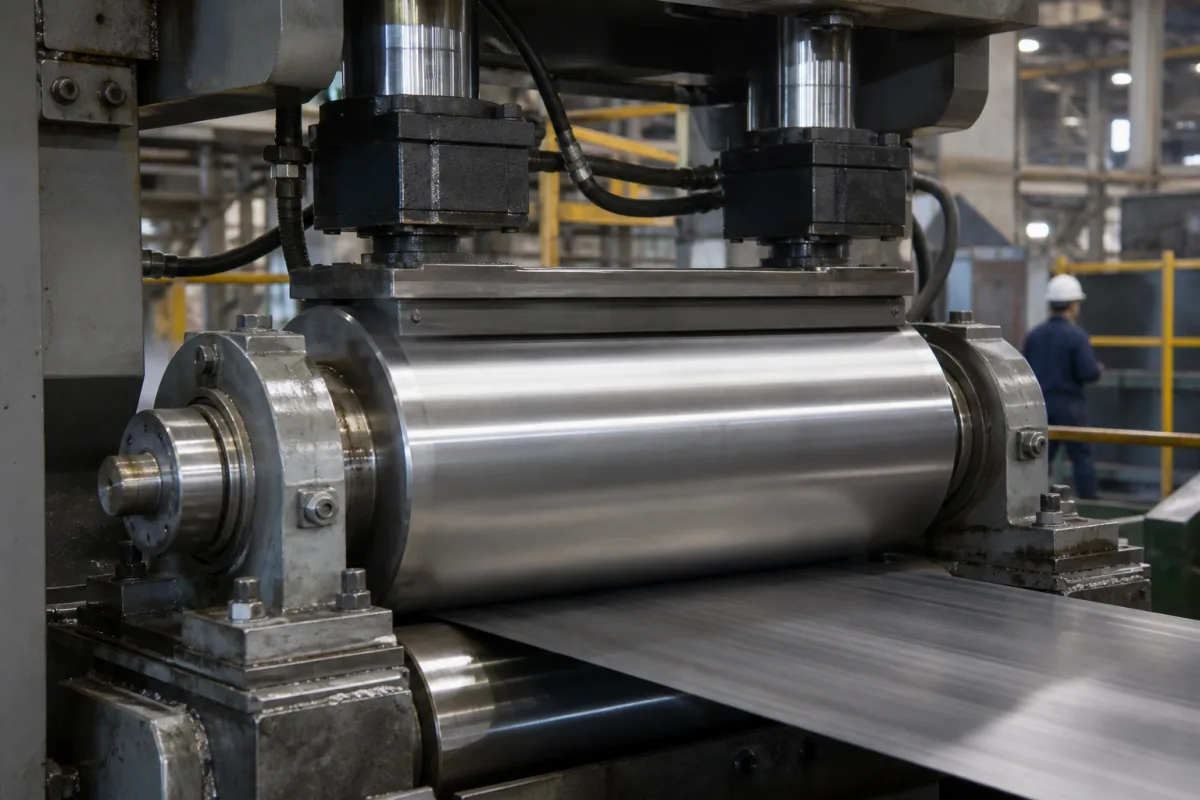
Technical details and manufacturing context for Upper Pinch Roll
| Parameter | Typical range | Notes & selection driver |
|---|---|---|
| Roll Diameter | 200–400 mm | Determines contact area and material grip. |
| Roll Face Width | 600–2000 mm | Must match strip width. |
| Operating Pressure | 1.0–1.6 MPa | |
| Pinch Force | 50–200 kN | Ensures positive material feed without slippage. |
| Roll Surface Hardness | HRC 50–60 | Higher hardness improves wear resistance.ASTM E18 |
| Surface Roughness | Ra 0.8–1.6 µm | Affects material surface quality.ISO 4287 |
| Operating Temperature | -20–80 °C | Beyond this range, seals and bearings may fail. |
| Motor Power | 5.5–22 kW | Sized for required torque and speed.IEC 60034 |
| Drive Speed | 0.5–3.0 m/s | Must match line speed. |
| Roll Material | 42CrMo4 | High strength and wear resistance.DIN EN 10083 |
| Weight | 1500–3500 kg | Affects installation and structural support. |
| IP Rating | IP54–IP65 | Protects against dust and water ingress.IEC 60529 |
Ranges are indicative industry figures for RFQ preparation, not a supplier commitment. Confirm every value and standard with the legal manufacturer before ordering.
This component is essential for the following industrial systems and equipment:
| pressure: | Max 50 MPa contact pressure |
| other spec: | Material feed speed: 0.1-10 m/s, Roller surface hardness: 55-65 HRC |
| temperature: | -20°C to 150°C |
Indicative industry ranges for design and RFQ preparation. Confirm the exact figures and applicable standard with the manufacturer before specifying.
Quoted from the published standard.
Manufacturer profiles associated with Upper Pinch Roll.
Manufacturer listings support early research and capability understanding. They are not certification, ranking, or transaction guarantees.
A practical evidence checklist for RFQ preparation and supplier evaluation.
CNFX does not score or rank suppliers. Buyers must verify all claims and documents with the legal manufacturer before ordering.
The Upper Pinch Roll works with the lower pinch roll to apply controlled pressure on continuous materials, gripping and feeding them through processing equipment at a consistent speed and tension.
Common surface materials include chrome-plated steel, hardened alloy steel, polyurethane, and rubber. The choice depends on the material being processed and the required surface quality.
Typical operating pressure is 1.0–1.6 MPa, and pinch force is 50–200 kN. These are reference ranges; actual values must be confirmed for the specific application.
Regularly inspect the roll surface for wear or damage, check bearings and seals for proper function, and ensure the pressure and alignment are within specified limits. Follow the manufacturer's maintenance guidelines.
Editorial classification, named public sources where available, and source-reviewed manufacturer records.
Ask for use case, specification boundaries, supplier type, and RFQ preparation information for this product.
Compare manufacturer profiles with relevant product and process capability.