Industry-Verified Manufacturing Data (2026)

Valves

Based on aggregated insights from multiple verified factory profiles within the CNFX directory, the standard Valves used in the Machinery and Equipment Manufacturing sector typically supports operational capacities ranging from standard industrial configurations to heavy-duty production requirements.

Technical Definition & Core Assembly

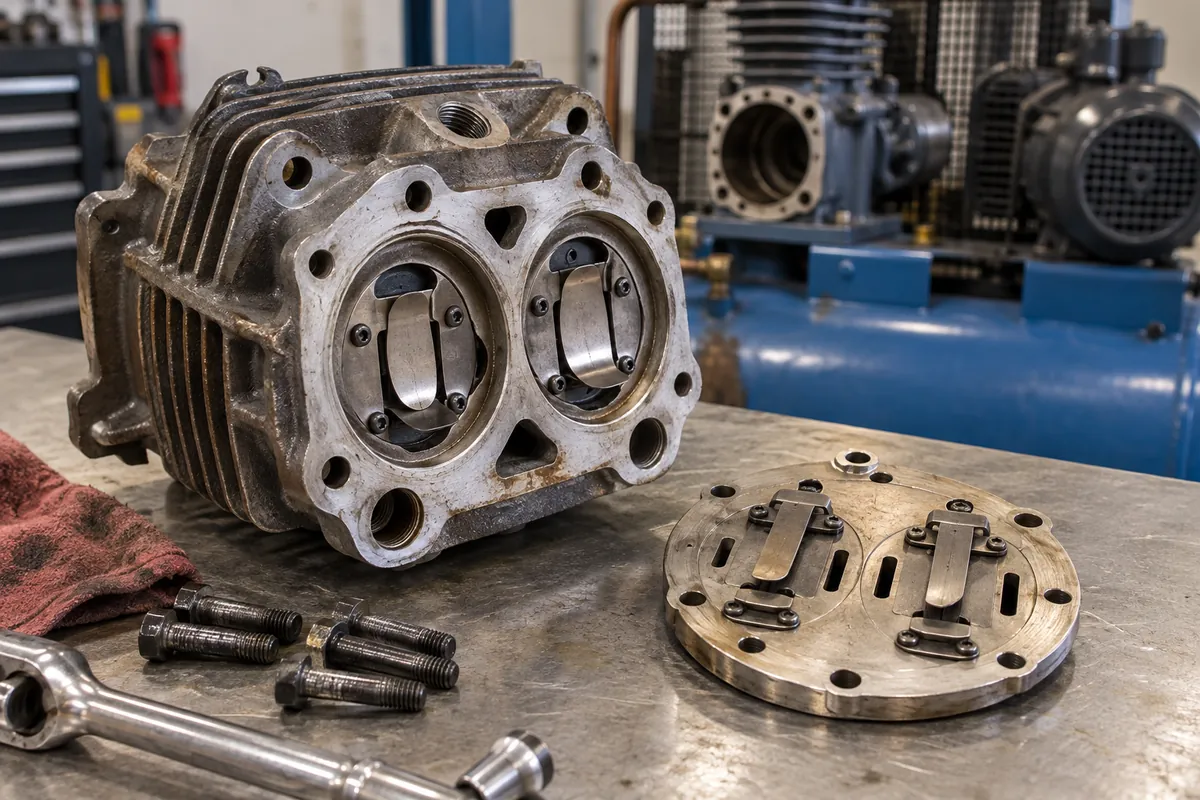
A canonical Valves is characterized by the integration of Valve Plate and Valve Spring. In industrial production environments, manufacturers listed on CNFX commonly emphasize Stainless Steel construction to support stable, high-cycle operation across diverse manufacturing scenarios.

Flow control devices in compressors that regulate the intake and discharge of gases or fluids.
Product Specifications

Technical details and manufacturing context for Valves

Definition
Valves are critical components within compressors that manage the directional flow, pressure regulation, and sealing of working fluids (air, gas, or refrigerant) during compression cycles. They ensure efficient operation by opening and closing at precise intervals to allow intake, compression, and discharge phases.
Working Principle
Valves operate through mechanical actuation (e.g., spring-loaded, pressure differential) or electronic control. During compressor operation, intake valves open to allow fluid entry into the compression chamber, then close during compression. Discharge valves open to release compressed fluid and close to maintain pressure. Timing and sealing are critical for efficiency and preventing backflow.
Common Materials
Stainless Steel, Bronze, Polymer Composites
Technical Parameters
  • Valve port diameter, determining flow capacity and compatibility with compressor specifications (mm) Standard Spec
Components / BOM
  • Valve Plate
    Provides mounting surface and flow channels for valve operation
    Material: Stainless Steel
  • Valve Spring
    Controls valve opening/closing timing through tension
    Material: Spring Steel
  • Valve Seat
    Creates seal when valve is closed to prevent leakage
    Material: Bronze or Polymer
Engineering Reasoning
0.1-350 bar differential pressure, -196°C to 650°C temperature
Material yield strength exceeded at 550 MPa stress or 0.3 mm seat deformation
Design Rationale: Cavitation-induced erosion at vapor pressure threshold of 0.023 bar absolute or thermal fatigue from ΔT>200°C cyclic loading
Risk Mitigation (FMEA)
Trigger Particulate contamination exceeding 25 μm particle size
Mode: Seat galling and leakage rate >0.01% of Cv
Strategy: Install dual 10 μm absolute filters with differential pressure monitoring
Trigger Actuator torque exceeding 120% of rated Nm due to stiction
Mode: Stem shear failure at 345 MPa torsional stress
Strategy: Implement piezoelectric torque sensors with 0.1 Nm resolution and automatic lubrication

Industry Taxonomies & Aliases

Commonly used trade names and technical identifiers for Valves.

Applied To / Applications

This component is essential for the following industrial systems and equipment:

Industrial Ecosystem & Supply Chain DNA

Complementary Systems
Downstream Applications
Specialized Tooling

Application Fit & Sizing Matrix

Operational Limits
pressure: Up to 10,000 psi
flow rate: 0.1 to 10,000 GPM
temperature: -50°C to 400°C
slurry concentration: Up to 60% solids by weight
Media Compatibility
✓ Natural Gas ✓ Compressed Air ✓ Process Water
Unsuitable: Hydrochloric Acid (HCl) due to corrosion risk
Sizing Data Required
  • Required Flow Rate (GPM or m³/h)
  • System Pressure (psi or bar)
  • Fluid Properties (density, viscosity, corrosiveness)

Reliability & Engineering Risk Analysis

Failure Mode & Root Cause
Internal Leakage
Cause: Wear or damage to sealing surfaces (seat, disc, ball) due to erosion, corrosion, or foreign particle impingement, often exacerbated by improper material selection for the service media or excessive cycling.
Sticking/Binding
Cause: Build-up of deposits (scale, polymer, coke) on internal components or stem, thermal expansion issues, or corrosion/gauling of mating metal surfaces, frequently from inadequate cleaning, unsuitable operating temperatures, or lack of lubrication.
Maintenance Indicators
  • Audible: Hissing or whistling sound from the valve body or downstream piping when the valve is commanded closed, indicating internal leakage past the seat.
  • Visual: External leakage of process fluid from the valve stem packing or body seals, or visible corrosion/erosion on the valve exterior that suggests compromised integrity.
Engineering Tips
  • Implement a proactive maintenance program including regular stroking/exercising of valves (especially those in standby or infrequent service) to prevent sticking and verify function, combined with periodic leak testing (e.g., bubble test, acoustic emission).
  • Specify valves with materials specifically selected for the service (considering media corrosivity, temperature, pressure, and presence of solids) and ensure proper installation with adequate straight-run piping upstream/downstream to minimize turbulent flow and associated erosion.

Compliance & Manufacturing Standards

Reference Standards
ISO 5208:2015 (Industrial valves - Pressure testing of valves) ANSI/ASME B16.34 (Valves - Flanged, Threaded, and Welding End) DIN EN 593 (Industrial valves - Metallic butterfly valves)
Manufacturing Precision
  • Bore diameter: +/-0.02mm
  • Seat flatness: 0.1mm
Quality Inspection
  • Hydrostatic pressure test
  • Dye penetrant test for surface defects

Factories Producing Valves

Verified manufacturers with capability to produce this product in China

✓ 98% Supplier Capability Match Found

P Project Engineer from Singapore Jan 29, 2026
★★★★★
"The technical documentation for this Valves is very thorough, especially regarding technical reliability."
Technical Specifications Verified
S Sourcing Manager from Germany Jan 26, 2026
★★★★★
"Reliable performance in harsh Machinery and Equipment Manufacturing environments. No issues with the Valves so far."
Technical Specifications Verified
P Procurement Specialist from Brazil Jan 23, 2026
★★★★★
"Testing the Valves now; the technical reliability results are within 1% of the laboratory datasheet."
Technical Specifications Verified
Verification Protocol

“Feedback is collected from verified sourcing managers during RFQ (Request for Quote) and factory evaluation processes on CNFX. These reports represent historical performance data and technical audit summaries from our B2B manufacturing network.”

11 sourcing managers are analyzing this specification now. Last inquiry for Valves from USA (51m ago).

Supply Chain Compatible Machinery & Devices

Heavy-Duty CNC Plasma Cutting Machine

Industrial machine for precision metal cutting using plasma arc technology

Explore Specs →
Automated Assembly Line System

Integrated production system for sequential component assembly operations

Explore Specs →
Automated Powder Coating System

Integrated industrial system for applying dry powder coatings to metal substrates.

Explore Specs →
Centrifugal Pump Impeller

Rotating component that transfers energy to fluid in centrifugal pumps.

Explore Specs →

Frequently Asked Questions

What materials are best for compressor valves in harsh industrial environments?

Stainless steel offers corrosion resistance for demanding applications, bronze provides durability with good thermal conductivity, while polymer composites reduce weight and resist chemical degradation.

How do valve components like plates, springs, and seats work together in compressors?

The valve plate controls flow opening/closing, the spring ensures proper return timing, and the seat provides a tight seal—together they regulate gas/fluid intake and discharge efficiently.

What specifications should I consider when selecting valves for machinery manufacturing equipment?

Key specs include pressure ratings, temperature tolerance, flow capacity, material compatibility with gases/fluids, and compliance with industry standards like ASME or ISO for safety and performance.

Can I contact factories directly on CNFX?

CNFX is an open directory, not a transaction platform. Each factory profile provides direct contact information and production details to help you initiate direct inquiries with Chinese suppliers.

Get Quote for Valves

Request technical pricing, lead times, or customized specifications for Valves directly from verified manufacturing units.

Your business information is encrypted and only shared with verified Valves suppliers.

Thank you! Your message has been sent. We'll respond within 1–3 business days.

Need to Manufacture Valves?

Connect with verified factories specializing in this product category

Add Your Factory Contact Us
Previous Product
Valve/Driver (for pneumatic/electric)
Next Product
Valves (Suction & Discharge)