Vacuum Generator
View system integration details
This page explains how Venturi Nozzle is classified within Machinery and Equipment Manufacturing. Technical values and manufacturer relationships are research references; confirm the current specification and supplier evidence for each order.
A specialized nozzle that uses the Venturi effect to create vacuum pressure by accelerating fluid flow through a constricted section.
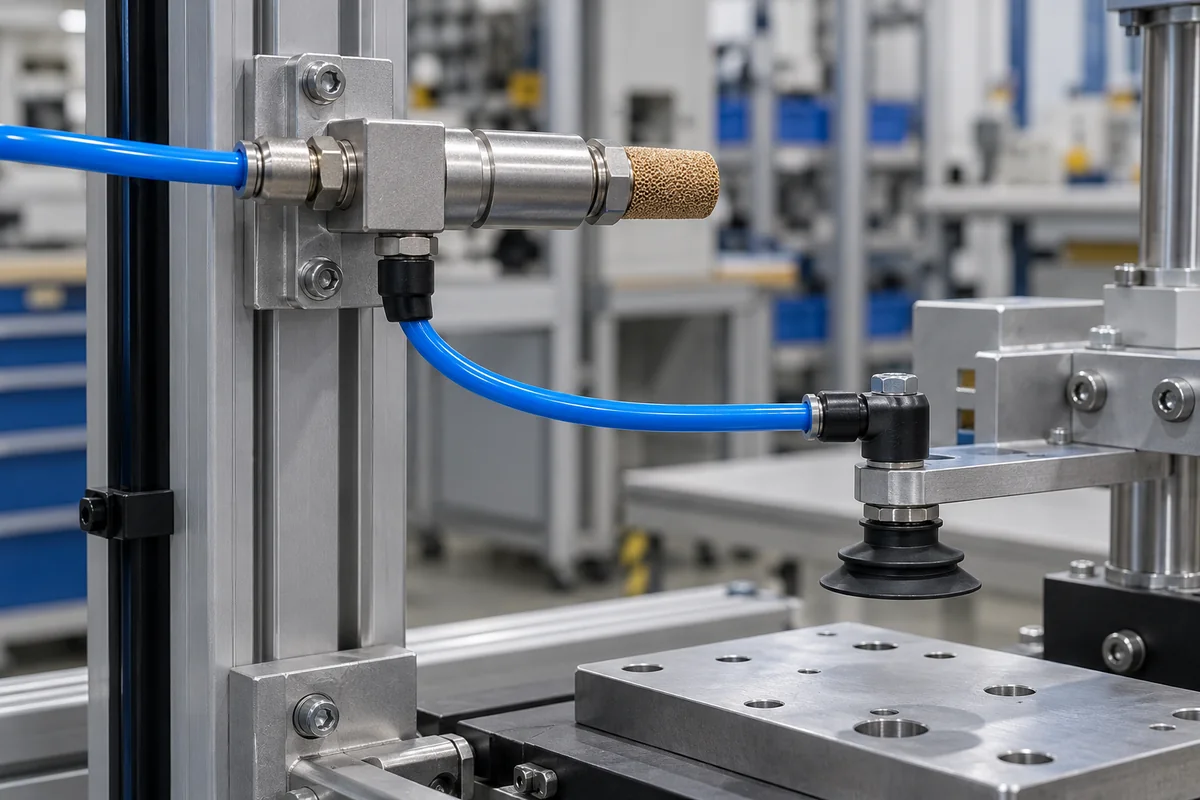
Technical details and manufacturing context for Venturi Nozzle
| Parameter | Typical range | Notes & selection driver |
|---|---|---|
| Inlet Connection Size | 1/4–2 inch | Standard NPT or BSP threads |
| Flow Rate | 0.5–10 m³/h | At 1.0 MPa inlet pressure |
| Vacuum Pressure | -0.05–-0.08 MPa | Relative to atmospheric pressure |
| Operating Temperature | -20–80 °C | For standard materials |
| Material | SS304/SS316 | Corrosion resistantASTM A276 |
| Weight | 0.5–5 kg | Depends on size and material |
Ranges are indicative industry figures for RFQ preparation, not a supplier commitment. Confirm every value and standard with the legal manufacturer before ordering.
| pressure: | Up to 10 bar inlet pressure, vacuum up to 0.8 bar |
| flow rate: | 0.5 to 500 L/min (water equivalent) |
| temperature: | -40°C to 150°C (dependent on material) |
| slurry concentration: | Up to 15% solids by weight (particle size < 100 microns) |
Indicative industry ranges for design and RFQ preparation. Confirm the exact figures and applicable standard with the manufacturer before specifying.
Quoted from the published standard.
A practical evidence checklist for RFQ preparation and supplier evaluation.
Compare the published product scope and source details, then include your specifications and quantity in an enquiry.
2 companies list this product among what they make. Company figures are quoted from each company's own website; every card states where the relationship came from.
Explore company information and manufacturing capabilities, then discuss the scope of your project with a relevant supplier.
Ask for use case, specification boundaries, supplier type, and RFQ preparation information for this product.
According to the directory data.
Common materials include stainless steel, brass, aluminum, and engineering plastics. For corrosion-resistant applications, stainless steel grades SS304/SS316 (per ASTM A276) are listed. Confirm the material suitability for your environment.
Compressed air accelerates through a converging section, reaching maximum velocity at the throat, which causes a pressure drop below atmospheric pressure. This creates suction at the inlet. The air then expands through a diverging section, recovering pressure while maintaining the vacuum effect.
Inlet connection sizes range from 1/4 to 2 inches, with standard NPT or BSP threads. Choose the size that matches your system's piping and flow requirements.
This component is essential for the following industrial systems and equipment:
Editorial classification, named public sources where available, and source-reviewed manufacturer records.
Compare manufacturer profiles with relevant product and process capability.