Product Screening System
View system integration details
This page explains how Vibrating Screen Deck is classified within Machinery and Equipment Manufacturing. Technical values and manufacturer relationships are research references; confirm the current specification and supplier evidence for each order.
The working surface of a vibrating screen that directly contacts and separates materials based on size.
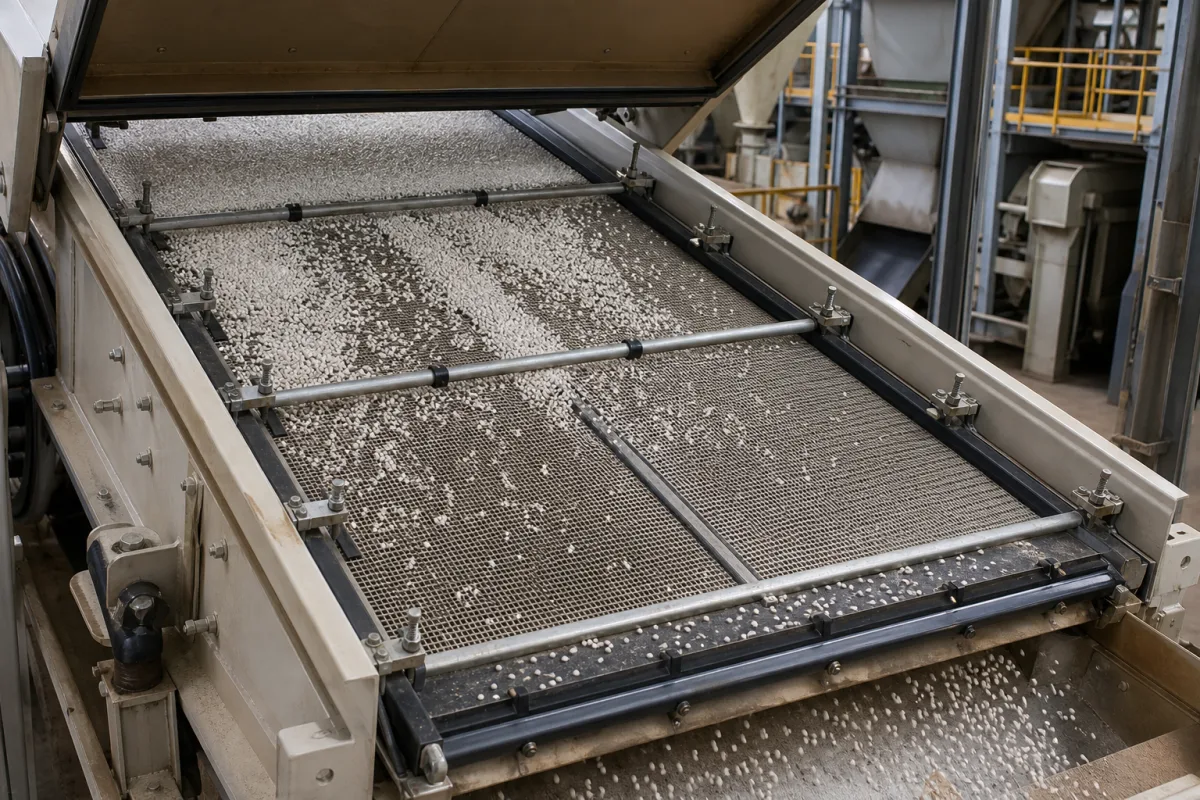
Technical details and manufacturing context for Vibrating Screen Deck
| Parameter | Typical range | Notes & selection driver |
|---|---|---|
| Screen Area | 1.5–10 m² | Determines throughput capacity |
| Mesh Size | 0.5–100 mm | Separation cut pointISO 9044 |
| Open Area | 30–60 % | Higher open area improves efficiency |
| Vibration Amplitude | 2–8 mm | Affects material stratification |
| Vibration Frequency | 700–1200 rpm | Matches material characteristics |
| Processing Capacity | 10–500 t/h | Per square meter of screen area |
| Separation Efficiency | 85–95 % | Measured per test standard |
| Operating Temperature | -20–80 °C | Material and screen cloth limits |
| Material Grade | Q235A/304/316 | Corrosion and wear resistanceGB/T 700, ASTM A240 |
| Screen Cloth Thickness | 1–10 mm | Affects durability and open area |
| Weight | 500–5000 kg | Per deck, for structural support |
Ranges are indicative industry figures for RFQ preparation, not a supplier commitment. Confirm every value and standard with the legal manufacturer before ordering.
| pressure: | Not applicable (no pressure rating required) |
| other spec: | Max feed rate: 500-2000 tph depending on screen size, Slurry concentration: Up to 70% solids by weight |
| temperature: | -20°C to 120°C |
Indicative industry ranges for design and RFQ preparation. Confirm the exact figures and applicable standard with the manufacturer before specifying.
Quoted from the published standard.
A practical evidence checklist for RFQ preparation and supplier evaluation.
Compare the published product scope and source details, then include your specifications and quantity in an enquiry.
Manufacturer profiles associated with Vibrating Screen Deck.
Explore company information and manufacturing capabilities, then discuss the scope of your project with a relevant supplier.
Ask for use case, specification boundaries, supplier type, and RFQ preparation information for this product.
A vibrating screen deck is the working surface of a vibrating screen that directly contacts and separates materials based on size. It consists of a frame supporting screening media such as wire mesh, polyurethane panels, or perforated plates.
The deck is mounted on a vibrating screen frame and subjected to high-frequency vibrations. These vibrations cause materials to stratify, with finer particles passing through the openings while larger particles travel across the surface to the discharge end.
Key parameters include screen area (1.5–10 m²), mesh size (0.5–100 mm), open area (30–60%), vibration amplitude (2–8 mm), vibration frequency (700–1200 rpm), processing capacity (10–500 t/h per m²), separation efficiency (85–95%), operating temperature (-20–80 °C), material grade (Q235A/304/316), screen cloth thickness (1–10 mm), and weight (500–5000 kg). These are reference ranges; verify with the manufacturer.
Common materials include high-carbon steel wire, stainless steel, polyurethane, and rubber. The choice depends on the application, including factors like abrasiveness, corrosion, and temperature.
This component is essential for the following industrial systems and equipment:
Editorial classification, named public sources where available, and source-reviewed manufacturer records.
Compare manufacturer profiles with relevant product and process capability.