Industry-Verified Manufacturing Data (2026)

Waste Removal System

Based on aggregated insights from multiple verified factory profiles within the CNFX directory, the standard Waste Removal System used in the Machinery and Equipment Manufacturing sector typically supports operational capacities ranging from standard industrial configurations to heavy-duty production requirements.

Technical Definition & Core Assembly

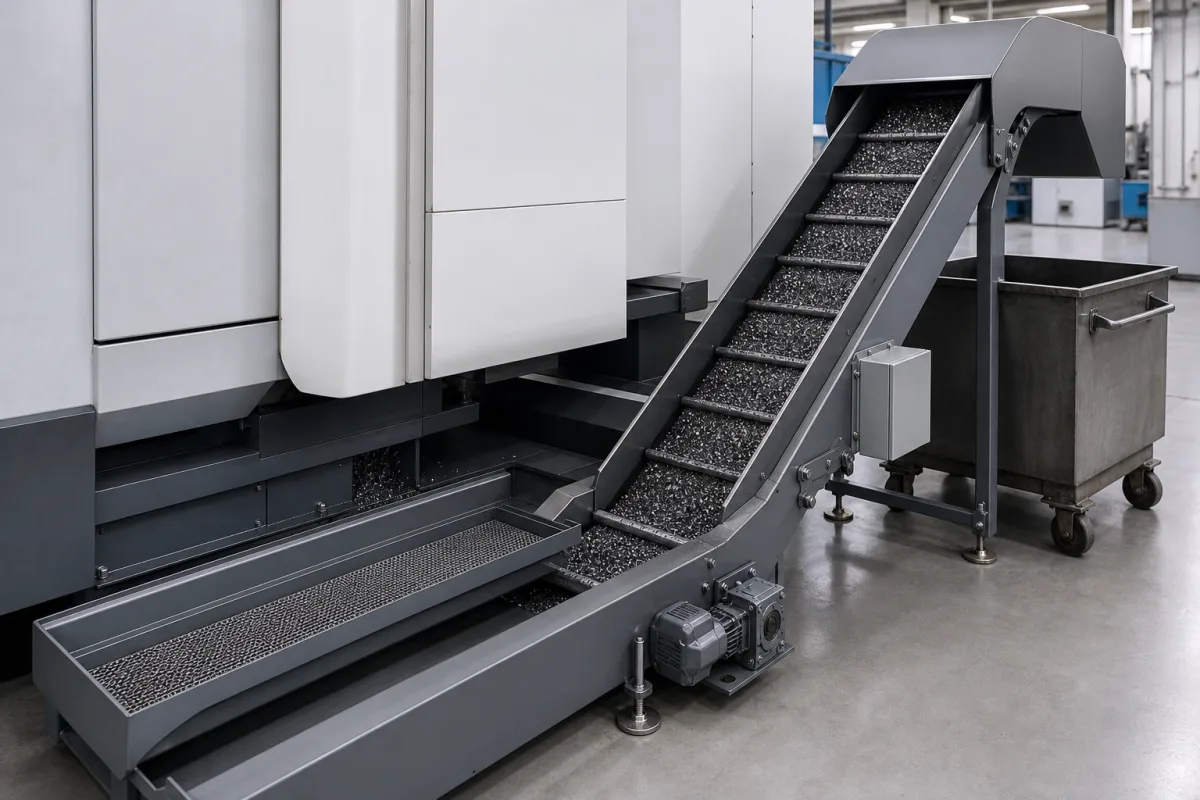
A canonical Waste Removal System is characterized by the integration of Collection Chute/Hopper and Conveyance Mechanism (e.g., Auger). In industrial production environments, manufacturers listed on CNFX commonly emphasize Stainless Steel (AISI 304/316) construction to support stable, high-cycle operation across diverse manufacturing scenarios.

A subsystem within an industrial fish filleting machine designed to collect, transport, and dispose of processing by-products such as fish heads, tails, bones, skin, and offal.

Product Specifications

Technical details and manufacturing context for Waste Removal System

Definition
The Waste Removal System is an integral component of an Industrial Fish Filleting Machine, responsible for the hygienic and efficient evacuation of solid and semi-solid waste generated during the filleting process. It operates in tandem with cutting and processing stations to ensure a clean workspace, prevent cross-contamination, and maintain production flow by continuously removing non-fillet materials from the primary processing line.
Working Principle
The system typically employs a combination of mechanical conveyance (e.g., augers, conveyor belts, or chutes) and/or pneumatic suction to capture waste material from discharge points beneath filleting blades and sorting stations. Collected waste is transported to a central collection hopper or discharge port for subsequent disposal or further processing (e.g., rendering).
Common Materials
Stainless Steel (AISI 304/316), Food-Grade Polymer (e.g., UHMW-PE)
Technical Parameters
  • Maximum waste handling capacity per hour. (kg/h) Per Request
Components / BOM
  • Collection Chute/Hopper
    Initial catchment point for waste falling from processing heads; often includes a screen for liquid drainage.
    Material: Stainless Steel
  • Conveyance Mechanism (e.g., Auger)
    Transports compacted waste from the collection point to the discharge outlet.
    Material: Stainless Steel
  • Discharge Port/Flange
    Interface for connecting to external waste bins, pipes, or further processing equipment.
    Material: Stainless Steel
  • Drive Motor & Gearbox
    Provides power to the conveyance mechanism.
    Material: Cast Iron / Steel (housing), Copper (windings)
Engineering Reasoning
0.1-0.5 bar vacuum pressure, 0.2-1.0 m/s conveyor velocity
Vacuum pressure exceeding 0.8 bar positive pressure or dropping below 0.05 bar vacuum, conveyor velocity exceeding 1.5 m/s
Design Rationale: Material bridging due to insufficient vacuum pressure (below 0.05 bar) causing flow obstruction, or excessive velocity (above 1.5 m/s) causing centrifugal separation failure in cyclonic separators
Risk Mitigation (FMEA)
Trigger Protein-fat emulsion accumulation on conveyor surfaces
Mode: Adhesion coefficient reduction from μ=0.6 to μ<0.2 causing material slippage
Strategy: PTFE-coated conveyor belts with surface energy <18 mN/m and 60° inclined scraper blades
Trigger Bone fragment penetration exceeding 2 mm depth
Mode: Perforation-induced vacuum loss at >0.3 mm hole diameter in PVC ducting
Strategy: Abrasion-resistant polyurethane lining with 90 Shore A hardness and 15 mm thickness

Industry Taxonomies & Aliases

Commonly used trade names and technical identifiers for Waste Removal System.

Industrial Ecosystem & Supply Chain DNA

Complementary Systems
Downstream Applications
Specialized Tooling

Application Fit & Sizing Matrix

Operational Limits
pressure: Atmospheric to 0.5 bar (low-pressure transport system)
flow rate: 0.5-3.0 m³/hr (variable based on processing throughput)
temperature: 5-40°C (ambient to chilled processing environment)
slurry concentration: 10-40% solids by weight (viscous slurry handling)
Media Compatibility
✓ Fish processing by-products (heads, tails, bones, skin, offal) ✓ Food-grade washdown fluids (CIP chemicals) ✓ Seawater/brine solutions (processing environment)
Unsuitable: High-temperature steam cleaning (>60°C) or corrosive chemical sterilization
Sizing Data Required
  • Maximum hourly by-product volume (kg/hr or m³/hr)
  • Peak processing line speed (units/minute)
  • Maximum particle size and fibrous content

Reliability & Engineering Risk Analysis

Failure Mode & Root Cause
Abrasive wear in pump impellers and piping
Cause: High concentration of solid particles in waste stream causing mechanical erosion of metal surfaces
Corrosion-induced leaks in containment systems
Cause: Chemical attack from acidic/alkaline waste components combined with moisture exposure
Maintenance Indicators
  • Unusual grinding or rattling noises from pumps/motors indicating bearing failure or foreign object ingestion
  • Visible leaks or damp areas around joints/flanges suggesting seal degradation or corrosion
Engineering Tips
  • Implement regular particle size monitoring and install upstream screening/filtration to reduce abrasive content
  • Apply protective coatings/lining materials compatible with waste chemistry and establish routine thickness testing

Compliance & Manufacturing Standards

Reference Standards
ISO 14001:2015 Environmental Management Systems ANSI/ASME B31.3 Process Piping DIN EN 1092-1 Flanges and their joints
Manufacturing Precision
  • Pipe Diameter: +/-0.5mm
  • Surface Roughness: Ra ≤ 3.2μm
Quality Inspection
  • Pressure Test (Hydrostatic/Pneumatic)
  • Material Verification Test (PMI)

Factories Producing Waste Removal System

Verified manufacturers with capability to produce this product in China

✓ 98% Supplier Capability Match Found

S Sourcing Manager from Singapore Jan 16, 2026
★★★★★
"Found 54+ suppliers for Waste Removal System on CNFX, but this spec remains the most cost-effective."
Technical Specifications Verified
P Procurement Specialist from Germany Jan 13, 2026
★★★★☆
"The technical documentation for this Waste Removal System is very thorough, especially regarding technical reliability. (Delivery took slightly longer than expected, but technical support was excellent.)"
Technical Specifications Verified
T Technical Director from Brazil Jan 10, 2026
★★★★★
"Reliable performance in harsh Machinery and Equipment Manufacturing environments. No issues with the Waste Removal System so far."
Technical Specifications Verified
Verification Protocol

“Feedback is collected from verified sourcing managers during RFQ (Request for Quote) and factory evaluation processes on CNFX. These reports represent historical performance data and technical audit summaries from our B2B manufacturing network.”

9 sourcing managers are analyzing this specification now. Last inquiry for Waste Removal System from India (1h ago).

Supply Chain Compatible Machinery & Devices

Automated Assembly Line System

Integrated production system for sequential component assembly operations

Explore Specs →
Automated Powder Coating System

Integrated industrial system for applying dry powder coatings to metal substrates.

Explore Specs →
Centrifugal Pump Impeller

Rotating component that transfers energy to fluid in centrifugal pumps.

Explore Specs →
High-Precision CNC Laser Cutting Machine

Computer-controlled industrial machine using focused laser beams to cut sheet metal with micron-level accuracy.

Explore Specs →

Frequently Asked Questions

What materials are used in this waste removal system to ensure food safety?

The system is constructed with food-grade materials including AISI 304/316 stainless steel for corrosion resistance and UHMW-PE polymer components, both compliant with food processing hygiene standards.

How does this system integrate with existing fish filleting machinery?

The waste removal system is designed as a modular subsystem with standard discharge ports and flanges that connect directly to most industrial fish filleting machines, requiring minimal modification.

What types of fish processing by-products can this system handle?

It efficiently collects and transports all common by-products including fish heads, tails, bones, skin, offal, and other solid waste generated during industrial filleting operations.

Can I contact factories directly on CNFX?

CNFX is an open directory, not a transaction platform. Each factory profile provides direct contact information and production details to help you initiate direct inquiries with Chinese suppliers.

Get Quote for Waste Removal System

Request technical pricing, lead times, or customized specifications for Waste Removal System directly from verified manufacturing units.

Your business information is encrypted and only shared with verified Waste Removal System suppliers.

Thank you! Your message has been sent. We'll respond within 1–3 business days.

Need to Manufacture Waste Removal System?

Connect with verified factories specializing in this product category

Add Your Factory Contact Us
Previous Product
Waste Collection Tray/Bin
Next Product
Water Circulation and Filtration Unit