Industry-Verified Manufacturing Data (2026)

Conveyance Mechanism (e.g., Auger)

Based on aggregated insights from multiple verified factory profiles within the CNFX directory, the standard Conveyance Mechanism (e.g., Auger) used in the Machinery and Equipment Manufacturing sector typically supports operational capacities ranging from standard industrial configurations to heavy-duty production requirements.

Technical Definition & Core Assembly

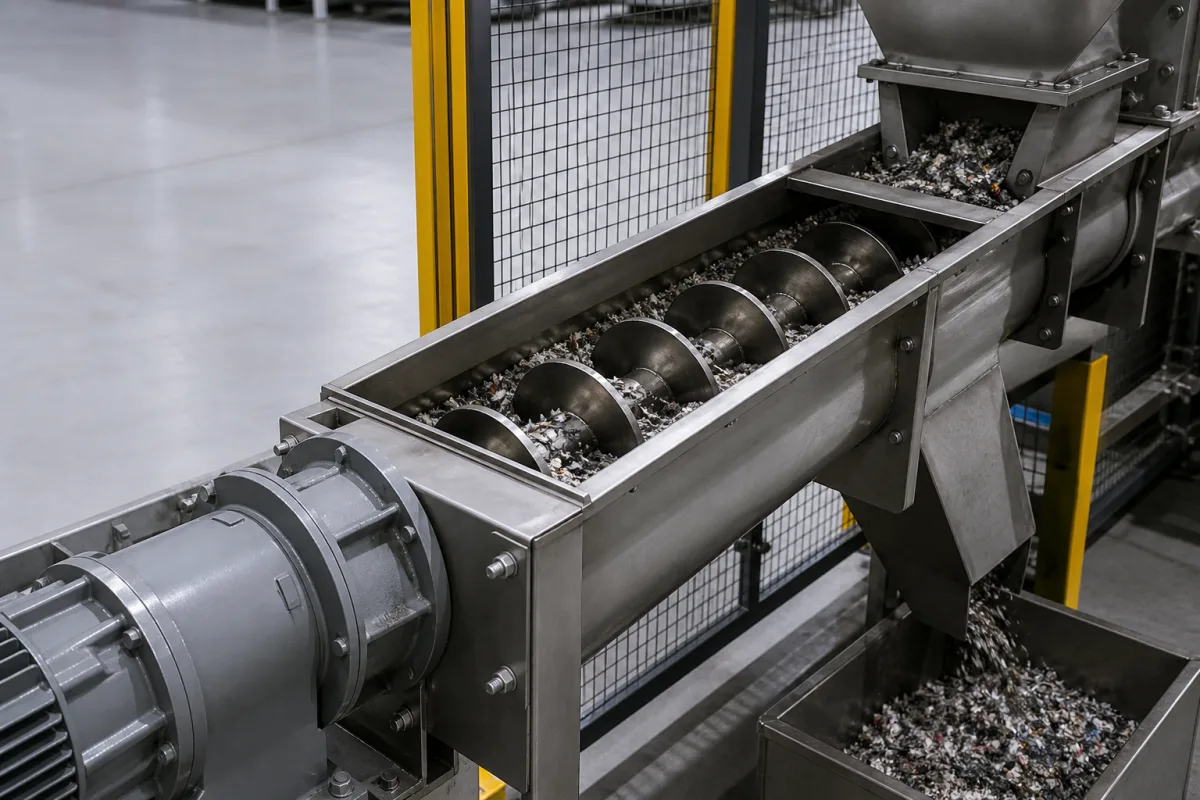
A canonical Conveyance Mechanism (e.g., Auger) is characterized by the integration of Auger Screw and Drive Motor. In industrial production environments, manufacturers listed on CNFX commonly emphasize Carbon Steel construction to support stable, high-cycle operation across diverse manufacturing scenarios.

A mechanical component within waste removal systems that transports waste materials from collection points to disposal or processing areas.
Product Specifications

Technical details and manufacturing context for Conveyance Mechanism (e.g., Auger)

Definition
A conveyance mechanism is a critical component of industrial waste removal systems that physically moves waste materials through controlled pathways. In the context of waste removal, it typically consists of augers, conveyors, or similar transport elements that handle various waste types (solid, semi-solid, or granular) from collection hoppers or points of generation to central disposal units, compactors, or processing equipment. It ensures continuous waste flow while preventing blockages and maintaining system efficiency.
Working Principle
The mechanism operates by mechanical force applied to waste materials. For auger-type systems, a rotating helical screw (auger) moves materials along a trough or tube via rotational motion. The screw's geometry creates forward displacement of material with each rotation. For conveyor-type systems, belts, chains, or vibrating surfaces transport materials. Power is typically supplied by electric motors with gear reduction systems, and operation can be continuous or intermittent based on waste generation rates and system controls.
Common Materials
Carbon Steel, Stainless Steel, Abrasion-Resistant Alloys
Technical Parameters
  • Diameter of the auger screw or width of conveyor elements (mm) Customizable
Components / BOM
  • Auger Screw
    Helical rotating element that moves materials through axial displacement
    Material: Carbon Steel or Stainless Steel
  • Drive Motor
    Provides rotational power to the conveyance mechanism
    Material: Various (housing typically steel or aluminum)
  • Gear Reducer
    Reduces motor speed and increases torque for efficient material transport
    Material: Cast Iron or Steel Housing with Steel Gears
  • Trough/Casing
    Encloses the transport mechanism and contains materials during conveyance
    Material: Steel with Wear Liners
  • Bearings
    Support rotating components and reduce friction
    Material: Steel with Various Bearing Materials
Engineering Reasoning
0.5-3.0 m/s linear velocity, 15-60 RPM rotational speed, 0.2-1.5 MPa bearing pressure
Shear stress exceeding 45 MPa in auger flights, torsional deflection >0.15 rad/m, bearing temperature >120°C
Design Rationale: Material fatigue from cyclic torsional loading exceeding 10^6 cycles at 35 MPa stress amplitude, abrasive wear from particle hardness >6.5 Mohs scale
Risk Mitigation (FMEA)
Trigger Particle jamming causing torque spike to 150% rated value
Mode: Shear pin failure at 450 N·m torque threshold
Strategy: Torque-limiting clutch with 400 N·m slip point and jam detection sensor
Trigger Abrasive material accumulation in flight clearance exceeding 5 mm
Mode: Auger binding and motor overload at 125% current draw
Strategy: Hardened flight edges with tungsten carbide coating and 2 mm minimum clearance design

Industry Taxonomies & Aliases

Commonly used trade names and technical identifiers for Conveyance Mechanism (e.g., Auger).

Applied To / Applications

This component is essential for the following industrial systems and equipment:

Industrial Ecosystem & Supply Chain DNA

Complementary Systems
Downstream Applications
Specialized Tooling

Application Fit & Sizing Matrix

Operational Limits
pressure: Up to 10 bar
flow rate: 0.5 to 50 m³/h
temperature: -20°C to 120°C
slurry concentration: Up to 70% solids by weight
Media Compatibility
✓ Municipal solid waste ✓ Food processing waste ✓ Industrial sludge
Unsuitable: Highly corrosive chemical waste with pH <2 or >12
Sizing Data Required
  • Material bulk density (kg/m³)
  • Required throughput capacity (tons/hour)
  • Material particle size distribution (mm)

Reliability & Engineering Risk Analysis

Failure Mode & Root Cause
Auger flight wear and deformation
Cause: Abrasive material contact causing gradual material loss, improper material handling leading to overloading, or fatigue from cyclic stress
Bearing failure in drive assembly
Cause: Contamination from conveyed material ingress, inadequate lubrication due to poor maintenance practices, or misalignment causing uneven load distribution
Maintenance Indicators
  • Unusual grinding or scraping noises during operation indicating metal-on-metal contact or foreign object interference
  • Visible material spillage or reduced throughput suggesting flight damage, drive slippage, or blockage
Engineering Tips
  • Implement regular inspection and cleaning schedules to prevent material buildup and contamination, especially in bearing housings and flight clearances
  • Use wear-resistant materials or coatings on flight surfaces and ensure proper alignment during installation to reduce uneven stress and premature failure

Compliance & Manufacturing Standards

Reference Standards
ISO 9001:2015 - Quality management systems ANSI/CEMA 350-2015 - Screw conveyors DIN 15262-1 - Continuous mechanical handling equipment
Manufacturing Precision
  • Auger flight pitch: +/-1.5% of nominal pitch
  • Shaft straightness: 0.1mm per meter length
Quality Inspection
  • Non-destructive testing (NDT) for weld integrity
  • Dimensional verification using coordinate measuring machine (CMM)

Factories Producing Conveyance Mechanism (e.g., Auger)

Verified manufacturers with capability to produce this product in China

✓ 93% Supplier Capability Match Found

P Project Engineer from Germany Jan 09, 2026
★★★★★
"Reliable performance in harsh Machinery and Equipment Manufacturing environments. No issues with the Conveyance Mechanism (e.g., Auger) so far."
Technical Specifications Verified
S Sourcing Manager from Brazil Jan 06, 2026
★★★★★
"Testing the Conveyance Mechanism (e.g., Auger) now; the technical reliability results are within 1% of the laboratory datasheet."
Technical Specifications Verified
P Procurement Specialist from Canada Jan 03, 2026
★★★★★
"Impressive build quality. Especially the technical reliability is very stable during long-term operation."
Technical Specifications Verified
Verification Protocol

“Feedback is collected from verified sourcing managers during RFQ (Request for Quote) and factory evaluation processes on CNFX. These reports represent historical performance data and technical audit summaries from our B2B manufacturing network.”

14 sourcing managers are analyzing this specification now. Last inquiry for Conveyance Mechanism (e.g., Auger) from USA (1h ago).

Supply Chain Compatible Machinery & Devices

Hydraulic Press

Industrial machine using hydraulic pressure to compress, form, or assemble materials

Explore Specs →
Heavy-Duty CNC Plasma Cutting Machine

Industrial machine for precision metal cutting using plasma arc technology

Explore Specs →
Automated Assembly Line System

Integrated production system for sequential component assembly operations

Explore Specs →
Automated Powder Coating System

Integrated industrial system for applying dry powder coatings to metal substrates.

Explore Specs →

Frequently Asked Questions

What materials are best for abrasive waste applications?

For highly abrasive waste materials, we recommend abrasion-resistant alloys or hardened carbon steel components, which provide superior wear resistance and extended service life compared to standard materials.

How do I select the right drive motor for my auger conveyor?

Motor selection depends on material density, flow rate, conveyor length, and incline. Our engineers calculate torque requirements based on your specific application to ensure optimal performance and energy efficiency.

Can these conveyance mechanisms handle wet or sticky waste materials?

Yes, with proper trough/casing design and specialized auger screw configurations, our systems effectively transport wet, sticky, or compacted waste materials while minimizing buildup and maintenance requirements.

Can I contact factories directly on CNFX?

CNFX is an open directory, not a transaction platform. Each factory profile provides direct contact information and production details to help you initiate direct inquiries with Chinese suppliers.

Get Quote for Conveyance Mechanism (e.g., Auger)

Request technical pricing, lead times, or customized specifications for Conveyance Mechanism (e.g., Auger) directly from verified manufacturing units.

Your business information is encrypted and only shared with verified Conveyance Mechanism (e.g., Auger) suppliers.

Thank you! Your message has been sent. We'll respond within 1–3 business days.

Need to Manufacture Conveyance Mechanism (e.g., Auger)?

Connect with verified factories specializing in this product category

Add Your Factory Contact Us
Previous Product
Controller Unit
Next Product
Conveyor Belt