Centrifugal Wheel Assembly
View system integration details
This page explains how Wear Plate/Control Cage is classified within Machinery and Equipment Manufacturing. Technical values and manufacturer relationships are research references; confirm the current specification and supplier evidence for each order.
A protective and flow-regulating component within a centrifugal wheel assembly that shields critical surfaces from abrasion and controls material distribution.
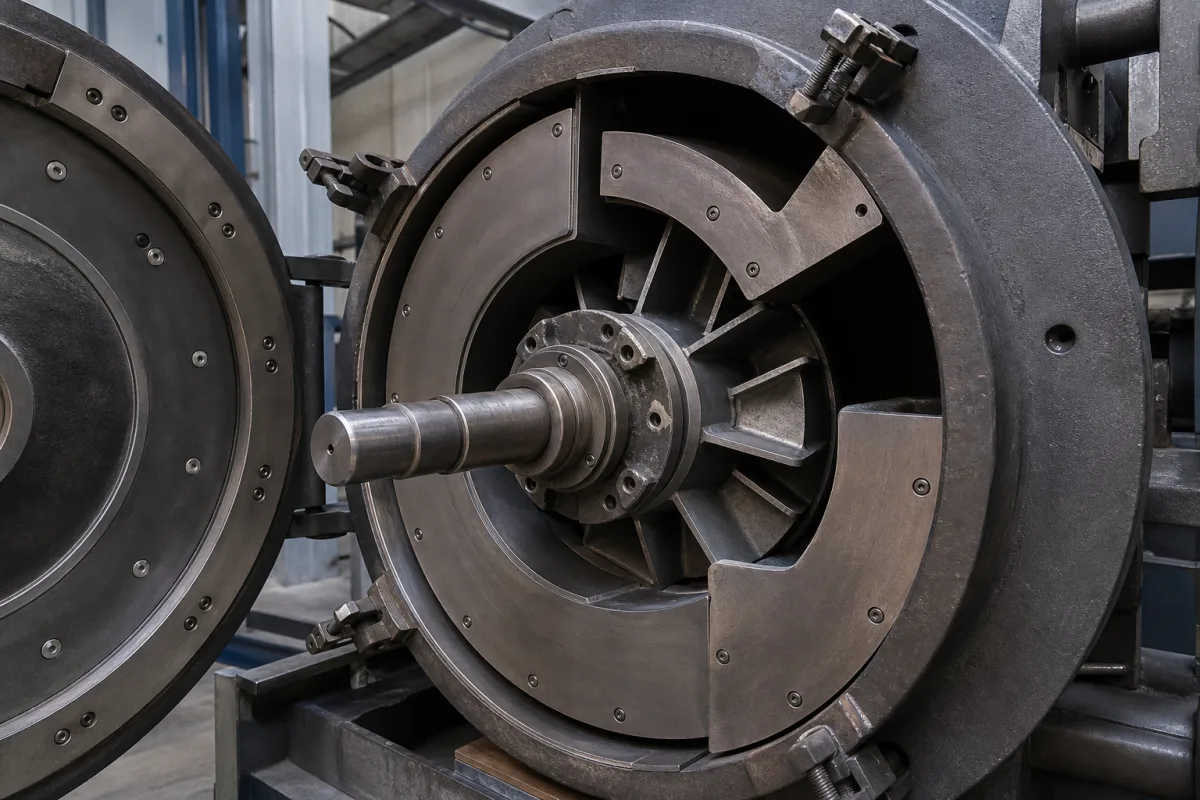
Technical details and manufacturing context for Wear Plate/Control Cage
| Parameter | Typical range | Notes & selection driver |
|---|---|---|
| Hardness | 45–62 HRC | Higher hardness improves wear resistanceASTM E18 |
| Tensile Strength | 700–1200 MPa | Ensures structural integrity under impactASTM E8 |
| Impact Toughness | 20–60 J | Resists cracking from material impactsASTM E23 |
| Wear Resistance | 0.2–0.5 cm³/10min | Lower volume loss indicates better wear performanceASTM G65 |
| Operating Temperature | -40–200 °C | Exceeding range may cause material degradation |
| Density | 7.2–8.0 g/cm³ | Affects weight and inertiaASTM B311 |
| Thickness | 10–50 mm | Customizable based on application |
| Outer Diameter | 200–800 mm | Must match wheel assembly dimensions |
| Mounting Hole Diameter | 10–30 mm | Ensures proper fastening |
| Surface Roughness | Ra 3.2–6.3 µm | Affects material flow and wearISO 4287 |
| Weight | 5–50 kg | Depends on size and material |
Ranges are indicative industry figures for RFQ preparation, not a supplier commitment. Confirm every value and standard with the legal manufacturer before ordering.
| pressure: | Up to 10 bar (145 psi) |
| flow rate: | Up to 500 m³/h |
| temperature: | -40°C to 150°C |
| slurry concentration: | Up to 70% solids by weight |
Indicative industry ranges for design and RFQ preparation. Confirm the exact figures and applicable standard with the manufacturer before specifying.
Quoted from the published standard.
A practical evidence checklist for RFQ preparation and supplier evaluation.
Compare the published product scope and source details, then include your specifications and quantity in an enquiry.
1 company lists this product among what they make. Company figures are quoted from each company's own website; every card states where the relationship came from.
Explore company information and manufacturing capabilities, then discuss the scope of your project with a relevant supplier.
Ask for use case, specification boundaries, supplier type, and RFQ preparation information for this product.
It serves as a wear-resistant barrier protecting the wheel's structural components from abrasive materials and as a flow-control mechanism that guides and regulates material distribution through the assembly.
Hardened steel and abrasion-resistant alloy are typical materials, with hardness ranging from 45 to 62 HRC and tensile strength from 700 to 1200 MPa, as per reference data.
Check hardness (ASTM E18), tensile strength (ASTM E8), impact toughness (ASTM E23), and wear resistance (ASTM G65) against the specified ranges. Confirm these values with the manufacturer for your specific model.
Signs include excessive wear, cracking, deformation, or reduced performance due to uneven material flow. Regular inspection is recommended to detect these issues early.
This component is essential for the following industrial systems and equipment:
Commonly used trade names and technical identifiers for Wear Plate/Control Cage.
Editorial classification, named public sources where available, and source-reviewed manufacturer records.
Compare manufacturer profiles with relevant product and process capability.