This page explains how Automated Metal Fabrication Cell System is classified within Manufacture of Other Fabricated Metal Products. Technical values and manufacturer relationships are research references; confirm the current specification and supplier evidence for each order.
The Automated Metal Fabrication Cell System is a fully integrated manufacturing system that combines robotic automation with multiple metal fabrication processes in a coordinated workflow.
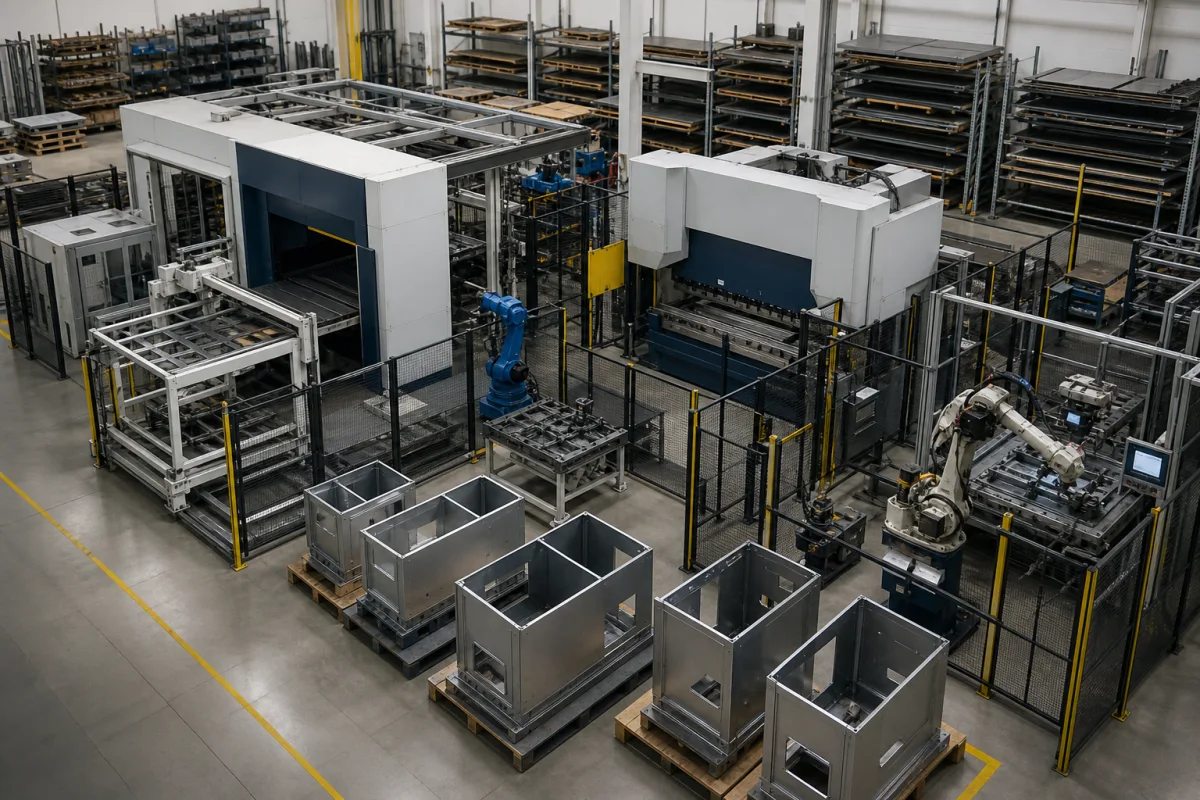
Technical details and manufacturing context for Automated Metal Fabrication Cell System
| Parameter | Typical range | Notes & selection driver |
|---|---|---|
| Maximum Sheet ThicknessRequired | 6–25 mm | Maximum material thickness the system can process |
| Positioning AccuracyRequired | ±0.05 mm | Repeatability of robotic positioning for tool operationsISO 230-2 |
| Maximum Workpiece WeightRequired | 500–2000 kg | Maximum weight of components the system can handle |
| Power ConsumptionRequired | 15–45 kW | Total electrical power required during normal operation |
| Footprint AreaRequired | 20–60 m² | Floor space required for complete system installation |
| Rated Voltage | 380–480 V AC | Three-phase, 50/60 HzIEC 60038 |
| Operating Temperature | 5–40 °C | Below 5°C may affect hydraulic systems |
| Relative Humidity | 20–85 % | Non-condensing; above 85% risk of corrosion |
| Ingress Protection Rating | IP54–IP65 | IP65 for dusty environmentsIEC 60529 |
| Machine Weight | 8000–15000 kg | Requires reinforced floor |
| Repeatability | ±0.02 mm | Critical for consistent weld qualityISO 9283 |
| Cycle Time | 30–120 s | Depends on part complexity and process sequence |
| Noise Level | 75–85 dB(A) | At operator position; hearing protection requiredISO 11201 |
Ranges are indicative industry figures for RFQ preparation, not a supplier commitment. Confirm every value and standard with the legal manufacturer before ordering.
| pressure: | N/A (mechanical system) |
| other spec: | Max workpiece weight: 500 kg, Max workpiece dimensions: 2000x1500x500 mm, Positioning accuracy: ±0.1 mm, Cycle time: 90-120 seconds per operation |
| temperature: | 15-40°C (operating environment) |
Indicative industry ranges for design and RFQ preparation. Confirm the exact figures and applicable standard with the manufacturer before specifying.
Quoted from the published standard.
A practical evidence checklist for RFQ preparation and supplier evaluation.
Compare the published product scope and source details, then include your specifications and quantity in an enquiry.
Manufacturer profiles associated with Automated Metal Fabrication Cell System.
Explore company information and manufacturing capabilities, then discuss the scope of your project with a relevant supplier.
Ask for use case, specification boundaries, supplier type, and RFQ preparation information for this product.
The system is designed to process carbon steel, stainless steel, and aluminum alloy. Maximum sheet thickness ranges from 6 to 25 mm, and maximum workpiece weight is 500–2000 kg. Confirm material compatibility and limits with the manufacturer for your specific application.
Positioning accuracy is ±0.05 mm per ISO 230-2, and repeatability is ±0.02 mm per ISO 9283. These values are reference ranges; actual performance may vary with model and installation. Verify with the manufacturer.
The system requires a footprint of 20–60 m² and a reinforced floor capable of supporting 8000–15000 kg. Electrical supply should be 380–480 V AC, three-phase, 50/60 Hz, with power consumption of 15–45 kW. Operating temperature should be 5–40 °C, and relative humidity 20–85% non-condensing.
The system has an ingress protection rating of IP54–IP65 (IEC 60529) and operates at a noise level of 75–85 dB(A) (ISO 11201). Operating pressure is 1.0–1.6 MPa. These standards are references for verification; ensure compliance with local regulations and confirm with the manufacturer.
Commonly used trade names and technical identifiers for Automated Metal Fabrication Cell System.
Editorial classification, named public sources where available, and source-reviewed manufacturer records.
Compare manufacturer profiles with relevant product and process capability.