Industry-Verified Manufacturing Data (2026)

Apron

Based on aggregated insights from multiple verified factory profiles within the CNFX directory, the standard Apron used in the Motor Vehicle Manufacturing sector typically supports operational capacities ranging from standard industrial configurations to heavy-duty production requirements.

Technical Definition & Core Assembly

A canonical Apron is characterized by the integration of Mounting bracket and Reinforcement rib. In industrial production environments, manufacturers listed on CNFX commonly emphasize Steel construction to support stable, high-cycle operation across diverse manufacturing scenarios.

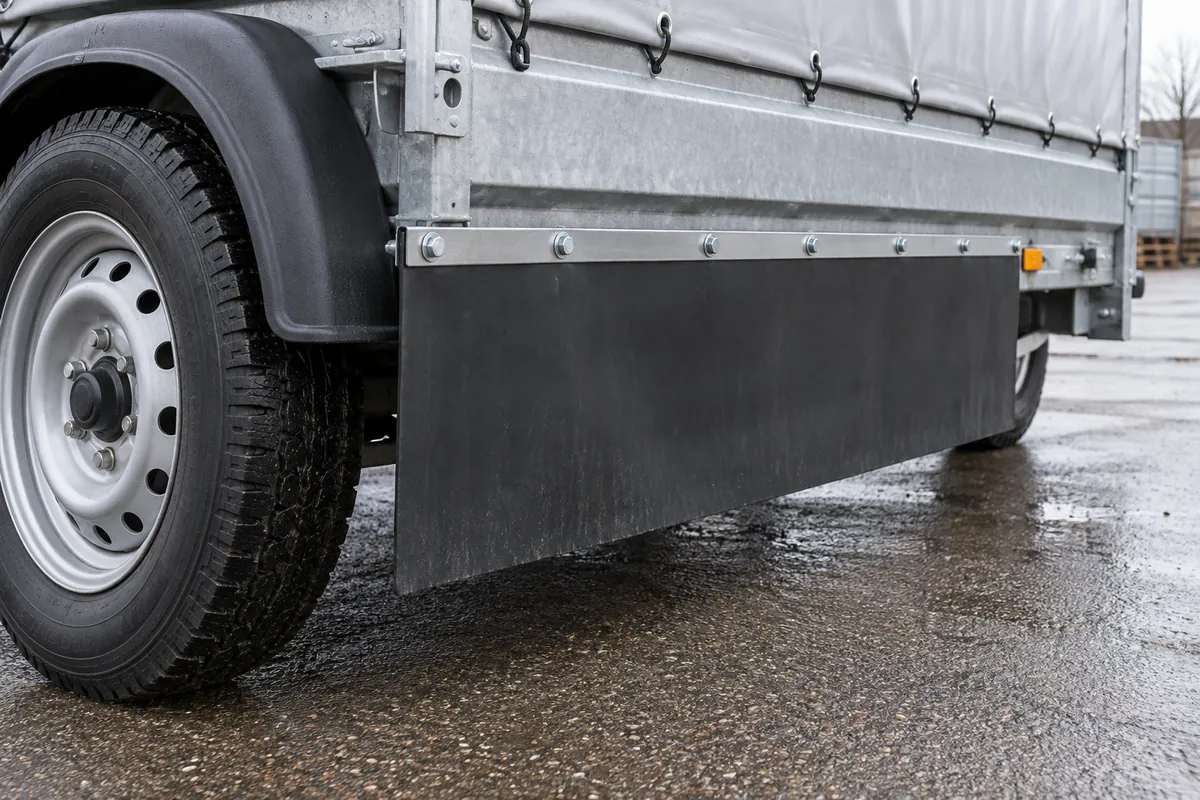
Protective panel mounted on the lower front or sides of a carriage to shield against debris, water, and road spray.
Product Specifications

Technical details and manufacturing context for Apron

Definition
In carriage manufacturing, an apron is a structural component typically attached to the undercarriage or lower body panels. It serves as a protective barrier that prevents road debris, water, mud, and other environmental elements from entering mechanical components or the passenger compartment. Aprons also contribute to aerodynamic efficiency by managing airflow under the vehicle and may provide additional structural rigidity to the carriage frame.
Working Principle
The apron functions as a physical shield, intercepting and deflecting debris and fluids thrown up by the wheels. It is strategically positioned and angled to redirect airflow, reduce turbulence, and minimize spray patterns. In some designs, it may incorporate drainage channels or mounting points for other components like fender liners or splash guards.
Common Materials
Steel, Aluminum alloy, Fiber-reinforced plastic
Technical Parameters
  • Thickness and dimensions vary based on carriage design, typically ranging from 0.8mm to 2.5mm for metal aprons, with specific length, width, and curvature to match vehicle contours. (mm) Standard Spec
Components / BOM
  • Mounting bracket
    Secures apron to carriage frame or body
    Material: steel
  • Reinforcement rib
    Adds structural stiffness to prevent flexing
    Material: same as main panel
  • Drainage channel
    Directs water away from critical components
    Material: same as main panel
Engineering Reasoning
0-120 km/h vehicle speed, -40°C to 85°C ambient temperature, 0-100 kPa dynamic pressure
Material yield strength exceeded at 250 MPa stress, fastener shear failure at 450 N·m torque, panel deflection exceeding 15 mm permanent deformation
Design Rationale: High-cycle fatigue from cyclic loading at 5-20 Hz vibration frequencies, stress concentration at mounting points exceeding material endurance limit of 180 MPa, plastic deformation from impact exceeding material yield strength of 250 MPa
Risk Mitigation (FMEA)
Trigger Corrosion-induced material thinning reducing thickness below 2.5 mm
Mode: Panel fracture at mounting points under 150 kPa aerodynamic load
Strategy: Galvanic corrosion protection with 0.8 mm zinc coating, stainless steel fasteners with 12.9 grade tensile strength
Trigger Resonant vibration at 18 Hz matching panel natural frequency
Mode: Fatigue cracking initiating at stress concentration points after 1×10⁶ cycles
Strategy: Damping treatment with 3 mm constrained layer viscoelastic material, structural reinforcement increasing natural frequency to 25 Hz

Industry Taxonomies & Aliases

Commonly used trade names and technical identifiers for Apron.

Applied To / Applications

This component is essential for the following industrial systems and equipment:

Industrial Ecosystem & Supply Chain DNA

Complementary Systems
Downstream Applications
Specialized Tooling

Application Fit & Sizing Matrix

Operational Limits
pressure: N/A (non-pressure component)
other spec: Max impact velocity: 15 m/s, Max debris size: 50 mm, Slurry concentration: ≤30% solids by volume
temperature: -40°C to 120°C
Media Compatibility
✓ Road spray and water ✓ Gravel and small debris ✓ Snow and ice accumulation
Unsuitable: Chemical splash or corrosive fluid environments
Sizing Data Required
  • Vehicle/equipment mounting dimensions
  • Required coverage area and protection zone
  • Material thickness and impact resistance requirement

Reliability & Engineering Risk Analysis

Failure Mode & Root Cause
Abrasive Wear
Cause: Continuous exposure to particulate-laden materials (e.g., ore, aggregate) causing surface degradation and thinning, exacerbated by high-velocity material flow and inadequate material hardness.
Fatigue Cracking
Cause: Cyclic loading from impact forces during material loading/unloading, combined with stress concentrations at bolt holes or weld seams, leading to crack initiation and propagation.
Maintenance Indicators
  • Visible thinning or perforation along the apron surface, especially at high-wear zones near the discharge end.
  • Audible metallic clanking or abnormal impact noises during operation, indicating loose fasteners, structural cracks, or material buildup causing interference.
Engineering Tips
  • Implement a regular wear monitoring program using ultrasonic thickness gauging at critical zones, and schedule replacements based on wear rate data rather than fixed intervals.
  • Upgrade to abrasion-resistant steel (e.g., AR400/500) or apply replaceable wear liners at high-impact areas, and ensure proper tensioning of apron chains to reduce impact loads.

Compliance & Manufacturing Standards

Reference Standards
ISO 13688:2013 - Protective clothing - General requirements ANSI/ISEA 107-2020 - American National Standard for High-Visibility Safety Apparel and Accessories EN 340:2003 - Protective clothing - General requirements (CE marking basis)
Manufacturing Precision
  • Seam strength: Minimum 100 N per 5 cm
  • Dimensional stability: Maximum 3% shrinkage after washing
Quality Inspection
  • Flame resistance test (ISO 15025 or ASTM F1506)
  • Tensile strength test of fabric and seams (ISO 13934-1)

Factories Producing Apron

Verified manufacturers with capability to produce this product in China

✓ 94% Supplier Capability Match Found

P Procurement Specialist from United Arab Emirates Jan 23, 2026
★★★★★
"Great transparency on the Apron components. Essential for our Motor Vehicle Manufacturing supply chain."
Technical Specifications Verified
T Technical Director from Australia Jan 20, 2026
★★★★★
"The Apron we sourced perfectly fits our Motor Vehicle Manufacturing production line requirements."
Technical Specifications Verified
P Project Engineer from Singapore Jan 17, 2026
★★★★★
"Found 57+ suppliers for Apron on CNFX, but this spec remains the most cost-effective."
Technical Specifications Verified
Verification Protocol

“Feedback is collected from verified sourcing managers during RFQ (Request for Quote) and factory evaluation processes on CNFX. These reports represent historical performance data and technical audit summaries from our B2B manufacturing network.”

15 sourcing managers are analyzing this specification now. Last inquiry for Apron from Turkey (16m ago).

Supply Chain Compatible Machinery & Devices

Automotive Wireless Power Transfer System

Wireless charging system for electric vehicles using electromagnetic induction.

Explore Specs →
Automotive Solid-State Battery Pack

High-energy-density solid-state battery system for electric vehicles

Explore Specs →
Automotive Active Grille Shutter System

Aerodynamic system with motorized shutters for vehicle thermal and efficiency management.

Explore Specs →
Automotive Active Suspension Damping System

Electronically controlled suspension system for vehicle stability and comfort.

Explore Specs →

Frequently Asked Questions

What materials are best for aprons in motor vehicle manufacturing?

Steel offers maximum durability, aluminum alloy provides lightweight strength, and fiber-reinforced plastic combines corrosion resistance with impact protection for various manufacturing needs.

How does the drainage channel in vehicle aprons function?

The drainage channel directs water and debris away from critical vehicle components, preventing accumulation that could lead to corrosion or mechanical issues in manufacturing environments.

What maintenance do reinforcement ribs require on industrial aprons?

Reinforcement ribs typically require periodic inspection for stress cracks or deformation, especially in high-impact areas, with cleaning to prevent debris buildup that could compromise structural integrity.

Can I contact factories directly on CNFX?

CNFX is an open directory, not a transaction platform. Each factory profile provides direct contact information and production details to help you initiate direct inquiries with Chinese suppliers.

Get Quote for Apron

Request technical pricing, lead times, or customized specifications for Apron directly from verified manufacturing units.

Your business information is encrypted and only shared with verified Apron suppliers.

Thank you! Your message has been sent. We'll respond within 1–3 business days.

Need to Manufacture Apron?

Connect with verified factories specializing in this product category

Add Your Factory Contact Us
Previous Product
All-wheel Drive System
Next Product
Articulated Industrial Robots