Structured Manufacturing Data (2026)

Automotive Solid-State Battery Pack

Based on aggregated insights from structured factory profiles within the CNFX directory, the standard Automotive Solid-State Battery Pack used in the Motor Vehicle Manufacturing sector typically supports operational capacities ranging from standard industrial configurations to heavy-duty production requirements.

Technical Definition & Core Assembly

A canonical Automotive Solid-State Battery Pack is characterized by the integration of Solid-State Cell Module and Battery Management System. In industrial production environments, manufacturers listed on CNFX commonly emphasize solid ceramic electrolyte construction to support stable, high-cycle operation across diverse manufacturing scenarios.

High-energy-density solid-state battery system for electric vehicles

Product Specifications

Technical details and manufacturing context for Automotive Solid-State Battery Pack

Definition
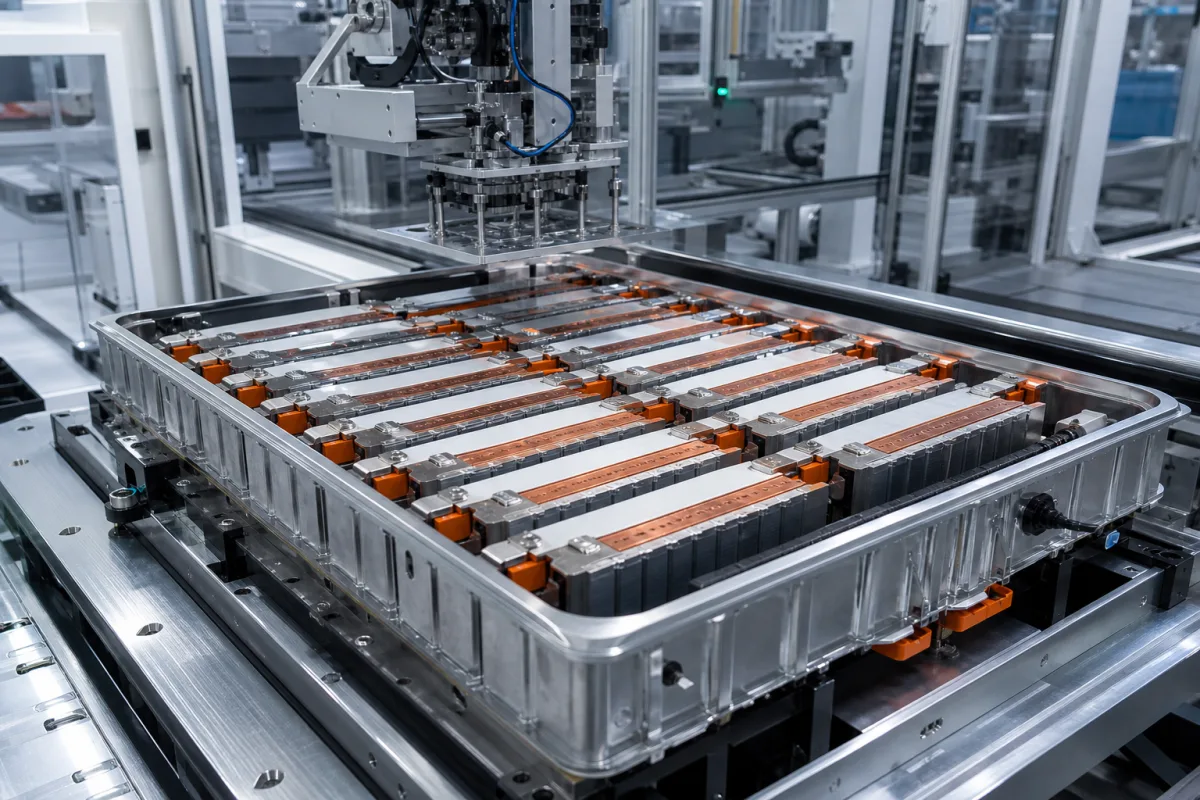
A complete battery pack assembly utilizing solid-state electrolyte technology instead of conventional liquid electrolytes. This system integrates multiple solid-state battery cells with thermal management, battery management electronics, and structural housing. Designed specifically for integration into electric vehicle platforms, it offers improved safety, higher energy density, and faster charging capabilities compared to traditional lithium-ion batteries. The modular design allows for scalable capacity configurations to meet different vehicle range requirements.
Working Principle
Solid electrolyte enables lithium-ion transport between electrodes while preventing dendrite formation and thermal runaway
Common Materials
solid ceramic electrolyte, lithium metal anode, cathode composite, aluminum housing, thermal interface material
Technical Parameters
  • Total pack capacity (kWh) Per Request
  • Maximum continuous charging rate (C) Per Request
  • Gravimetric energy density (Wh/kg) Per Request
Components / BOM

Industry Taxonomies & Aliases

Commonly used trade names and technical identifiers for Automotive Solid-State Battery Pack.

Industrial Ecosystem & Supply Chain Structure

Complementary Systems
Downstream Applications
Specialized Tooling

Application Fit & Sizing Matrix

Operational Limits
pressure: 0.5 to 1.5 MPa (cell stack pressure), 0.1 to 0.3 MPa (pack internal)
other spec: Energy density: 400-500 Wh/kg, Cycle life: >1000 cycles at 80% DoD, Charge rate: 0.5-3C continuous
temperature: -40°C to 85°C (operational), -50°C to 100°C (storage)
Media Compatibility
✓ Electric vehicle powertrain systems ✓ Stationary energy storage cabinets ✓ Marine electric propulsion systems
Unsuitable: High-vibration industrial machinery without additional damping
Sizing Data Required
  • Required vehicle range (kWh)
  • Maximum continuous power demand (kW)
  • Available packaging space (L)

Reliability & Engineering Risk Analysis

Failure Mode & Root Cause
Solid electrolyte cracking
Cause: Thermal cycling stress from charging/discharging cycles and ambient temperature fluctuations, leading to mechanical fatigue and fracture in brittle ceramic or glass electrolytes, which compromises ionic conductivity and causes internal short circuits.
Lithium dendrite formation
Cause: Non-uniform current distribution during high-rate charging or low-temperature operation, causing lithium metal plating and needle-like dendrite growth that can pierce the solid electrolyte, resulting in internal short circuits, thermal runaway, and capacity degradation.
Maintenance Indicators
  • Sudden, unexplained voltage drop or capacity fade during operation, indicating potential internal short circuits or electrolyte degradation.
  • Abnormal thermal hotspots detected via infrared imaging or temperature sensors, signaling localized overheating from dendrite penetration or electrolyte cracking.
Engineering Tips
  • Implement controlled, moderate-rate charging protocols with temperature compensation (e.g., reduce charge rate below 0.5C at temperatures <10°C) to prevent lithium plating and dendrite initiation.
  • Use active thermal management systems (e.g., liquid cooling with precise temperature control ±2°C) to minimize thermal gradients and cycling stress on solid electrolytes, extending mechanical integrity.

Compliance & Manufacturing Standards

Reference Standards
ISO 26262:2018 - Functional Safety for Road Vehicles IEC 62619:2017 - Safety Requirements for Secondary Lithium Cells and Batteries UN/ECE Regulation No. 100 - Uniform Provisions Concerning the Approval of Vehicles with Regard to Specific Requirements for the Electric Power Train
Manufacturing Precision
  • Electrode Layer Thickness: +/- 2 μm
  • Cell-to-Cell Voltage Variation: +/- 0.05 V
Quality Inspection
  • Thermal Runaway Propagation Test
  • Electrochemical Impedance Spectroscopy (EIS) Analysis

Factories Producing Automotive Solid-State Battery Pack

Manufacturer profiles with relevant production capability in China

Manufacturer listings support early research and capability understanding. They are not certification, ranking, or transaction guarantees.

Technical documentation
4/5
Manufacturing capability
4/5
Inspection readiness
5/5
Supplier transparency
3/5

These scores are example evaluation dimensions, not real customer ratings, country-specific buyer feedback, or live inquiry activity.

Supply Chain Commonly Integrated Components

Body Drop Station

Automated station in final assembly where vehicle body is precisely lowered onto chassis frame

Explore Specs →
Interior Assembly Station

A specialized workstation within an automotive final assembly line dedicated to installing interior components into vehicle bodies.

Explore Specs →
Final Inspection Station

A specialized workstation within the automotive assembly line where completed vehicles undergo comprehensive quality checks before release.

Explore Specs →
Automated Guided Vehicle System

A flexible material handling system using self-guided vehicles to transport components and assemblies along predetermined paths within automotive final assembly lines.

Explore Specs →

Frequently Asked Questions

What are the key advantages of this solid-state battery pack over traditional lithium-ion batteries?

This solid-state battery pack offers higher energy density, improved safety due to non-flammable solid ceramic electrolyte, longer cycle life, and better performance across a wider operating temperature range compared to conventional lithium-ion batteries.

How does the thermal management system work in this battery pack?

The battery pack utilizes a thermal management plate and thermal interface material to efficiently dissipate heat, maintaining optimal operating temperatures without active cooling systems, which enhances reliability and reduces complexity.

What is the expected cycle life and power output of this automotive battery pack?

The solid-state battery pack is designed for extended cycle life with high maximum power output, though specific values depend on application requirements. It delivers consistent nominal voltage and operates effectively within specified temperature ranges for electric vehicles.

Can I contact factories directly on CNFX?

CNFX is an open directory, not a transaction platform. Each factory profile provides direct contact information and production details to help you initiate direct inquiries with Chinese suppliers.

Data Basis

CNFX manufacturer profiles, technical classification, publicly available product information, and ongoing plausibility checks.

Preliminary Technical Classification
This page supports structured research, RFQ preparation, and supplier evaluation. It does not replace buyer-led supplier qualification, standards review, or technical approval.

Request Manufacturing Insight for Automotive Solid-State Battery Pack

Ask for use case, specification boundaries, supplier type, and RFQ preparation information for Automotive Solid-State Battery Pack.

Your business information is used only to process this request.

Thank you! Your message has been sent. We'll respond within 1–3 business days.

Need to Manufacture Automotive Solid-State Battery Pack?

Compare manufacturer profiles with relevant product and process capability.

Create Manufacturer Profile Contact Us
Previous Product
Automotive Powertrain Assembly System
Next Product
Automotive Wireless Power Transfer System